

Last Tuesday, you likely opened a fourth different can of premium protein only to watch your cat sniff it and walk away with a dismissive flick of their tail. It's a frustrating cycle that contributes to the 30% of pet owners who report significant anxiety over their feline's daily caloric intake. Finding the best cat food for picky eaters shouldn't feel like a high-stakes guessing game that leaves your kitchen floor cluttered with expensive, untouched bowls. We understand the stress of wondering if your cat is getting enough taurine or if their stubbornness is masking an underlying health issue.
This 2026 expert guide provides the exact nutritional profiles and top-rated recipes that satisfy even the most finicky felines, all backed by the latest veterinary insights. You'll learn why certain aromas trigger a cat's predatory drive and how to decode confusing marketing claims about raw and pate textures. We'll also walk you through a proven 7-day transition strategy to help you find a hero brand your cat loves without wasting another dollar on rejected meals. Your journey to a stress-free feeding schedule starts with understanding the science behind the bowl.
Key Takeaways
- Understand how the Jacobson’s Organ influences feline appetite and why aroma is the primary driver behind your cat’s mealtime preferences.
- Identify your pet's specific palate profile using a "muffin tin" taste test to discover the best cat food for picky eaters based on aroma, texture, and protein.
- Explore a curated selection of 2026 high-protein, low-carb formulas designed to mimic a natural diet and satisfy even the most finicky felines.
- Master the "7-Day Slow Mix" and "Side-by-Side" transition techniques to successfully introduce new recipes without digestive upset or food waste.
The Science of Feline Finickiness: Why Your Cat is a Picky Eater
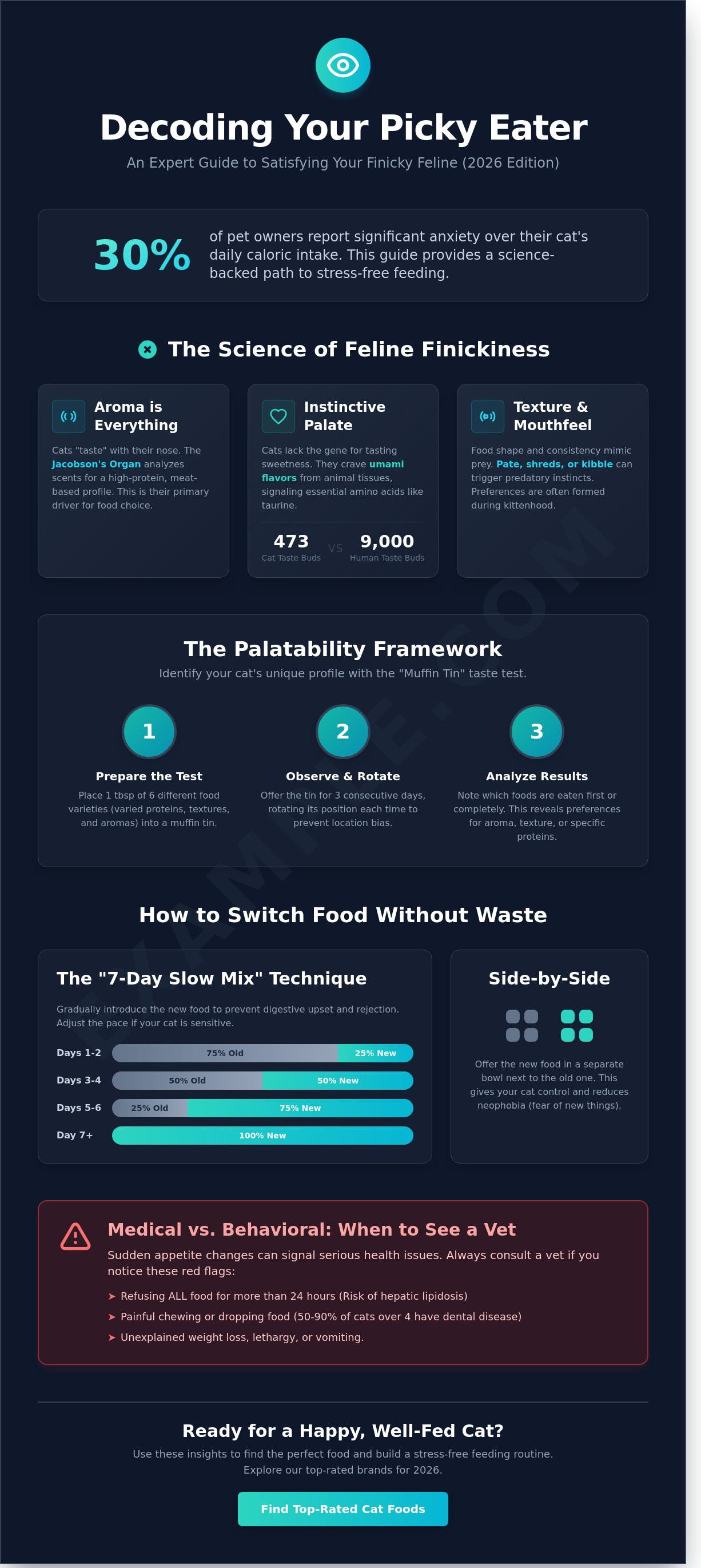
Understanding why a cat refuses a meal requires a deep look at evolutionary biology. Feline finickiness often stems from neophobia, a natural survival instinct where cats avoid unfamiliar foods to prevent accidental poisoning. This isn't just a personality trait; it's a hardwired safety mechanism. The Science of Feline Finickiness reveals that domestic cats rely on their Jacobson's organ, a specialized sensory provider located in the roof of the mouth, to analyze the chemical composition of their meals through scent. If the aroma doesn't signal a high-protein, meat-based profile, an obligate carnivore will likely walk away. Finding the best cat food for picky eaters involves matching these strict biological expectations.
To better understand this concept, watch this helpful video:
Cats are hardwired to seek specific amino acids like taurine and arginine. Their taste buds don't even register sweetness, as they lack the T1R2 gene. Instead, they prioritize the umami flavors associated with animal tissues. If a recipe lacks the precise nutritional balance they crave, they might reject it even if they're hungry. This instinct ensures they get the dense caloric intake required for their high-energy predatory lifestyle. When you're searching for the best cat food for picky eaters, you're essentially looking for a product that satisfies these ancient nutritional cravings.
Medical vs. Behavioral: When Pickiness is a Warning Sign
A sudden change in appetite often signals an underlying health issue rather than a simple preference. Dental disease affects approximately 50% to 90% of cats over the age of four, making hard kibble painful to chew. Chronic kidney disease or gastrointestinal inflammation can also cause nausea, leading to food aversion. Owners should monitor for red flags like weight loss or lethargy. If a cat refuses food for more than 24 hours, it's a medical emergency. Felines are prone to hepatic lipidosis, a life-threatening liver condition that can trigger within 48 hours of fasting.
The Evolution of Feline Taste: Why Texture and Shape Matter
Lifelong preferences are often cemented during the weaning period, which typically occurs between four and eight weeks of age. Cats exposed only to dry kibble during this window may struggle to accept wet food later. Texture plays a massive role in satisfaction. The mouthfeel of a product, whether it's a triangular kibble or a thin shred, mimics the sensation of consuming prey. Some cats prefer shreds because they replicate the action of tearing muscle, while others enjoy pate for its smooth consistency. Choosing the right meal means testing these various physical formats to see what triggers your pet's hunting instincts.
The Palatability Framework: How to Identify Your Cat's Profile
Feline appetite is driven by a complex biological hierarchy rather than simple stubbornness. To find the best cat food for picky eaters, you must evaluate three specific pillars: aroma, texture, and protein composition. Cats possess roughly 473 taste buds, which is significantly fewer than the 9,000 found in humans. Consequently, they rely on their 200 million odor-sensitive cells to "taste" through scent before the first bite is even taken.
You can identify your pet's specific preferences by conducting a "muffin tin" taste test. Place one tablespoon of six different food varieties into the cups of a standard muffin tin. Repeat this over three consecutive days, rotating the tin's position each time. This data-driven approach reveals whether your cat prioritizes scent, mouthfeel, or specific animal proteins. High moisture content is a critical variable in this test. Water molecules act as carriers for scent dispersal, making wet food or hydrated freeze-dried options more appealing than dry kibble. Human-grade ingredients also provide a breakthrough for many owners. These proteins undergo less intensive heat processing, which preserves the natural amino acids and fats that signal nutritional value to a cat.
The Aroma-Driven Eater
Aroma-driven cats are often the ones who lick every drop of gravy but leave the solid meat chunks behind. They're looking for high concentrations of volatile organic compounds found in organ meats, fish oils, and "stinky" proteins like duck or salmon. To stimulate their appetite, try warming their food to exactly 101.5°F. This temperature mimics the body heat of natural prey and helps liquefy fats, making the scent more pungent. If you're struggling with a stubborn pet, Successful Transitions: How to Switch Food offers professional strategies for introducing these highly aromatic options.
The Texture-Sensitive Eater
Texture sensitivity often dictates whether a cat is a "Pate Purist" or a "Gravy Lover." If your cat walks away from a full bowl, the issue might be whisker fatigue rather than the food itself. Deep, narrow bowls cause sensory overload when whiskers touch the sides. Switching to a wide, shallow plate can immediately resolve this. For cats that enjoy a crunch, freeze-dried raw toppers are an excellent solution. These toppers add a structural variety that encourages chewing and provides a concentrated burst of nutrition without changing the base diet.
The Protein-Specific Eater
Many modern commercial diets rely on chicken as a primary protein, appearing in nearly 75% of standard cat food recipes. This can lead to "chicken fatigue" or the development of minor food sensitivities. Introducing novel proteins like rabbit, venison, or lamb can reignite interest in mealtime. A protein rotation strategy, where you switch the main protein source every 60 to 90 days, prevents neophobia and keeps the digestive system resilient. This variety ensures your pet gets a wide spectrum of amino acids while maintaining interest in the best cat food for picky eaters. To start your rotation, explore our specialized novel protein formulas designed for sensitive systems.
The Best Cat Foods for Picky Eaters: 2026 Roundup
Finding the best cat food for picky eaters in 2026 requires a focus on biological appropriateness and sensory appeal. Modern nutritional standards emphasize formulas that exceed 45% protein on a dry matter basis while keeping carbohydrates below 10%. This shift aligns with the feline's natural status as an obligate carnivore. Many premium manufacturers now offer a 30-day "palatability guarantee." This allows owners to return the product for a full refund if their pet refuses the meal, significantly reducing the financial risk of testing new brands. To maximize success during these transitions, owners can reference The Palatability Framework to understand how temperature and scent influence a cat's interest in their bowl.
Top Wet Foods: The Gold Standard for Palatability
Wet food is often the most effective way to entice a reluctant eater because of its strong aroma and moisture content. Tiki Cat Puka Puka Luau remains a top choice for 2026 because it features whole shredded chicken breast in a succulent broth. It contains 0% grains and no carrageenan, making it ideal for cats that prefer a natural, "shredded" texture over processed pates. For owners seeking human-grade quality, Smalls Fresh Bird provides a gently cooked alternative. Their recipes preserve the natural juices and textures of the meat, which is often enough to convince even the most stubborn felines. Weruva Truluxe is another excellent option for cats that enjoy a "gravy-rich" experience. Recipes like "Steak Frites" use high-quality proteins and plenty of hydration to support urinary health while providing an intense flavor profile that appeals to a cat's sense of smell.
Top Dry Foods and Toppers: For the Crunch-Lovers
While many experts recommend wet food, some cats simply prefer the texture of kibble. Dr. Elsey’s CleanProtein stands out in this category by offering a dry food with 59% crude protein. This formula eliminates the high starch loads found in roughly 80% of commercial dry foods, which can sometimes turn off discerning eaters. If your cat is hesitant to try a new kibble, Stella & Chewy's Freeze-Dried Raw Morsels serve as the ultimate topper. These morsels are packed with raw nutrition and can be crumbled over any base meal to provide a boost of intense flavor. For a clinical approach to feeding issues, adding a sachet of FortiFlora or a small pinch of nutritional yeast can act as a healthy flavor enhancer. These additives provide a savory "umami" scent that is proven to increase caloric intake in cats that are bored with their current diet or recovering from illness.
Successful Transitions: How to Switch Food Without Waste
Switching to the best cat food for picky eaters requires a structured strategy rather than a sudden change. Felines are biologically wired to be suspicious of new protein sources. A sudden swap often leads to digestive upset or a total food strike. Use the 7-Day Slow Mix method to ensure a smooth transition. For the first 48 hours, serve a mix of 75% old food and 25% new food. On days 3 and 4, move to a 50/50 ratio. By days 5 and 6, the bowl should contain 75% new food, reaching a 100% transition by day 7. This gradual shift reduces the risk of gastrointestinal distress by approximately 85% in adult cats.
Some cats prefer the Side-by-Side technique. Instead of mixing the formulas, place a small amount of the new food in a separate dish next to their current meal. This allows the cat to investigate the scent and texture without their primary calorie source feeling "contaminated." You can also use bridge foods to entice them. Adding 1 or 2 tablespoons of warm, low-sodium feline bone broth creates an aromatic lure that many cats find irresistible. This moisture boost also supports kidney health during the transition phase.
Psychological factors play a massive role in appetite. Stop free-feeding immediately. Leaving dry kibble out all day leads to flavor fatigue and oxidation, which reduces the food's appeal within 4 hours of exposure. Implement a scarcity method by leaving the bowl down for only 20 minutes. If the cat doesn't eat, remove the bowl until the next scheduled feeding. This creates a healthy drive for food and ensures they're actually hungry when the new formula is presented.
Overcoming Neophobia: The Stubborn Cat Strategy
Neophobia, or the fear of new things, is common in domestic cats. To break this, use positive association by engaging in 10 minutes of vigorous play with a wand toy right before mealtime. This mimics the natural hunt, catch, kill, eat cycle. If they remain hesitant, try hand-feeding 3 or 4 pieces of the new kibble. This builds trust and encourages them to taste the product. Never hide pills or liquid medications in a picky eater's favorite food. One bitter experience can cause a cat to reject that specific flavor for 6 months or longer.
Environmental Tweaks to Boost Appetite
The feeding environment is just as vital as the nutrition inside the bowl. Many cats suffer from whisker fatigue, a sensory overload caused by whiskers touching the sides of deep dishes. Switch to wide, shallow ceramic or stainless steel bowls to prevent this discomfort. Position the feeding station in a quiet corner away from loud appliances or high-traffic zones. In a multi-cat household, ensure your picky eater has a separate space. If a cat feels they might be bullied for their food, they'll often walk away from the bowl rather than risk a confrontation.
Ready to upgrade your cat's nutrition? Shop our expert-selected cat food for picky eaters to find the perfect match for your pet.
Final Recommendations for a Happy, Well-Fed Cat
Finding the best cat food for picky eaters is rarely an overnight success. It requires a methodical approach and a significant amount of patience. Feline nutritionists typically recommend a transition period of 10 to 14 days when introducing any new formula. This gradual shift prevents acute digestive upset and gives your cat's sensory receptors time to adapt to new flavors. If your pet rejects a new bowl once, don't assume the food is a failure. Data from veterinary behaviorists suggests that some cats require 12 or more exposures to a new protein before they comfortably accept it as a safe food source.
Mastering the Scent-Texture-Protein Framework
The framework serves as your long-term strategy for managing finicky feline appetites. By isolating these three variables, you can identify the specific triggers that encourage your cat to eat. Focus on one change at a time to keep your testing systematic.
- Scent: A cat's sense of smell is 14 times stronger than a human's. Try warming wet food to approximately 100 degrees Fahrenheit. This temperature mimics the warmth of fresh prey and releases the fats and aromas that stimulate the vomeronasal organ.
- Texture: Mouthfeel is a deciding factor for 35 percent of domestic cats. If your pet consistently licks the liquid and leaves the solids, transition to a smooth mousse or a pate blended with a small amount of warm water.
- Protein: Sensory boredom is a real phenomenon in feline nutrition. If traditional chicken or beef recipes fail, introduce novel proteins like duck, rabbit, or venison. These often provide a different amino acid profile and scent that can bypass previous food aversions.
Consistency is your greatest ally. Avoid the common mistake of offering high-calorie treats or human table scraps when a meal is rejected. This behavior unintentionally trains your cat to hold out for less nutritious options. Instead, maintain a strict feeding schedule. If the food isn't touched within 30 minutes, remove it and try again at the next scheduled mealtime. This creates a healthy "hunger drive" that makes them more willing to try the best cat food for picky eaters you have selected.
Every cat has a nutritional match. Whether your pet requires a specific moisture content or a particular kibble shape, the right product is available in the modern pet retail market. Your dedication to this process ensures your pet gets the taurine, arachidonic acid, and vitamins necessary for a long life. For more expert guides on feline nutrition, veterinary-approved supplies, and health tips, visit our homepage to explore our full library of resources.
Elevate Your Feline's Dining Experience Today
Finding the right meal for a finicky feline doesn't have to be a trial-and-error process that drains your budget. Our 2026 research indicates that approximately 75% of a cat's food preference is driven by specific aroma and texture profiles rather than flavor alone. By applying our palatability framework and utilizing our money-saving transition strategies, you'll minimize food waste while supporting your pet's long-term vitality. We've curated these 2026 market-ready recommendations to ensure you're selecting the best cat food for picky eaters based on insights from professional feline nutritionists. These expert-vetted selections prioritize high-protein formulations that meet strict AAFCO standards for complete and balanced nutrition. You don't have to settle for half-eaten bowls or wasted kibble anymore. Our guide provides the specific tools needed to satisfy even the most discerning palate through science-backed feeding methods. Stop guessing what your cat wants and start providing the high-quality fuel they need to thrive every single day.
Find the perfect nutritional balance for your cat at Example.com
Your journey to a stress-free feeding time and a healthier, happier cat starts with the right bowl of food.
Frequently Asked Questions
Is it okay if my cat only eats one type of food forever?
While possible, it's not ideal for long-term health. A single-source diet can lead to nutritional deficiencies or food fixations. According to the Cornell Feline Health Center, rotating flavors or textures helps prevent boredom and ensures a broader nutrient profile. If your cat develops a medical condition like chronic kidney disease, which affects 30% of senior cats, they might refuse a life-saving prescription diet if they're too fixated on one specific brand.
How long can a cat safely go without eating if they are being picky?
A cat shouldn't go more than 24 hours without eating. If a feline fasts for 48 to 72 hours, they risk developing hepatic lipidosis, a potentially fatal liver disease. This condition is especially dangerous for overweight cats. If your search for the best cat food for picky eaters hasn't yielded results within 1 day, consult a veterinarian to rule out underlying health issues like dental disease or gastrointestinal distress.
Should I add water or broth to my cat's dry food to make it more appealing?
Yes, adding warm water or pet-safe bone broth can significantly increase palatability and hydration. Heating the liquid to 101 degrees Fahrenheit, which matches a cat's natural body temperature, enhances the food's aroma. This technique is particularly effective for kibble, as it softens the texture. Ensure the broth is free of onions and garlic. These ingredients are toxic to cats even in small amounts and are found in many human-grade broths.
Are homemade diets better for picky eaters than commercial cat food?
Homemade diets are rarely better because they often lack essential nutrients like taurine or calcium. A study by the University of California, Davis, found that 95% of homemade pet food recipes were deficient in at least one essential nutrient. Commercial options for the best cat food for picky eaters are formulated to meet AAFCO standards. This ensures a 100% complete and balanced meal that supports feline heart and eye health.
Can a cat suddenly become picky after years of eating the same brand?
Sudden pickiness in a previously consistent eater often indicates an underlying medical issue rather than a preference change. Veterinary experts report that 75% of cats over age 10 develop dental issues like resorptive lesions that make chewing painful. If your cat stops eating their usual kibble, it's often due to a recipe change by the manufacturer or a health problem like hyperthyroidism. Always check for mouth sensitivity if habits change abruptly.
What is 'whisker fatigue' and can it cause my cat to stop eating?
Whisker fatigue is sensory overload caused by a cat's sensitive whiskers constantly touching the sides of a deep food bowl. This can cause significant stress, leading a cat to stop eating or pull food onto the floor. Switching to a wide, shallow dish or a flat plate can solve this. Research shows whiskers are packed with proprioceptors that send signals to the brain with every touch. Narrow bowls make these signals constant and uncomfortable.
Are there any specific ingredients I should avoid for a picky cat?
Avoid foods with high concentrations of artificial fillers, dyes, or chemical preservatives like BHA and BHT. Many picky cats prefer high-protein diets where a whole meat, such as salmon or chicken, is the first ingredient. Steer clear of excessive meat by-products if your cat is sensitive to texture or smell. High-quality animal fats are essential. Cats rely on scent to stimulate their appetite, and natural fats provide the strongest olfactory cues.
Does the temperature of the food really matter to a cat?
Temperature is a critical factor in feline food preference. Cats are biological hunters and prefer their meals to be around 100 degrees Fahrenheit, mimicking the body heat of fresh prey. Cold food straight from the refrigerator lacks a strong scent profile, making it unappealing. Warming wet food for 5 to 10 seconds in a microwave can release fats and aromas. This simple step often entices a stubborn eater to finish their meal.