

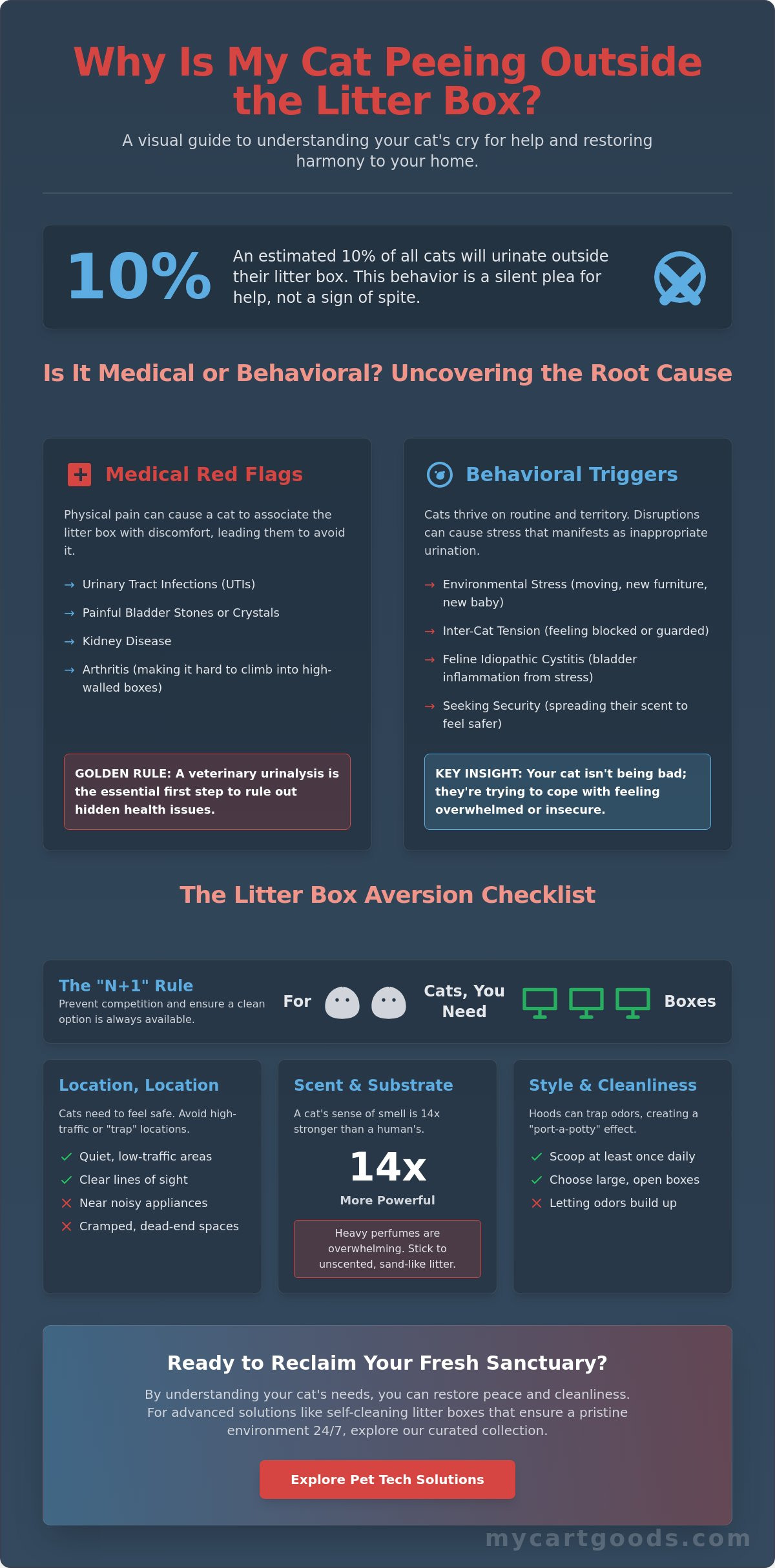
Did you know that an estimated 10% of all cats will urinate outside their litter box at some point in their lives? It is a deeply stressful experience that leaves many pet parents feeling exhausted by constant cleaning and anxious about their fur baby's health. If your cat keeps peeing outside the litter box, please know that you are not alone and this behavior is often a silent plea for help rather than a sign of feline spite. You love your pet like family, and it is completely natural to feel a mix of guilt and frustration when your domestic harmony is disrupted.
We believe that every home should be a sanctuary of comfort and every pet should feel safe and pampered. This guide will show you how to conduct a "Harmony Audit" to discover the medical, environmental, and behavioral secrets to stopping inappropriate urination for good. We will explore everything from the latest 2026 veterinary insights to the effortless joy of a self cleaning cat litter box. By the end of this article, you will have a clear path toward a healthy cat and a home that smells wonderfully fresh once again.
Key Takeaways
- Identify whether your fur baby is experiencing a medical emergency or a behavioral "cry for help" so you can take the right steps toward healing.
- Discover why your cat keeps peeing outside the litter box and how simple changes to your "N+1" setup can instantly reduce their anxiety.
- Master our five-step restoration plan to deep clean your home and reclaim your sanctuary using specialized techniques that actually work.
- Learn how cutting-edge "zero-touch" automation and orthopedic support can provide the ultimate comfort for cats with specific physical or cleanliness needs.
- Promote long-term bladder health by boosting hydration and creating an enriching environment that keeps your beloved pet happy and confident.
Why Your Fur Baby is Ditching the Box: Medical vs. Behavioral Causes
If your cat keeps peeing outside the litter box, the very first thing to understand is that your sweet companion isn't trying to punish you for that late dinner or the new sofa. In the world of feline elimination habits, going outside the box is almost always a heartfelt cry for help. It is their way of saying that something feels physically wrong or emotionally overwhelming. While the smell of ammonia on your favorite rug is frustrating, approaching this with empathy rather than anger is the secret to restoring your home's peace and domestic harmony.
Medical red flags often hide in plain sight. Conditions like Urinary Tract Infections (UTIs), painful bladder stones, or even early stage kidney disease can turn a routine bathroom break into a source of intense distress. This leads to what experts call the "Pain Association" theory. Cats are incredibly sensitive, intuitive creatures; if they feel a sharp sting while using their litter, they may conclude that the box itself is the source of the pain. To avoid that "hurtful" place, they seek out soft, absorbent surfaces like your laundry or bedding, hoping for a more comfortable experience.
Ruling Out Health Issues First
Before you assume it's just a behavioral quirk, look for physical clues that your cat is struggling. Are they straining, spending a long time in the box, or leaving small, frequent spots of blood? Senior cats deserve extra consideration too. As our beloved elders develop arthritis, climbing over the high walls of a traditional tray becomes a painful chore. This is why a professional veterinary urinalysis is the absolute gold standard for your first step. It rules out crystals or infections that no amount of cleaning or training can fix.
Decoding Feline Stress and Anxiety
Our cats thrive on predictability and a sense of safe territory. Major life events like moving to a new house, welcoming a fresh pet, or even shifting your work hours can send their stress levels soaring. In multi-cat homes, "inter-cat tension" often plays a silent role. If one cat is "guarding" the hallway, another might feel too intimidated to reach the box, leading to accidents in "safe" corners of the room. Feline idiopathic cystitis is a painful inflammation of the bladder wall triggered specifically by a cat's high-stress response to their environment. When your cat keeps peeing outside the litter box due to stress, they are often just trying to surround themselves with their own scent to feel more secure in a changing world.
The Litter Box Aversion Checklist: Is Your Setup Scaring Them Away?
Sometimes, your cat's refusal to use the box isn't about health or deep-seated anxiety; it is a simple critique of the facilities you've provided. If your cat keeps peeing outside the litter box, they might be telling you that the current setup doesn't meet their high standards for safety, privacy, or hygiene. Cats are naturally fastidious creatures that require a specific environment to feel comfortable during their most vulnerable moments. By performing a quick audit of your "feline bathroom," you can identify the small friction points that lead to big messes on your carpets.
The "N+1 Rule" is a golden principle for every multi-cat household. To maintain domestic harmony, you should always have one more box than you have cats. This prevents "box guarding" and ensures that even if one station is occupied or feels "too used," your precious pet has a private, clean alternative. Location is equally vital. Avoid placing boxes near noisy washing machines or in cramped laundry rooms that feel like a trap. Cats need clear sightlines and multiple escape routes to feel safe, so a box tucked into a dead-end corner can be a major deterrent.
While we might love "fresh linen" or "floral" scents, a cat's nose is remarkably powerful. A heavy perfume can be overwhelming and even repulsive to a sensitive feline. Understanding the medical and behavioral reasons for house soiling often starts with choosing an unscented, sandy texture that mimics what they would instinctively use in nature. Whether you prefer hooded or open boxes, remember that hoods can trap odors inside, creating a "port-a-potty" effect that no cat enjoys.
Maintaining a Pristine Environment
A cat’s sense of smell is roughly 14 times stronger than a human’s, meaning a box that smells "okay" to you might be unbearable for them. Traditional boxes require scooping at least twice a day and a full litter swap every two weeks to stay truly fresh. If your schedule is busy, a self cleaning cat litter box ensures a fresh bed of litter for every single visit. This modern solution eliminates the sensory "nightmare" of a dirty box and provides your fur baby with a consistently inviting place to go.
Box Design and Accessibility
Physical comfort is just as important as cleanliness. "Whisker fatigue" is a real concern; if a box is too narrow, their sensitive whiskers brush against the sides, causing irritation every time they turn around. The ideal box should be at least 1.5 times the length of your cat. For our tiny kittens or cherished seniors, a low-entry height is essential. If your cat keeps peeing outside the litter box and they are older, they may simply find it too painful to hop over a high plastic wall. If you're looking to simplify your routine while keeping your pet happy, a high-quality self cleaning cat litter box can be a game-changer for both your home's scent and your cat's confidence.
Step one is all about erasing the past. You must identify every accident zone and clean it thoroughly. If your cat keeps peeing outside the litter box even after a surface scrub, it's likely because the scent still lingers deep in the carpet fibers, acting as a neon sign for your pet. After cleaning, step two involves temporarily restricting access to these problem areas. Step three is a bit counterintuitive but highly effective: place a secondary "attractor" box in the exact location your cat has chosen. Once they are back in a routine, step four focuses on re-introducing the original box with positive reinforcement. Finally, step five requires you to monitor their body language closely to ensure they feel safe and comfortable.
The Enzymatic Cleaning Protocol
Standard household soaps or vinegar often fail because they don't dissolve uric acid crystals. These crystals cling to fibers and reactivate with humidity, drawing your cat back to the same spot repeatedly. To be thorough, use a blacklight in a darkened room to reveal hidden stains you might have missed. Once found, saturate the area completely with an enzymatic cleaner. You need the liquid to reach the subfloor padding to ensure the odor is gone for good. This deep clean is the foundation of a happy, fresh-smelling home.
Positive Reinforcement and Re-Training
Creating a joyful atmosphere around the litter box is essential for long-term success. You can use interactive cat toys to engage your pet in play sessions near their designated station. This builds a positive emotional connection to the area rather than one of fear or pain. Never resort to punishment; yelling or rubbing their nose in a mess only creates anxiety and increases the stress that likely caused the issue. Instead, reward them with high-value treats when they show interest in the box. You can also try the "Litter Kicker" method by gently scratching the litter yourself to trigger their natural digging instincts and curiosity.
Always watch for subtle cues in your fur baby’s behavior. Tail flicking, flattened ears, or hesitating at the box entry are signals that they still feel uneasy. Adjusting your approach based on these cues ensures a smooth, stress-free return to domestic harmony for everyone in the family.
Advanced Solutions: Tech and Comfort for the Modern Feline
Sometimes, even with the best cleaning routine, a highly fastidious cat needs something more consistent than manual scooping can provide. We often see that a cat keeps peeing outside the litter box simply because their standards for cleanliness are higher than a busy human schedule allows. In 2026, we have incredible tools at our fingertips to bridge this gap. By embracing a blend of smart technology and deep-seated physical comfort, you can transform your home from a place of stress into a high-tech sanctuary where your fur baby feels truly pampered and secure.
The Self-Cleaning Advantage
For cats with what we affectionately call "cleanliness OCD," even a single used clump can be enough to trigger box aversion. Modern automation has become the gold standard for these sensitive souls. High-end systems now feature advanced sensors that detect when your pet has finished their business, initiating a cleaning cycle within minutes to remove waste and seal it away. This drastically reduces the "odor halo" that often lingers around traditional trays. New 2026 models, such as the Litter-Robot 5 Pro or the Petkit Purobot Ultra, even utilize AI-driven health monitoring to track your cat's weight and urination frequency. This data is sent straight to your smartphone, acting as an early warning system for UTIs or kidney issues before they become emergencies. It's the ultimate peace of mind for parents who want the best for their pets while enjoying a hands-off maintenance routine.
Comfort Gear for Anxious Cats
Physical discomfort and environmental stress are major contributors to house soiling. If your cat keeps peeing outside the litter box and they are entering their golden years, joint pain might be making the journey to the box feel like a mountain trek. Placing an orthopedic memory foam bed near their favorite bathroom spot gives them a soft, supportive place to rest between trips, reducing the physical toll on their aging bodies. For younger, more anxious kitties, a calming shag fur pet donut bed provides a "safe home base" that helps lower cortisol levels through sensory soothing. Integrating these modern pet supplies into your decor creates a cohesive environment where every need is anticipated. When a cat feels physically comfortable and mentally relaxed, they are far more likely to stick to their reliable routines.
Ready to upgrade your fur baby's lifestyle and reclaim your fresh-smelling home? Explore our curated collection of the best self cleaning cat litter boxes and discover the joy of a truly effortless pet care routine today.
Long-Term Success: Preventing Relapses and Promoting Hydration
Achieving home harmony isn't just about fixing the current mess; it's about building a lifestyle that supports your cat's long-term health and emotional well-being. When a cat keeps peeing outside the litter box, it is often a sign that their internal systems are under stress. One of the most overlooked factors in feline urinary health is simple hydration. By increasing their water intake, you help dilute their urine, which reduces the concentration of irritating minerals and crystals that cause pain during elimination. A hydrated cat is a happy cat with a much lower risk of painful relapses and inflammatory flare-ups.
Encouraging Hydration with Tech
Cats possess a deep-seated evolutionary instinct to avoid stagnant water, which their ancestors associated with harmful bacteria and illness. This is why your fur baby might ignore their ceramic bowl but show intense interest in a dripping kitchen faucet. An automatic pet water fountain provides the bubbling, oxygenated flow that triggers their natural urge to drink more frequently. To maximize their comfort, place these fountains in quiet, low-traffic areas away from both their food and their litter box. Cats are instinctively wary of water sources near "kill sites" or waste areas, so separate stations encourage more frequent sipping throughout the day, keeping their bladders flushed and healthy.
The Power of Play and Enrichment
Stress is a major driver of inappropriate urination, and boredom is often the root of that stress in indoor environments. Providing vertical territory, like a cozy cat window perch hammock, allows your pet to survey their kingdom from a safe height, which significantly reduces environmental anxiety. We recommend following the natural "hunt, eat, groom, sleep" cycle by using interactive play sessions before meals to stabilize their moods. Engaging their minds through mental stimulation effectively reduces cortisol levels and improves litter box compliance by making them feel confident and secure in their territory.
If you have optimized the environment and ruled out medical issues but your cat keeps peeing outside the litter box, it might be time to consult a professional behaviorist. These expert "cat whisperers" can help untangle complex multi-pet dynamics that are sometimes hard to see with the naked eye. Consistency is your greatest ally in this journey. By maintaining a predictable routine and a pristine, tech-forward environment, you ensure that your home remains a sanctuary of love and domestic harmony for years to come.
Ready to Reclaim Your Fresh Sanctuary and Feline Joy?
Restoring domestic harmony starts with understanding that your precious fur baby is communicating their needs, not acting out of spite. We have explored how ruling out medical discomfort, optimizing your litter box setup, and boosting hydration can transform your cat's well-being. If your cat keeps peeing outside the litter box, the solution often lies in a blend of empathetic care and modern innovation that prioritizes their fastidious nature. By creating a stress-free environment, you aren't just cleaning a floor; you're protecting the sacred bond you share with your beloved pet.
As experts specialized in high-tech feline wellness, we've already served over 10,000+ happy fur babies with our reliable care solutions. You can finally say goodbye to the frustration of manual cleaning while ensuring your pet always has a fresh, inviting place to go. Upgrade to a Self-Cleaning Litter Box for a Fresher, Happier Home! With free shipping on all automated care solutions, there's never been a better time to invest in your pet's comfort. Your home will smell wonderful, and your fur baby will thank you for the extra love and attention to their unique needs.
Frequently Asked Questions
Why did my cat suddenly start peeing outside the litter box?
Sudden changes in your sweet pet's bathroom habits are usually a sign of physical discomfort or a shift in their home environment. Conditions like urinary tract infections or crystals can cause immediate pain, leading them to avoid the box entirely. If your cat keeps peeing outside the litter box after you've moved furniture or welcomed a new family member, they are likely feeling overwhelmed by the change and need extra reassurance.
Can I use bleach to clean up cat urine accidents?
You should absolutely avoid using bleach to clean up these accidents. Bleach contains ammonia, which smells very similar to urine to your cat's powerful nose. Instead of cleaning the spot, it can act as a beacon that draws them back to pee in the same place again. Always choose a high-quality enzymatic cleaner that breaks down the uric acid crystals and erases the scent for good.
How many litter boxes do I really need for two cats?
The golden rule for a happy multi-pet home is the N+1 formula, which means you need three boxes for two cats. This setup prevents any one cat from "guarding" the facilities and ensures there is always a clean, private option available. Spreading these boxes throughout different rooms helps every fur baby feel safe and reduces the chances of territorial tension.
Is my cat peeing outside the box because they are mad at me?
It is a common myth that cats act out of spite, but they simply don't have the emotional capacity for revenge. If your kitty is missing the box, they are experiencing genuine distress, pain, or an environment that feels unsafe. They aren't trying to ruin your rug; they are desperately trying to communicate that something in their world isn't right.
What is the best type of litter for a cat that has stopped using the box?
Most feline experts recommend an unscented, fine-grained clumping litter that mimics the soft feel of natural sand. Many cats have extremely sensitive paws and find large pellets or crystals uncomfortable to stand on. By providing a texture that feels gentle and natural, you make the litter box an inviting destination rather than a chore they want to avoid.
Can a self-cleaning litter box help with inappropriate urination?
A modern self-cleaning litter box can be a total game-changer for fastidious cats who refuse to use a soiled tray. These smart systems ensure a pristine bed of litter for every single visit, removing the waste within minutes. This level of consistent cleanliness eliminates the odor halo that often causes box aversion and helps you monitor their health through integrated apps.
How do I tell the difference between spraying and peeing?
You can distinguish the two by looking at your cat's posture and the location of the urine. Spraying usually involves your cat standing up, backing into a wall, and treading with their back paws while their tail quivers. Inappropriate peeing happens when a cat squats on a horizontal surface, like a rug or bed, to fully empty their bladder.
When should I take my cat to the vet for litter box issues?
The very first step you should take is making an appointment with your veterinarian. Since nearly 38% of cats with elimination issues have an underlying medical condition, ruling out pain is vital. If your cat keeps peeing outside the litter box and you see blood or straining, treat it as an emergency and seek professional help right away.