

What if you could delete the most unpleasant chore of pet parenthood from your daily routine forever? We all adore our precious whiskered companions, but nobody enjoys the lingering odors or the physical strain of daily scooping. It's the one task that stands between you and total domestic harmony with your cat. You might find yourself wondering, how do robot litter boxes work to solve this smelly dilemma? These sophisticated hygiene ecosystems are revolutionizing pet care by combining weight-sensing safety with advanced sifting technology to create a truly scoop-free lifestyle. 🐾
We agree that your precious time is better spent on chin scratches and cozy snuggles rather than digging through dusty clay. To ensure your home stays fresh and your fur baby feels pampered, this guide promises to reveal the fascinating technology that keeps your space clean without you ever touching a scoop again. We'll dive into the science of centrifugal sifting, explore how modern sensors keep your kitty safe, and look at how app-connected health monitoring is turning the humble litter box into a proactive wellness tool for your family. 🐾
Key Takeaways
- Compare the whisper-quiet mechanics of rotating systems against traditional raking methods to find the best fit for your home's unique rhythm.
- Learn exactly how do robot litter boxes work to protect your kitty using a sophisticated "Safety First" hierarchy of weight sensors and infrared beams. 🐾
- Uncover why specific clumping litters and carbon filtration are the non-negotiable duo for maintaining a perpetually fresh, odor-free sanctuary.
- Identify whether your fur baby's personality makes them a "brave explorer" or a "shy hider" to ensure a smooth, happy transition to automated care. 🐾
- Weigh the long-term rewards of convenience and hygiene against the initial investment to see if a self-cleaning solution is the right move for your home's harmony.
What is a Robot Litter Box and How Does it Change Your Life?
Imagine a world where your morning coffee isn't interrupted by the unpleasant aroma of a used tray. A robot litter box is essentially a high-tech, automated pet hygiene station designed to handle the "gross factor" of cat ownership for you. By using a clever combination of weight sensors and electric motors, these devices manage waste without you ever having to lift a finger. It's a complete reimagining of the standard cat litter box, transforming it from a chore-heavy plastic bin into a self-maintaining sanctuary. 🐾
When curious pet parents ask how do robot litter boxes work, they're usually looking for the secret to that "perpetually clean" feeling. The core mission is simple: providing your fur baby with a fresh bed of litter every single time they step inside. This eliminates the primary friction point in cat ownership, which is the dreaded daily scoop. Instead of lingering odors and unsightly clumps, you get a home that smells like a home, not a kennel. It's a celebratory shift toward domestic harmony that keeps your kitty's paws clean and your stress levels low.
The Basic Components of Every Robot Box
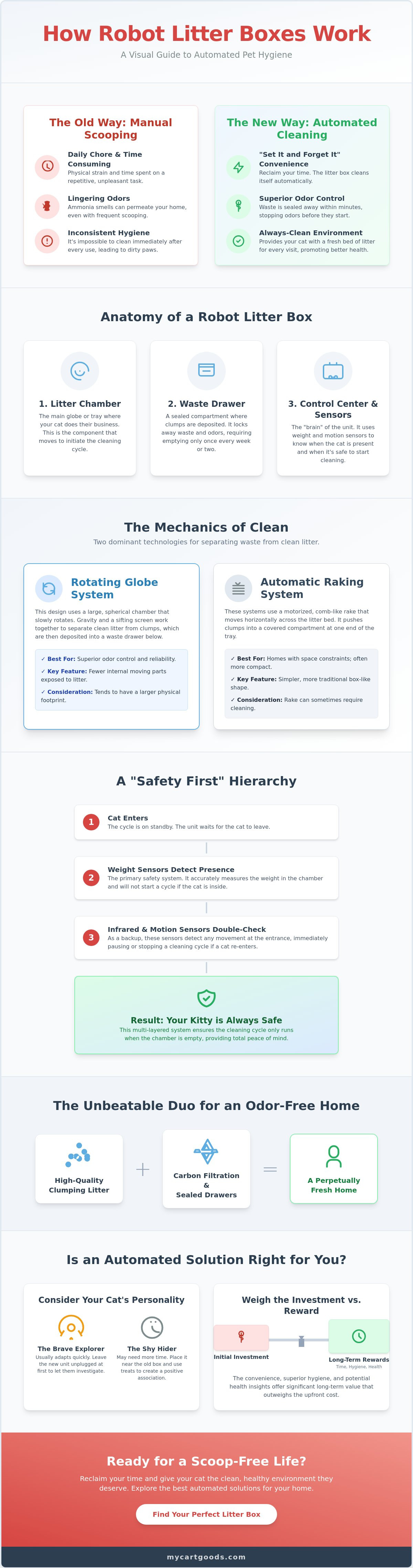
While designs vary, every reliable unit consists of three essential pillars. First is the Litter Chamber, the cozy globe or tray where your kitty feels safe and comfortable. Second is the Waste Drawer, a tightly sealed compartment that traps odors and bacteria away from your living space. Finally, the Control Center acts as the "brain" of the operation. It coordinates precise timing and safety checks to ensure the cleaning cycle only begins when your cat is safely elsewhere. 🐾
Why Traditional Scooping is Becoming Obsolete
Manual scooping is inconsistent and often messy. Robots offer a level of consistency that humans just can't match because they clean minutes after use. This prevents ammonia smells from ever taking root in your carpets or furniture. Hygiene is another massive win. You'll deal with significantly less dust and enjoy zero contact with waste. Perhaps most exciting is the health monitoring aspect. Many modern units track how often your cat visits, giving you a heads-up on potential health issues before they become emergencies. It's about more than just convenience; it's about a higher standard of care for your best friend.
By investing in a Self Cleaning Cat Litter Box, you aren't just buying a gadget; you're reclaiming your time and prioritizing your pet's well-being. It's a forward-thinking solution that ensures your fur baby is happy and your home stays fresh, even when you're busy at work or enjoying a weekend away.
The Mechanics of Clean: Raking vs. Rotating Systems
Understanding how do robot litter boxes work requires a peek under the hood at the two dominant engineering paths available today. While every brand promises a scoop-free life, the mechanical journey to reach that goal varies significantly between models. Modern robotic litter box technology generally follows one of two designs: the rotating globe or the automatic rake. Each path offers unique benefits for your home's footprint, noise levels, and your cat's personal comfort.
A critical feature shared by both systems is the "wait time" setting. This delay ensures the litter has enough time to form a solid clump before the machine starts its cycle. If the cycle begins too early, the waste might break apart, leading to a messy chamber and lingering smells. Most high-end units allow you to customize this delay, usually ranging from 3 to 15 minutes, to match the specific clumping speed of your favorite litter. This patience is what keeps the "clean" in self-cleaning.
Rotating Globe Technology (Centrifugal Sifting)
This method uses a large, spherical chamber that slowly rotates to separate clean litter from waste. As the globe turns, gravity pulls the litter through a sifting screen. The clean granules pass through while the clumps are diverted into a hidden waste drawer. Many enthusiasts prefer this style for its superior odor control and reliability. Since the entire chamber moves, there are fewer small moving parts inside the litter area that could potentially get stuck or clogged. These units often have a larger footprint, so they're best suited for homes with a dedicated "cat corner." 🐾
Automatic Raking Systems
Raking systems utilize a horizontal movement where a comb-like metal or plastic rake travels across a rectangular bed of litter. This rake pushes clumps into a covered trap at one end of the box. This design is ideal for pet parents who prefer a box that fits more easily into traditional spaces or under furniture. It's a sleek, space-saving solution that feels familiar to most cats. To keep these systems running smoothly, you'll need a high-quality clumping litter. This prevents the rake from "clogging" or dragging smaller debris back through the clean sections. 🐾
Maintenance for these machines is surprisingly straightforward. Rotating globes typically require a deep soak of the plastic chamber every few months, while raking systems need the tracks wiped down to prevent dust buildup. If you're ready to upgrade your home harmony, exploring a Self Cleaning Cat Litter Box can transform your daily routine from a chore into a joy.
Smart Sensors and Safety: How Robots Protect Your Precious Kitty
The thought of your precious fur baby being inside a moving machine is enough to make any pet parent pause. It's the number one fear we hear: "Will the machine start while my cat is still inside?" We're here to tell you that modern technology has turned these devices into vigilant guardians. To truly understand how do robot litter boxes work safely, you have to look at the "Safety First" hierarchy that engineers have perfected. These machines don't just clean; they watch, feel, and listen to ensure your kitty is always out of harm's way before a single gear turns. 🐾
Most high-quality units use a multi-layered approach to protection. This includes weight-sensitive bases, infrared light beams, and sophisticated pinch-protection sensors. This isn't just about stopping a cycle; it's about preventing it from ever starting if the conditions aren't perfect. The robot essentially learns your cat's weight, which allows it to distinguish between different pets in a multi-cat household. This data doesn't just keep them safe; it also helps you track their health by monitoring sudden weight changes or unusual bathroom frequency. It's a celebratory shift toward proactive pet parenting that keeps your home harmonious and your mind at ease.
Weight and Pressure Sensors
The "Cat-In" detection system is the first line of defense for feline safety. High-precision sensors in the base measure even the smallest changes in grams to detect when a cat has entered the chamber. These sensors are incredibly sensitive and can pick up the presence of a tiny kitten or a large adult cat with equal accuracy. These pressure-sensitive pads ensure the motor cannot engage as long as the base detects any weight above a very low threshold. It's a simple, reliable mechanical fail-safe that provides immense peace of mind for every pet parent. 🐾
Infrared and Motion Detection
Beyond weight, many robots use electronic "curtains" of infrared light across the entrance to detect movement. If a curious paw or a fluffy tail breaks this beam, the machine pauses its cycle instantly. This is combined with pinch-protection tech, which ensures there are no gaps where a limb could get trapped during the rotation process. If the machine feels any resistance, the globe reverses immediately to clear the path. Finally, the "Wait Timer" logic adds another layer of security. By waiting 3 to 15 minutes after your cat leaves, the robot ensures your kitty is long gone before the cleaning begins, allowing them to go about their day in total comfort.
When you choose a Self Cleaning Cat Litter Box, you're investing in this sophisticated safety net. It's about creating a space where your fur baby feels pampered and protected, while you enjoy a home that stays fresh without the constant worry of manual monitoring. 🐾
The Role of Specialized Litter and Odor Control Technology
While the mechanical gears and smart sensors provide the brawn, the litter you choose is the brains of the operation. To truly grasp how do robot litter boxes work at peak performance, you have to understand the "Science of the Clump." A robot is only as effective as the litter inside it; without a high-quality clumping medium, the sifting process can't separate waste from clean granules. This hard-clumping action is a non-negotiable requirement for robotic success because it ensures that waste stays together during the rotation or raking cycle, preventing messy smears on the interior of your fur baby's sanctuary. 🐾
Modern units go far beyond simple sifting to keep your home smelling like a fresh breeze. They utilize sealed waste drawers that create a vacuum-like effect, effectively trapping ammonia smells before they can escape into your living room. Many high-end models have also introduced UV light technology as a modern defense. This invisible light works silently between cycles to kill bacteria and viruses, ensuring the environment remains hygienic for your kitty's sensitive paws. It's a celebratory level of cleanliness that traditional boxes simply cannot match.
Choosing the Right Litter for Your Robot
Standard clay clumping litter remains the gold standard for sifting efficiency. Its weight and texture allow it to flow easily through sifting screens while forming rock-solid clumps. You can often use alternative litters like corn, walnut, or even certain crystals, but they must be "hard-clumping" and have a small enough granule size to pass through the machine's filter. Be careful with the "sweet spot" fill line; overfilling the chamber is a common mistake that can jam the mechanism or cause the motor to strain. Keeping the litter at the designated level ensures a smooth, whisper-quiet cycle every time. 🐾
Odor Neutralization Beyond the Drawer
The fight against odors doesn't stop at the waste bin. Most robots feature activated carbon filters that act as a final checkpoint, catching airborne particles and neutralizing smells before they leave the unit. High-quality sealed gaskets around the drawer entrance provide an extra layer of security, keeping the "stink" firmly inside the bin. For a deeper look at which models offer the best scent-shielding features, check out our guide on the self cleaning cat litter box market for 2026. This combination of physical barriers and chemical filtration is what allows you to host guests without a second thought about the litter box.
If you're ready to say goodbye to the scoop and hello to a perpetually fresh home, explore our premium Self Cleaning Cat Litter Box collection today. Your fur baby deserves a clean bed of litter for every visit, and you deserve a home that feels as fresh as it looks. 🐾
Is an Automated Solution the Right Move for Your Home Harmony?
Deciding to upgrade your home with a smart device is a big step toward true domestic bliss. When pet parents ask how do robot litter boxes work in a real-life setting, they're usually wondering if their specific cat will actually embrace the change. It's about finding that perfect balance between high-tech convenience and your fur baby's unique comfort. Every home has its own rhythm, and adding an automated station can harmonize your daily routine by removing the most tedious chore on your list. 🐾
Evaluating your cat's personality is the first step in this exciting journey. Is your feline friend a "brave explorer" who investigates every new delivery, or a "shy hider" who needs a little extra time to adjust to change? Most cats adapt beautifully to a Self Cleaning Cat Litter Box, but understanding their temperament helps you set the stage for a happy transition. You should also consider your space; these units require a dedicated nook near a power outlet where your kitty feels safe and unobserved. At MyCartGoods.com, we act as your discerning expert, performing the intensive labor of selection so you only choose from the most reliable, pet-approved solutions on the market. 🐾
Transitioning Your Fur Baby to Their New Robot
Success starts with the "Old Box Nearby" trick. Place the new robot in the same room as the traditional tray, but keep the old one slightly less clean than usual. This makes the fresh, pristine bed of litter in the robot look much more inviting! Use high-value treats and plenty of positive reinforcement to associate the new machine with happiness and rewards. For the first few days, leave the unit completely "OFF" while your cat gets used to stepping inside. This prevents any sudden movements or sounds from startling a timid kitty during those first brave explorations. It's all about building confidence through familiarity and affection.
Maintenance and Long-Term Care
Keeping your robot in peak condition is surprisingly simple and rewarding. While the machine handles the daily sifting, you'll want to perform a deep clean of the globe or chamber every few months with a full wash. Modern app connectivity makes this even easier, allowing you to use your smartphone to monitor litter levels and waste bin capacity from anywhere. This technology turns a simple utility into a proactive wellness tool for your family. For more tech-forward care tips, feel free to explore our ultimate guide to modern pet supplies to see how automation can truly enhance your pet's life. 🐾
Embrace a Fresher Future with Your Fur Baby
Choosing to upgrade your pet care routine is a beautiful way to prioritize both your home's harmony and your kitty's happiness. We've explored the clever mechanics of rotating globes and the vigilant protection of smart sensors, giving you a clear understanding of how do robot litter boxes work to maintain a perpetually clean sanctuary. These sophisticated systems don't just eliminate scooping; they use advanced sifting and odor-trapping technology to ensure your living space stays fresh while providing your cat with the hygienic environment they deserve. 🐾
At MyCartGoods.com, we're dedicated to your fur baby's well-being and perform the intensive research so you don't have to. Our expertly curated pet tech is designed specifically to foster domestic harmony and joy. Discover our hand-picked collection of Self-Cleaning Litter Boxes! Here is to more quality time with your whiskered companion and a home that feels wonderfully fresh every single day. 🐾
Frequently Asked Questions
Are robot litter boxes safe for small kittens?
Most robot boxes are safe for kittens once they weigh at least 3 pounds. If your tiny fur baby is smaller than that, you should keep the unit unplugged and scoop manually to ensure their safety. Once they grow into their big-cat paws, the weight sensors will accurately detect them and allow the automatic cycles to begin safely. This prevents any accidental movement while your precious kitty is still inside. 🐾
Do I need to buy special trash bags for the waste drawer?
You don't always need specialized bags for your waste drawer. While some manufacturers offer custom-fit liners, many models are designed to work perfectly with standard small trash bags or grocery bags you already have at home. This flexibility makes maintaining your home harmony even easier and more cost-effective over time. It's one of the many ways these machines simplify your daily pet care routine.
How often do I need to completely change the litter inside?
We recommend a complete litter change every one to two months for a single-cat household. Even though the sifting process is incredibly efficient, tiny particles can break down over time and lose their odor-fighting power. To keep your home smelling fresh, a deep clean of the chamber and a fresh batch of litter will keep your kitty feeling pampered and comfortable in their space. 🐾
What happens if there is a power outage while the robot is cycling?
If the power goes out during a cycle, the machine will simply stop in its current position. Most modern units are designed to perform a reset or finish their rotation once the electricity returns. If you live in an area with frequent outages, you might consider a model with a battery backup. This ensures your fur baby's hygiene station stays operational and clean even when the lights go out.
Are automatic litter boxes loud enough to scare my cat?
Modern automatic litter boxes are remarkably quiet and typically produce a low hum that is less than 45 decibels. While the sound won't bother most humans, a very shy cat might need a few days to get used to the new movement in their space. Pairing the sound with treats helps your kitty associate the noise with positive experiences and celebratory rewards for being so brave. 🐾
Can I use a robot litter box for multiple cats?
Yes, these devices are actually a total game-changer for multi-cat families! Because the robot cleans within minutes of every use, each cat always finds a fresh, pristine bed of litter for their visit. This prevents the territorial issues that often arise with traditional boxes. It's a wonderful way to ensure all your fur babies stay happy and content without you doing extra work.
What should I do if my cat refuses to use the new robot box?
If your cat is hesitant, try the "Old Box Nearby" trick we mentioned earlier in our guide. Stop scooping the old box so the clean, inviting robot looks like a much better option for their sensitive paws. You can also place a small amount of their old litter into the new chamber. This provides a familiar scent that helps them feel safe and secure during the transition.
How much electricity does a robot litter box typically use in 2026?
A standard robot litter box uses very little electricity, typically consuming only about 5 to 10 watts during a cleaning cycle. In 2026, energy-efficient motors mean these devices cost only a few pennies a day to operate. It's a tiny investment when you consider how do robot litter boxes work to save you hours of labor and keep your home smelling fresh. 🐾