

What if that sleek, bubbling fountain you bought to pamper your whiskered family is actually hiding a microscopic "biofilm" city right inside the filter? We all want our fur babies to enjoy the sensory joy of fresh, running water, yet seeing a cloudy tint or feeling a slimy residue can be genuinely heart-wrenching. Learning how to clean a pet water fountain filter is the essential skill that transforms a struggling device into a sparkling oasis of health. It is the difference between a fountain that merely moves water and one that provides a truly sterile, life-giving resource.
You likely already know that proper hydration is the golden key to avoiding those scary urinary tract issues that can lead to veterinary bills ranging from $300 to $1,500. This guide will help you master the art of filter maintenance to keep your pet’s water crystal clear and their fountain motor humming happily for years. We will walk through the two-part harmony of foam and carbon care, safe mineral removal techniques using simple kitchen staples, and the latest 2026 maintenance trends for smart, multi-stage systems.
Key Takeaways
- Understand the vital roles of carbon and foam layers to maintain a high-quality hydration experience for your four-legged family members.
- Discover the specific steps for how to clean a pet water fountain filter using a pressure rinse to remove surface debris safely and effectively.
- Recognize the critical signs of filter exhaustion to prevent motor strain; this simple knowledge keeps your fountain running perfectly for years.
- Create a pro-level maintenance schedule that balances quick bi-weekly checks with comprehensive deep-cleans for total domestic harmony.
- Learn why the placement of your automatic pet water fountain is just as important as the filter itself for keeping water crisp and clean.
Understanding Why Your Pet’s Water Fountain Filter Needs Regular Love
Your fur baby’s automatic pet water fountain is a little slice of domestic harmony that brings the joy of a bubbling brook right into your living room. While it looks effortless, there's a hard-working filtration system beneath the surface that acts as a silent guardian for your pet’s health. These filters perform a dual role: they act as a physical net to catch hair, dust, and stray kibble while simultaneously using chemical magic to neutralize the sharp odors of tap water chlorine. When you master how to clean a pet water fountain filter, you aren't just tidying up; you're ensuring every sip your pet takes is as crisp and inviting as a mountain spring.
Neglecting this small component can lead to a buildup of "biofilm," that slippery, translucent layer of bacteria that often coats the filter and basin. This isn't just a cosmetic issue. Biofilm can harbor pathogens that lead to gastrointestinal upset or painful feline acne, which often appears as small black bumps on a cat's chin. By keeping the filter pristine, you provide sterile hydration that supports kidney function and helps prevent urinary tract issues that can be incredibly stressful for both you and your companion. Understanding how water filters work reveals that they have a finite capacity to hold onto impurities, and once they're saturated, they can no longer protect your pet's wellness.
The Connection Between Filter Health and Pump Longevity
Think of your fountain’s filter as a shield for the high-tech motor inside. When a filter becomes clogged with debris or slime, it creates significant back-pressure on the impeller. This forces the pump to work twice as hard to move the same amount of water, which leads to overheating and eventual motor burnout. If you start to hear a low grinding or rattling noise, it's often a sign that the motor is struggling against a blocked filter. Learning how to clean a pet water fountain filter regularly prevents this mechanical strain, acting as an insurance policy for your investment and keeping the water flowing smoothly.
Hydration and Your Fur Baby’s Wellness
Pets have a natural, ancestral instinct to seek out moving water because it's usually safer than stagnant puddles. A clean, well-maintained filter ensures the water remains oxygenated and tastes delicious, which directly encourages your pet to drink more throughout the day. Biofilm is a complex, sticky structure of bacteria and microorganisms that attaches to surfaces and requires physical agitation to remove. Regular maintenance breaks up these colonies before they can affect the water’s flavor or your pet’s delicate system, ensuring that every drop remains as pure as your love for them.
The Anatomy of a Filter: Carbon, Foam, and Mesh Explained
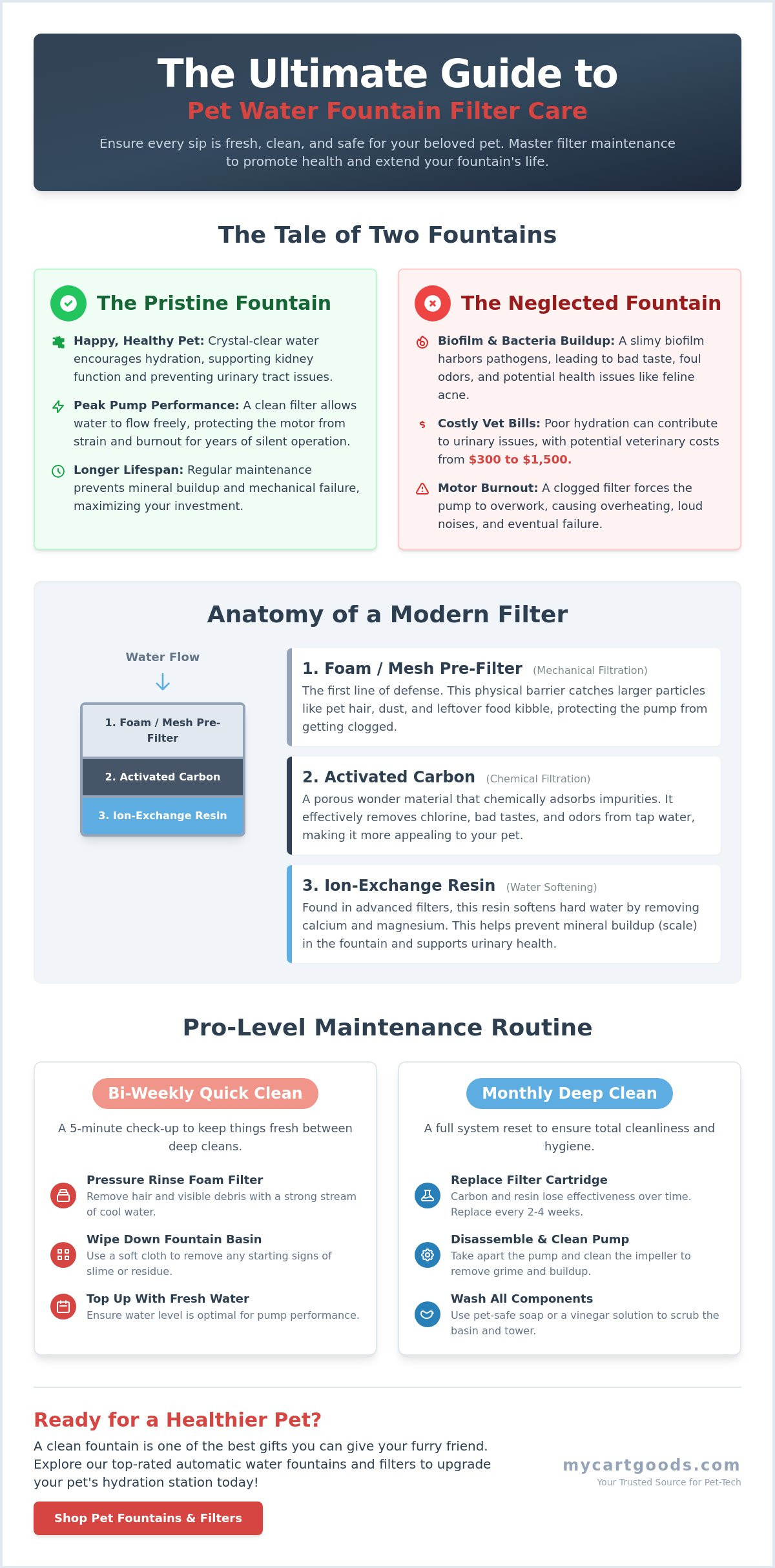
To truly provide that sparkling hydration experience, you need to understand that your filter is a high-tech, multi-stage defense system. It isn't just a simple sponge; it's a carefully engineered combination of mechanical and chemical filtration designed to keep your fur baby's water fresh and delicious. Mechanical filtration is the physical act of straining out hair and debris, while chemical filtration uses advanced materials to pull out microscopic toxins. Many modern 2026 models also incorporate ion-exchange resin, which softens hard water by removing excess minerals, providing a gentler experience for your pet’s kidneys and preventing scale buildup within the device.
The first line of defense is usually a mesh or foam pre-filter. This layer catches the "big stuff" like floating fur, dust, and stray bits of kibble before they can ever reach the delicate pump. By stopping these particles early, the foam prevents the motor from getting jammed or overheated. If you're using a high-quality automatic pet water fountain, you'll see how these layers work in tandem to keep the water moving beautifully and silently. Knowing the difference between these components is the first step in mastering how to clean a pet water fountain filter effectively.
How Activated Carbon Works (And Why You Can’t Scrub It)
Activated carbon is the porous hero of the fountain world. It's packed with millions of microscopic holes that act like a magnet for chlorine, heavy metals, and unpleasant odors. Because these pores are so tiny, they are easily clogged by soap or detergents. Never use cleaning agents on a carbon filter; the chemicals will fill the pores, rendering the filter useless and potentially leaching soap into your pet's water. You'll know it has reached its saturation point when the water starts to smell slightly metallic or your pet suddenly loses interest in their favorite water source. When learning how to clean a pet water fountain filter, remember that carbon only needs a thorough, gentle rinse with cool water to remove loose dust.
The Role of the Foam Pre-Filter
The foam layer is undoubtedly your pump’s best friend. It acts as a sacrificial barrier, trapping debris that would otherwise tangle the impeller and cause that dreaded grinding noise. Watch out for "kibble rot," which happens when food particles get trapped in the foam and start to break down, creating a murky environment for bacteria. To keep things fresh, you can gently squeeze the foam under running water to dislodge debris. If pet hair is stubbornly woven into the mesh, a soft-bristled brush can help pull it free without tearing the material. This physical cleaning keeps the mechanical layer functional until it finally loses its springiness and requires a full replacement.
To Clean or to Replace? Navigating the Filter Maintenance Debate
Every dedicated pet parent eventually faces the same puzzle: is it better for my budget and my fur baby's health to scrub that filter one more time or just toss it? While we all love the idea of domestic harmony and sustainable living, your filter eventually reaches a point where it can no longer protect your companion. Knowing how to clean a pet water fountain filter is a brilliant way to extend its life, but every filter has a hard deadline. Most manufacturers and veterinary sources recommend a full replacement of carbon filters every two to four weeks to ensure the water stays sparkling fresh and free from invisible contaminants.
There is a common myth circulating in some pet forums that filters are simply "bacteria traps" that do more harm than good. This simply isn't true if you follow a consistent routine. A filter only becomes a liability when it's neglected. When you see a noticeable drop in water flow or catch a whiff of a metallic odor, your filter is telling you it has reached its limit. Balancing the economic benefit of cleaning with the hygienic necessity of replacement is part of being a discerning pet expert. You're not just buying a component; you're investing in your pet's long-term kidney health and daily happiness.
Cleaning the Foam vs. Replacing the Carbon
The mechanical foam pre-filter is surprisingly resilient. Because its job is to catch physical debris like hair and dust, it can often be rinsed, squeezed, and reused up to three times before it loses its structural integrity. However, the activated carbon is a different story. Once carbon pores are filled, no amount of rinsing can restore their chemical absorption. This "hard expiration" is why carbon filters must be replaced regularly while the foam can be maintained a bit longer.
| Maintenance Factor | Foam Pre-Filter | Activated Carbon Filter |
|---|---|---|
| Cleaning Method | Physical rinse and squeeze | Gentle cool water rinse only |
| Reuse Potential | Up to 3 times | Zero (Replace only) |
| Replacement Sign | Tearing or permanent staining | Odors or 4-week mark |
The Risks of Over-Cleaning
In our enthusiasm to provide a sterile environment, it's easy to get a bit too aggressive with the scrubbing brush. Excessive friction can tear the delicate mesh housing of the filter, allowing carbon granules to leak into the water basin. Even more dangerous is the temptation to use household soaps or bleach. Because filter materials are incredibly porous, they soak up these chemicals and can slowly release them back into your pet's drinking water. When you're learning how to clean a pet water fountain filter, the most important rule is to stick to plain, cool water and gentle physical agitation to keep your fur baby safe and hydrated.
Step-by-Step: How to Safely Clean Your Pet Water Fountain Filter
Before you begin this rewarding ritual of care, safety always comes first for your beloved companion. Start by unplugging your automatic pet water fountain and carefully disassembling the housing to access the internal filtration chamber. This is the perfect moment to check the pump for any stray hairs that might have bypassed the pre-filter. When you are mastering how to clean a pet water fountain filter, the "pressure rinse" is your most effective technique. Use cool, high-pressure running water to blast away surface debris and stray kibble bits from the mesh before moving on to the more delicate layers.
Handling the foam pre-filter requires a gentle touch to maintain its structural integrity over time. Submerge the foam in cool water and give it several firm, rhythmic squeezes to flush out trapped biological matter and slime. If you notice hard water scale or white mineral deposits on the fountain housing itself, a simple 50/50 solution of white vinegar and water is a pet-safe miracle worker. Soak the plastic or ceramic parts for about fifteen minutes to dissolve the buildup, then follow with a thorough clear water rinse to ensure no vinegary scent remains to discourage your pet from drinking.
The "No-Soap" Rule for Filter Media
It is vital to remember that while fragrance-free soap is excellent for scrubbing the fountain’s bowl, it should never touch the filter media itself. Porous materials like foam and carbon act like sponges for chemical residues, which can lead to digestive upset or a complete refusal to drink. If you encounter stubborn slime that water alone won't budge, the 50/50 water and white vinegar solution is your safest alternative. This natural mixture breaks down the bacteria's sticky colonies without leaving behind harmful synthetic scents that could irritate your fur baby’s sensitive nose.
Rinsing and Re-Priming the Carbon
A critical step that many owners miss is the "priming" process for a new or rinsed carbon filter. You must rinse the filter under a cold tap until the water runs completely clear, which removes any harmless but unsightly carbon dust. Once rinsed, let the filter sit in a clean bowl of water for a full 10-minute soak. This ensures the internal media is fully saturated, preventing air pockets that can cause the pump to sputter or make noise. If you want to ensure your pet always has access to the freshest water possible, consider keeping a backup automatic pet water fountain filter on hand for those days when a deep clean reveals it is time for a fresh start.
Keeping Your Fur Baby Hydrated with a Pro-Level Maintenance Routine
The feeling of seeing your pet enjoy a sparkling, bubbling stream of water is pure domestic bliss. Once you have mastered how to clean a pet water fountain filter, the next step is establishing a rhythm that keeps that freshness alive every single day. A pro-level routine isn't about constant scrubbing; it's about smart, consistent checks. Aim for a full fountain deep-clean once a week, where you change the water and wipe down the basin. Every two weeks, perform a more intensive check by disassembling the pump to clear out any hidden debris that might have slipped past the filtration layers. This consistent care ensures your fountain remains a sanctuary of health rather than a chore.
Adopting a "Freshness First" mindset also means thinking about where your fountain lives. While it's convenient to place water right next to the kibble, veterinarians actually recommend keeping the automatic pet water fountain at least three feet away from food bowls. This distance prevents stray food particles from falling into the water, which significantly reduces the risk of "kibble rot" and keeps your filter working efficiently for longer. If you notice the plastic becoming scratched or the motor remaining loud even after a thorough cleaning, it might be time to upgrade to a modern 2026 model featuring advanced UVC sterilization or wireless pump technology.
Pro-Tips for Multi-Pet Households
If your home is a bustling hub of multiple furry friends, your maintenance schedule needs a "heavy-use" adjustment. More pets mean more fur, saliva, and dander entering the system, which can saturate a filter much faster than the standard four-week estimate. Keeping a stash of backup filters is one of those modern pet supplies essentials that prevents a weekend maintenance emergency. To create a truly seamless care experience, many pet parents find that a clean, high-tech fountain perfectly complements an automatic cat feeder, ensuring both nutrition and hydration are handled with the same level of precision and love. Understanding how to clean a pet water fountain filter in a busy household ensures every pet, from the alpha dog to the shyest kitten, gets the sterile hydration they deserve.
The MyCartGoods Commitment to Quality
At MyCartGoods, we view animals as family, and we believe every family deserves a home that vibrates with harmony and health. We perform the intensive labor of selection so you don't have to, curating only the most reliable, high-tech hydration solutions that prioritize safety and convenience. Our promise is to provide functional, beautiful accessories that enhance the sensory joy of pet ownership while making daily care frictionless. If you're ready to elevate your fur baby's wellness, explore our collection of premium fountains and precision-engineered replacement filters today. Let's work together to keep those tails wagging and those water bowls sparkling fresh for years to come.
Sparkling Water and Wagging Tails: Your Path to Perfect Hydration
You've now mastered the essential art of how to clean a pet water fountain filter, ensuring your fur baby enjoys the crisp, oxygenated water they instinctively crave. By balancing bi-weekly foam rinses with a strict four-week carbon replacement schedule, you protect both your pet's kidney health and your fountain’s high-tech motor. It's a simple routine that yields massive rewards in animal contentment and domestic harmony. A sterile hydration station is truly the heart of a happy, healthy home.
At MyCartGoods, we're just as pet-obsessed as you are. Our team has curated a selection of functional, modern designs that fit perfectly into any stylish pet home. We offer fast shipping on all essential maintenance supplies so you don't have to wait to pamper your companion. Shop Our Premium Automatic Pet Water Fountains & Filters to experience the high-quality solutions your family deserves. Your pet’s next refreshing sip is just a click away, and we can't wait to help you keep their water sparkling fresh for years to come.
Frequently Asked Questions
Can I wash my pet fountain filter with dish soap?
No, you should never use dish soap on the actual filter media. Because carbon and foam are highly porous, they absorb soap residue that is nearly impossible to rinse out completely. This can lead to your pet experiencing digestive upset or refusing to drink due to the chemical taste. Use soap only for the plastic or ceramic bowl, and stick to plain water for the filter.
How often should I actually clean the filter vs. replacing it?
You should rinse the filter weekly during your deep clean and replace it entirely every two to four weeks. While foam pre-filters can sometimes be washed and reused up to three times, the activated carbon has a hard expiration once its pores are filled. Learning how to clean a pet water fountain filter through regular rinsing helps maintain flow, but replacement is the only way to ensure chemical filtration remains effective.
What is the black dust coming out of my new pet fountain filter?
The black dust is simply harmless activated carbon particles that shifted during shipping. To prevent this from entering your pet's water, always rinse a new filter under cold running water for about two minutes until the stream runs perfectly clear. This "priming" step ensures your fur baby’s water stays crystal clear and inviting from the very first bubble.
Can I use vinegar to clean the slime off the filter?
Vinegar is a miracle worker for the fountain housing, but it shouldn't be used to "clean" a slimy carbon filter. If the filter media itself has become slimy, it is a sign that bacteria colonies have moved in and the filter needs to be replaced immediately. You can use a 50/50 water and white vinegar solution to scrub the basin and pump parts to prevent that slime from returning.
My fountain is making a loud noise even after I cleaned the filter—what do I do?
A loud grinding or humming noise usually indicates that debris or pet hair is trapped inside the pump's impeller. Even if you know how to clean a pet water fountain filter, you must also disassemble the small motor and clean the internal magnet. Use a small brush or a cotton swab to remove any buildup that is forcing the motor to work harder and making that distressing sound.
Is it okay to run the pet fountain without a filter?
Running the fountain without a filter is not recommended because it leaves the pump vulnerable to damage. Without the foam pre-filter, hair and food particles will flow directly into the motor, leading to a quick burnout. Additionally, your pet will lose the benefits of sterile, odor-free water, which can discourage them from staying properly hydrated throughout the day.
How do I get rid of the pink slime (Serratia marcescens) on the filter housing?
Pink slime is an airborne bacteria that thrives in moist environments, and you can eliminate it with a thorough vinegar soak. Disassemble the fountain and soak the affected plastic or ceramic parts in a mixture of one part vinegar to three parts water for fifteen minutes. Scrub the area with a soft brush and rinse well to keep your pet's hydration station sparkling and safe.
Do I need to use distilled water in my pet fountain to save the filter?
While distilled water can prevent hard water scale and extend the life of your fountain's housing, it isn't strictly necessary. If you choose to use tap water, just be more diligent about your weekly maintenance and bi-weekly filter checks. Using filtered water from a pitcher can also be a great middle-ground solution to keep your fur baby's water tasting delicious without the extra cost of distilled jugs.