

What if your most dreaded daily chore disappeared forever without causing a single moment of stress for your favorite feline? We all love our cats like family, but let's be honest; nobody enjoys the dusty, smelly ritual of scooping the litter box every single morning. You've likely eyed those high-tech, AI-enabled models that are revolutionizing pet care in 2026, yet the fear of your sensitive kitty rejecting a pricey new machine keeps you stuck with the scoop. Learning how to introduce a cat to a self cleaning litter box is the secret to unlocking a home that smells as fresh as a spring breeze while keeping your fur baby feeling safe and pampered.
You don't have to choose between modern convenience and your pet's emotional well-being. Discover a stress-free, step-by-step journey to help your cat embrace the convenience of an automatic litter box while maintaining their comfort and trust. We'll walk through a gentle roadmap designed to help your companion transition at their own pace. From smart placement strategies to positive reinforcement, this guide ensures your home stays odor-free and your cat remains a happy, confident explorer of their new, whisper-quiet throne.
Key Takeaways
- Understand why your kitty might view their new high-tech throne as a "spaceship" and how to bridge the sensory gap through patience and empathy.
- Start with a stress-free "stealth" phase by keeping the power cord unplugged and placing the unit right beside their current familiar setup.
- Discover the "dirty box" tactic and why running those first few cycles only when your cat is in another room is vital for building long-term trust.
- Master expert troubleshooting steps for handling high-anxiety pets or curious kitties who might want to guard or pounce on the new moving parts.
- Unlock a lifetime of domestic harmony by learning how to introduce a cat to a self cleaning litter box, ensuring a perpetually fresh home for your family.
Understanding the Sensory Shift: Why Cats Hesitate
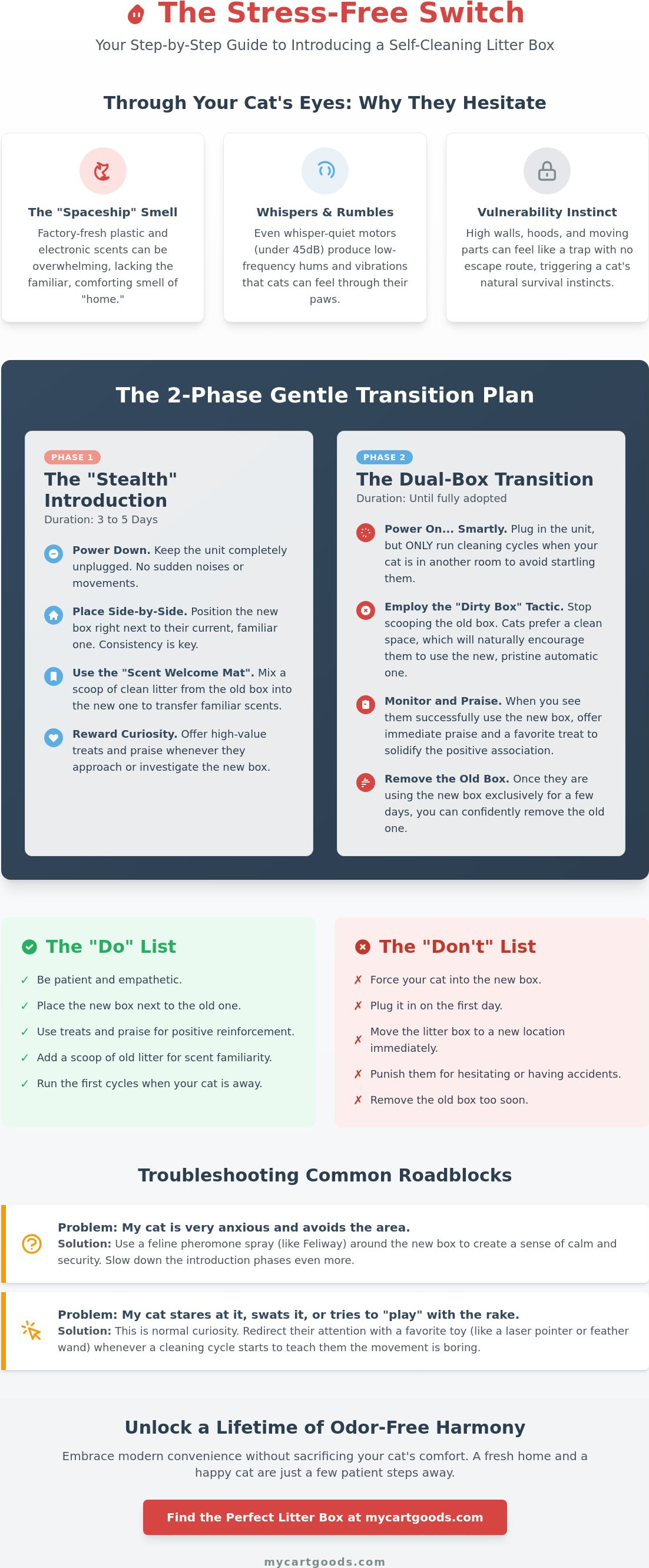
Our cats are the undisputed masters of their domain. They know every corner, every shadow, and every familiar scent in our homes. When we bring home a sleek, modern Self Cleaning Cat Litter Box, we see a miracle of automation that promises an end to daily chores. Our fur babies see something entirely different. To a cat, this new device is a giant, humming spaceship that smells like a factory and looks like nothing they have ever seen before. Understanding how to introduce a cat to a self cleaning litter box starts with looking through their eyes. Their hesitation isn't a sign of defiance; it's a deeply rooted survival instinct that keeps them safe.
The "new" smell is often the first hurdle. Factory-fresh plastic and electronic components carry a sterile, chemical scent that can be quite overwhelming for a feline's sensitive nose. Unlike their old, familiar box that smells like home, this new device feels anonymous. Vibration and motor noise also play a huge role in their caution. Even the most advanced 2026 models designed to operate at a whisper-quiet level under 45dB produce a low-frequency hum. While we might not notice it, cats can feel these mechanical vibrations through their sensitive paw pads, which can be startling for a creature that relies on stealth and silence.
The Role of Instinct in Litter Box Use
A cat is never more vulnerable than when they are using the bathroom. In the wild, this is a moment when they must be alert for potential threats. If a box has high walls, a hood, or moving parts, it can feel like a trap with no clear escape route. Traditional cat training principles emphasize that a cat needs to feel secure to maintain good habits. A perfectly clean, self-scrubbed box is wonderful for our noses, but for a kitty, it lacks the comforting scent markers that say "this is my safe space." To bridge this gap, you can try adding a small amount of clean litter from their old box to the new one, providing a familiar olfactory "welcome mat."
Decoding Your Cat’s Reaction
Watch your fur baby's body language closely during the first few days. Curiosity is a fantastic sign. If you see the "Stare and Swat," don't worry. This is normal investigative behavior as they try to determine if this new object is a friend or a foe. When you are learning how to introduce a cat to a self cleaning litter box, patience is your most valuable tool. You should never, under any circumstances, force your cat into the box. This creates a negative association that can take weeks to undo. Instead, let them explore the unpowered unit on their own terms, rewarding their bravery with treats and affectionate praise.
Phase One: The "Stealth" Introduction Strategy
Patience is your best friend when upgrading your pet care routine. You have unboxed your shiny new Self Cleaning Cat Litter Box, but don't reach for that power outlet just yet. Learning how to introduce a cat to a self cleaning litter box requires a gentle touch and a bit of feline psychology. For the first 3 to 5 days, keep the power cord completely unplugged. This allows your kitty to investigate the new furniture without the threat of sudden movement or mechanical noise. Place the unit directly next to their current box rather than tucked away in a new, unfamiliar room. Consistency helps your cat feel in control of their environment. If you move the bathroom location at the same time you change the hardware, you risk overwhelming their senses.
To establish a sense of ownership, try the "Old Litter Trick." Mix a scoop of clean litter from their old box into the new one to transfer familiar scents. This tells your cat that this new object is a designated bathroom spot. Understanding reasons for litter box aversion is vital because a box that feels "anonymous" or sterile is often a box that gets ignored. Rewarding proximity is also a powerful tool. Give your fur baby plenty of treats, praise, and extra scritches whenever they show interest in the new device. You want them to associate the presence of the machine with high-value rewards and affectionate attention.
Creating Positive Associations
We want your fur baby to view this new addition as a source of joy rather than a source of stress. Try placing high-value treats on the entry step or along the rim to encourage them to climb inside and explore. Pheromone sprays can also signal that the area is safe and secure for a sensitive nose. Engaging your kitty with interactive cat toys near the box can build their confidence and help them relax in its presence. Positive vibes create a happy home! When they feel playful and safe, they are much more likely to accept a change in their environment.
The "Off-Mode" Cleanliness Standard
While the unit is unpowered, you must manually scoop it to maintain the high hygiene standards your cat expects. Ensure the litter level matches their old preferences exactly. This stage is all about monitoring their entry and exit patterns without the distraction of noise or movement. Are they curious? Do they step inside without hesitation? By keeping things quiet and steady, you are mastering how to introduce a cat to a self cleaning litter box without the drama. If you're looking for the perfect tech to upgrade your home, our Self Cleaning Cat Litter Box from MyCartGoods.com is designed with feline comfort as the top priority.
Phase Two: The Dual-Box Transition and Power-On
Now that your kitty has spent a few days sniffing the unpowered unit, it's time to shift gears. This stage is where the magic happens; however, it requires a bit of tactical thinking. We want the new box to be the most attractive destination in the house. This means we have to let the old, traditional box become a little less inviting. By strategically managing both options, you create a natural path for your fur baby to choose the upgrade on their own terms. Mastering how to introduce a cat to a self cleaning litter box is all about making the right choice the easiest one for your pet.
- Keep both boxes available to prevent anxiety.
- Avoid moving the old box yet; keep the environment stable.
- Observe their preference without hovering or staring.
- Celebrate every brave step toward the new machine with low-key affection.
The Dirty Box Psychology
It sounds counterintuitive, but you should stop scooping the old litter box during this phase. Cats are incredibly fastidious creatures. If their old box is full of clumps while the new automatic unit remains pristine and fresh, their natural hygiene instinct will drive them toward the cleaner surface. Many common litter box problems arise because a box isn't cleaned frequently enough; we are simply using that preference to our advantage. Once you see your cat using the new box consistently for two or three days, you can finally retire the old one for good.
Managing the First Automatic Cycle
The moment you finally plug the unit in is a big milestone. To keep things stress-free, set the cleaning delay to the maximum setting, usually 15 or 20 minutes in most 2026 models. This ensures the machine won't start moving the second your cat hops out. For the very first cycle, try to run it manually while your fur baby is in another room. This lets the scent of "clean" fill the air without the sudden surprise of mechanical movement. If they happen to catch a glimpse and run away, don't worry. Simply offer a few treats and use a soothing voice to reassure them that everything is okay. Learning how to introduce a cat to a self cleaning litter box involves these small, patient victories that lead to a lifetime of domestic harmony.
Troubleshooting Common Roadblocks and Refusals
Even with a perfectly executed transition, some cats might still feel a bit hesitant about their new high-tech throne. It is completely normal for your fur baby to experience a few "growing pains" as they adjust to a new routine. If you find your companion eyeing the unit with suspicion or, worse, avoiding it altogether, don't lose heart. Understanding how to introduce a cat to a self cleaning litter box means being prepared for these little detours on the road to domestic harmony. Whether your companion is a bold adventurer or a cautious wallflower, there is always a solution to help them feel safe and pampered.
Some curious kitties might "guard" the box or even try to pounce on the moving parts during a cleaning cycle. This investigative behavior is often a sign of high intelligence, but it can interfere with the machine's sensors. If your cat is a "rake-chaser," try to distract them with a high-value treat or a favorite toy in another room whenever the cycle begins. For senior cats or tiny kittens, the physical height of the entrance can be a literal hurdle. Adding a sturdy pet step or a small ramp can make the world of difference for a cat with stiff joints or short legs, ensuring they can enter and exit with total confidence. If you want a unit designed with safety and accessibility in mind, our Self Cleaning Cat Litter Box from MyCartGoods.com is the perfect choice for cats of all ages.
Dealing with Noise Sensitivity
While most 2026 models are designed to be whisper-quiet, a sensitive feline might still find the low-frequency hum of the motor a bit unsettling. You can help muffle the sound by placing a thick, absorbent mat under the unit to reduce floor vibrations. Desensitization is a powerful tool here. Offer your kitty their favorite wet food or a special treat near the box while it is running a manual cycle. Over time, they will begin to associate that soft mechanical purr with something delicious rather than something scary. This is a core part of how to introduce a cat to a self cleaning litter box for those extra-cautious souls.
Litter Type and Texture Issues
Sometimes the problem isn't the machine at all; it's what you've put inside it. Most automatic systems require high-quality clay clumping litter to function correctly with their sensors and raking mechanisms. If your cat is used to pine, paper, or crystals, a sudden switch can cause a total sensory overhaul that leads to box aversion. Try mixing their old litter with the new clay version in a 50/50 blend for the first week. This allows their sensitive paw pads to adjust to the new texture gradually while the machine's tech stays happy and efficient. Avoid dusty brands that can create clouds during the cleaning cycle, as this can irritate your cat's nose and eyes, making them wary of returning.
Embracing the Future of Clean: Life After the Scoop
The result of your patience is pure domestic bliss. Once you've mastered how to introduce a cat to a self cleaning litter box, your daily routine shifts from a messy chore to a celebration of your bond with your pet. Imagine walking into your home and smelling only the crisp scent of fresh air rather than a lingering litter box. This transition isn't just about convenience; it's about elevating your lifestyle into a modern pet supplies ecosystem where every need is anticipated and met with technology. You finally have more time for the things that matter, like afternoon snuggles and energetic play sessions.
Domestic stress often melts away when the "whose turn is it to scoop?" argument disappears forever. By automating this essential task, you ensure your kitty always has a pristine surface, which drastically reduces the risk of behavioral accidents. A consistently clean environment is a fundamental pillar of feline happiness. When your home feels this harmonious, your fur baby feels it too, leading to a more relaxed and confident pet. It's a win for everyone in the family.
Health Monitoring Through Technology
In 2026, the best automated solutions do more than just clean; they protect. Many of the latest AI-enabled models now offer app-based tracking that monitors how often your cat visits the box. This data is a game-changer for early detection of health issues. A sudden increase in visits can be an early warning sign of a UTI or digestive distress, allowing you to seek veterinary care before a small problem becomes a major crisis. The peace of mind that comes with this level of automated monitoring is truly priceless for any dedicated pet parent. You aren't just buying a box; you're investing in a health-tracking assistant.
The MyCartGoods.com Promise
At MyCartGoods.com, we understand that your animals are family members who deserve the very best. Selecting the right self cleaning cat litter box is a commitment to functional, high-tech beauty that enhances your home's aesthetic while prioritizing your cat's comfort. We perform the intensive labor of selection so you don't have to, bringing you only the most reliable and whisper-quiet solutions on the market. Join our community of happy, scoop-free enthusiasts and experience the sensory joy of a perfectly clean home. We're here to support you every step of the way as you discover how to introduce a cat to a self cleaning litter box and transform your daily pet care into a seamless, heart-centered experience.
Step Into a Fresher, Happier Future Together
Transitioning your favorite feline to high-tech care is a beautiful journey of trust and patience. By starting with an unpowered stealth phase and using the dirty box tactic to encourage exploration, you've set the stage for long-term success. Mastering how to introduce a cat to a self cleaning litter box isn't just about ending the daily scoop; it's about providing your fur baby with a consistently pristine environment that supports their health and well-being. You've learned to decode their sensory needs and troubleshoot roadblocks like a true expert.
Now that you're ready to reclaim your time and enjoy a scent-free home, let us help you find the ideal fit for your family. At MyCartGoods, we offer a curated selection of high-tech pet gadgets and national shipping on premium pet comfort solutions. We pride ourselves on providing warm, expert support for every fur baby because we view your pets as our own family. Discover Your Perfect Scoop-Free Solution at MyCartGoods!
Your home is about to become much more relaxing for both you and your kitty. We can't wait to celebrate your scoop-free success story with you!
Frequently Asked Questions
Is it normal for my cat to be afraid of the self-cleaning litter box at first?
It's absolutely normal for your fur baby to feel a bit cautious about a new, moving machine. Cats are creatures of habit and sensory-driven hunters; they often view unfamiliar objects with a healthy dose of suspicion. This initial hesitation is just their survival instinct at work, so don't worry if they take a few days to investigate their new throne.
Can I use any type of litter in an automatic litter box?
Most automatic models perform best with high-quality clay clumping litter. The sensors and raking mechanisms are precisely calibrated for the weight and texture of clay, so using pine or paper can sometimes cause mechanical issues. Always verify your specific unit's requirements to ensure a smooth, jam-free cleaning experience for your kitty's sensitive paws.
How long does it typically take for a cat to switch to a self-cleaning box?
While every fur baby is unique, most cats successfully transition within one to two weeks. Learning how to introduce a cat to a self cleaning litter box requires patience and a gentle, phased approach. Some adventurous kitties might use it on day one, while more sensitive souls might need the full two-week period to feel totally confident and secure.
What if my cat is too small or too old to climb into the new box?
You can help your tiny kittens or senior companions by placing a sturdy ramp or a set of small steps at the entrance. These "step-up" solutions are perfect for cats with stiff joints or shorter legs who might struggle with a higher entry point. It ensures they can access their new bathroom without any physical strain or domestic discomfort.
Should I leave my old litter box out during the transition?
You should definitely keep the old litter box available during the initial transition period. Removing their familiar "safe spot" too quickly can lead to stress-induced accidents outside the box. Wait until you see your cat consistently choosing the automated unit for at least three days before you retire the old, manual box for good.
How do I stop my cat from playing with the litter box while it is cycling?
The best way to stop a curious kitty from pouncing on moving parts is through positive distraction. Try offering a delicious treat or starting a fun play session in another room when you hear the motor start. This redirects their hunting energy and helps them learn that the cycling machine isn't a toy designed for their entertainment.
Can two cats share one self-cleaning litter box?
Many modern units are spacious enough for two cats to share comfortably because they clean so frequently. However, it's important to monitor their interactions to ensure one cat isn't "gatekeeping" the box from their sibling. If you have a larger feline family, you might consider adding a second unit to keep the peace and maintain a fresh home.
What happens if the power goes out while my cat is using the box?
If the power fails, the machine will simply stop moving and stay in its current position. Your cat can still safely use the litter inside, but the self-cleaning cycle won't trigger until the electricity is restored. Many 2026 models also come equipped with battery backup systems to ensure your home stays odor-free even during an unexpected storm.