

You know the feeling: it's 4:15 AM and your favorite feline "alarm clock" is already demanding their morning feast with a chorus of insistent, hungry meows. It's a common struggle for devoted pet parents who want to balance a busy 2026 lifestyle with the deep affection we feel for our whiskered family members. Learning how to set a feeding schedule for my cat is about more than just calories; it's a beautiful way to build trust and eliminate that nagging worry about feline obesity or those long, guilt-filled hours spent away from home. 🐾
We agree that your home should be a sanctuary of peace, not a place of pre-dawn wake-up calls and mealtime anxiety. You're about to discover how to design a stress-free feeding routine that honors your cat’s natural biology while embracing the convenience of modern living. We'll walk through the steps to create a predictable rhythm using smart tools like a Slow Feeder Anti-Gulping Bowl or a high-tech Automatic Cat Feeder. By the end of this guide, you'll have a clear plan for a healthier, more energetic cat and a much more restful night's sleep for yourself. 🏠✨
Key Takeaways
- Understand why a predictable routine is the secret to reducing feline anxiety and stopping those persistent, attention-seeking meows for good.
- Discover the specific meal frequency and calorie needs tailored to your cat's unique life stage, whether they are a growing kitten or a dignified senior.
- Master our proven 7-day transition strategy to learn how to set a feeding schedule for my cat without the stress of a "hangry" protest.
- Evaluate how an Automatic Cat Feeder or a Slow Feeder Anti-Gulping Bowl can provide the perfect buffer for your modern, high-energy lifestyle.
- Learn how to integrate smart technology to create a holistic health snapshot that ensures your beloved furry family member thrives in 2026.
Understanding Why Your Fur Baby Needs a Consistent Feeding Routine
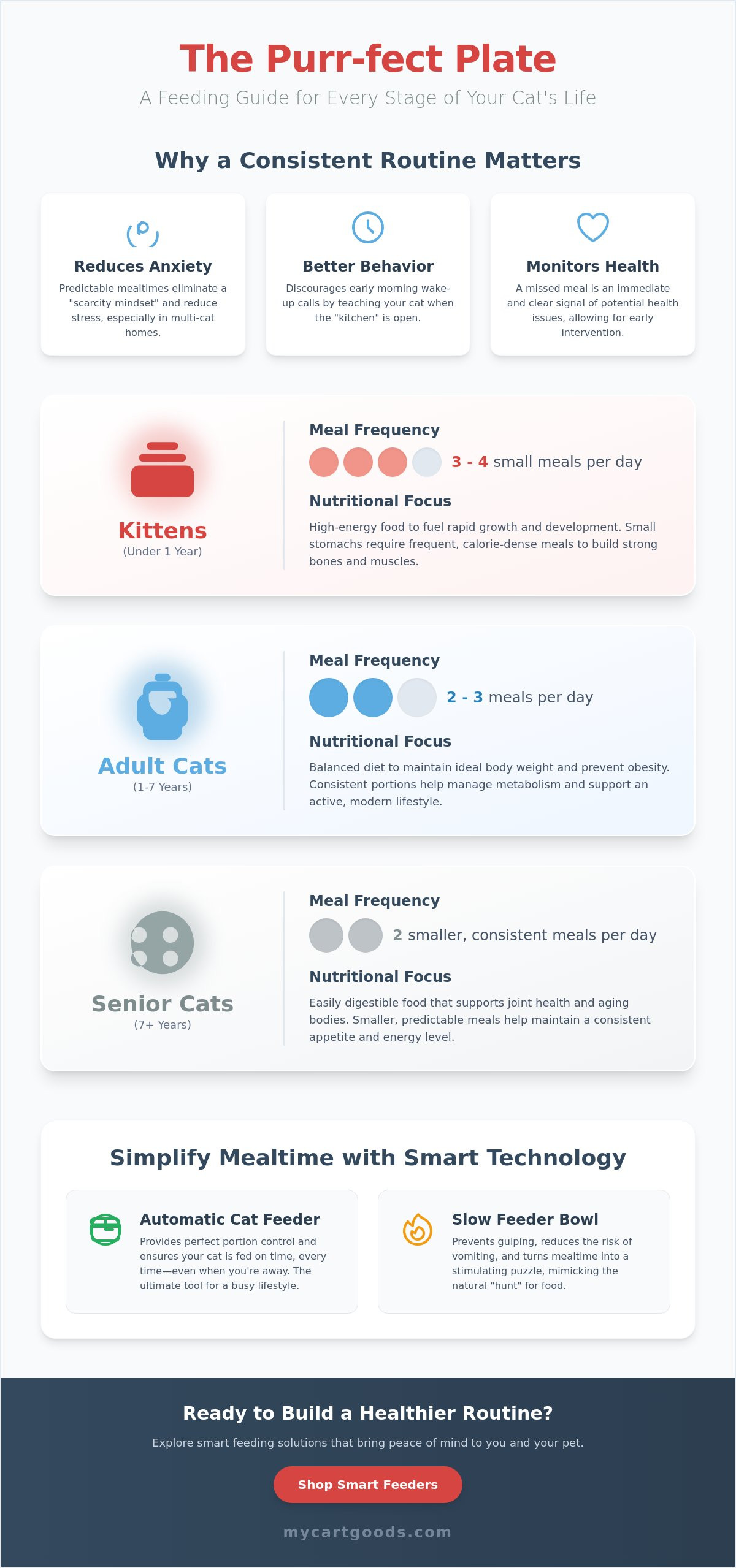
Creating a consistent rhythm for your beloved companion is truly the heartbeat of a happy, harmonious home. When you establish a reliable routine, you're doing so much more than just filling a bowl; you're providing a profound sense of security that lets your cat truly relax. Predictability is a powerful emotional tool. It reduces anxiety and those persistent, attention-seeking meows that often happen when a kitty feels uncertain about their next meal. By mastering how to set a feeding schedule for my cat, I'm ensuring their delicate systems stay balanced, successfully avoiding the exhausting spike and crash blood sugar cycle that often comes from constant grazing. 🐾
A structured routine offers several psychological benefits that foster domestic bliss:
- Reduced Stress: Knowing exactly when food arrives eliminates the "scarcity mindset" in multi-cat homes.
- Behavioral Harmony: Cats who are fed on a schedule are less likely to wake you up at 4:00 AM because they know the "kitchen" isn't open yet.
- Stronger Bonds: Mealtime becomes a celebratory moment of connection between you and your fur baby.
Beyond the emotional perks, scheduled meals serve as your most reliable health monitor. When a cat is free-fed, it's incredibly difficult to track exactly how much they're consuming or if their appetite has shifted. If your cat is accustomed to a specific mealtime and suddenly walks away from their favorite dish, you'll know within minutes that something might be wrong. This immediate feedback is a vital early warning system, allowing you to catch potential issues long before they become serious. It's about being a discerning expert for your pet, performing that daily labor of observation so they can simply enjoy being a happy, healthy member of the family. 🐱✨
The Problem with "Free-Feeding" and Grazing
Leaving food out all day might seem convenient for our busy lives, but it often leads to feline obesity and a lack of interest in nutrition. Kibble left in the open air for hours quickly becomes stale, losing the savory, enticing aroma that makes mealtime exciting. Understanding Feline Nutritional Needs reminds us that as obligate carnivores, our cats require high-quality proteins that are best served fresh. Grazing also makes it nearly impossible to manage multi-cat households, as one food-motivated kitty might easily steal more than their fair share from a communal bowl, masking changes in appetite that could signal veterinary issues.
Biological Rhythms: Mimicking the Natural Hunt
Domestic cats are still hardwired with the instincts of their wild ancestors, following a deeply satisfying hunt-eat-groom-sleep cycle. Offering 2-3 distinct meals per day aligns beautifully with their internal circadian rhythms, providing a sense of purpose and a natural outlet for their predatory energy. This structure keeps their spirits bright and their bodies lean. A cat's metabolic rate is specifically designed to process frequent, small meals that provide a steady stream of energy throughout their active hours. Taking the time to learn how to set a feeding schedule for my cat is the first step toward a lifetime of health and vibrant energy.
Determining the Perfect Frequency: Kittens vs. Adults vs. Seniors
Watching your fur baby grow from a tiny, tumbling kitten into a majestic senior is one of the greatest joys of pet parenthood. As their bodies change, their nutritional requirements shift too, making it essential to understand how to set a feeding schedule for my cat that evolves alongside them. It's not just about the volume of food in the bowl; it's about the timing and calorie density that fuels their specific life stage. By tailoring your approach, you're providing the foundation for a long, vibrant life filled with purrs and head-butts. 🐾
Kittens: Fueling the Zoomies
Kittens are little bundles of pure energy, and their metabolism is working overtime to build strong bones and healthy muscles. Because their stomachs are quite small, they can't take in all the calories they need in just one or two sittings. Based on expert veterinary advice, most kittens under six months thrive on 3 to 4 small, high-energy meals daily. This consistent timing doesn't just fuel their growth; it aids in early socialization by teaching them that you're the reliable source of all good things. As they reach that one-year milestone and their growth begins to plateau, you can start transitioning them to "maintenance" portions to prevent early weight gain.
Adults and Seniors: Maintaining Vitality
For the typical adult cat, a standard two-meal-a-day framework usually works wonders for maintaining a healthy weight. A balanced breakfast and dinner strategy helps prevent energy crashes, keeping their spirits high for mid-day naps and evening play. However, as your companion enters their golden years, you might notice their digestive system becoming a bit more delicate. Senior cats often benefit from returning to smaller, more frequent meals. This approach is gentler on their stomachs and makes it much easier for you to monitor weight changes, which is a key health metric for aging pets. 🐱✨
Managing a multi-cat household with different age groups can feel like a juggling act. If you have a senior on a specific diet and a kitten who needs growth-focused kibble, using an Automatic Cat Feeder can be a total game-changer. It allows you to program specific portions for each pet, ensuring no one steals from the other's bowl. We also find that many pet parents overlook the vital link between feeding and hydration. Cats have a low thirst drive, so their water intake is often tied to the ritual of eating. Integrating an Automatic Pet Water Fountain into your routine provides a fresh, flowing source of water that encourages them to drink more during their scheduled breaks. This holistic approach is exactly how to set a feeding schedule for my cat that supports their health from every angle.
Manual vs. Automatic Feeders: Which Fits Your Lifestyle?
Deciding between a traditional ceramic bowl and a high-tech smart device is a pivotal moment in learning how to set a feeding schedule for my cat. While we all cherish those sweet moments of connection during the day, the reality of a 2026 lifestyle often includes long commutes, late-night video calls, or the simple desire for a restful Saturday morning. Choosing the right tool isn't about replacing your love; it's about finding a reliable partner that ensures your fur baby never misses a beat, even when life gets a little chaotic. 🐾
There is a common myth that using technology to feed your pet might weaken your bond. We believe the opposite is true. When a machine takes over the role of the "food provider," your cat stops seeing you as a walking can opener to be pestered at 4:00 AM. This psychological shift allows your relationship to center entirely on affection, play, and cuddles. You remain the source of comfort and joy, while the tech handles the logistics. Following Cat Nutrition Tips from the ASPCA, portion control is a fundamental part of responsible pet ownership, and the right tools make this effortless.
The Case for Manual Feeding
Manual feeding remains a beautiful choice for many families, especially those who prefer a wet-food-only diet. Since canned food requires immediate refrigeration and can't sit out, the "mealtime dance" becomes a necessary and joyful ritual. This method is also ideal if your companion has specific medical needs that require hand-feeding or close supervision to ensure they're actually eating. If your kitty is a bit too enthusiastic at the bowl, using a Slow Feeder Anti-Gulping Bowl can help them savor every bite while preventing digestive upset. It's a hands-on way to show you care during every single meal.
Why Automatic Feeders are a 2026 Essential
For the modern pet parent, an Automatic Cat Feeder is a total game-changer for maintaining domestic bliss. These devices offer precision portion control, which eliminates the "handful" guesswork that often leads to unwanted weight gain. They deliver consistency that humans simply can't match, serving breakfast at 6:00 AM sharp every single day. This reliability provides incredible peace of mind when you're stuck in unexpected traffic or a meeting runs long. You can breathe easy knowing your fur baby is enjoying their meal on time, every time. It's the ultimate way to bridge the gap between expert advice and the practical demands of your daily life. 🐱✨
Ultimately, the best choice is the one that allows you to be the most present, loving version of yourself. Whether you choose the ritual of the manual bowl or the high-tech precision of a smart dispenser, you're taking a huge step toward a healthier, happier life for your feline family member. Learning how to set a feeding schedule for my cat is a journey of love, and we're here to help you every step of the way.
A Step-by-Step Guide to Transitioning Your Cat to a New Schedule
Transitioning your fur baby from a "buffet-style" free-feeding lifestyle to a structured routine requires patience, love, and a little bit of strategy. While cats are creatures of habit, they can be quite vocal when their expectations aren't met. Managing the "hangry" phase is often the biggest hurdle pet parents face when learning how to set a feeding schedule for my cat. By taking a slow, compassionate approach, you can avoid mealtime drama and turn the transition into a bonding experience that leaves everyone feeling satisfied and secure. 🐾
The 7-Day Transition Strategy
The secret to success is a gradual shift that doesn't shock your kitty's system. During Days 1-3, start offering food at your target times but keep a small "safety snack" available in between to bridge the gap. This prevents that frantic, over-the-top begging while their body adjusts. On Days 4-7, you'll remove that middle-of-the-day snack and solidify your morning and evening anchors. To make the new routine even more delightful, consider ending each meal with a relaxing Self-Cleaning Slicker Brush session. This post-meal reward mimics the natural grooming behavior cats perform after eating, reinforcing the "hunt-eat-groom-sleep" cycle we discussed earlier.
Solving Whisker Fatigue and Placement Issues
When you're researching how to set a feeding schedule for my cat, remember that environmental setup is a key piece of the puzzle that many guides overlook. Whisker fatigue is a very real form of sensory overload that happens when a cat's sensitive whiskers touch the sides of a deep, narrow bowl. Using a wide, shallow dish ensures they can eat in total comfort. It's also vital to place their feeding station in a quiet, low-traffic area where they feel safe and focused. Interestingly, cats instinctively prefer their water source to be separate from their food. Placing your Automatic Pet Water Fountain in a different part of the room, or even a different room entirely, encourages better hydration by honoring their natural wild instincts to avoid water near "prey."
Stimulating their appetite through interactive play just before mealtime is another fantastic way to ensure they're ready for the new schedule. A quick five-minute session with a feather wand helps them burn off energy and triggers that biological drive to eat. This little bit of effort goes a long way in making the new routine feel like a natural part of their day. If you're ready to upgrade your home's harmony, you can explore our curated feeding solutions to find the perfect fit for your fur baby's personality. 🐱✨
Simplifying Mealtime Harmony with Smart Pet Technology
You've done the heart-centered work of understanding your cat's biological needs and mapping out a plan for domestic bliss. Now, it's time to bridge the gap between that expert advice and the beautiful reality of your daily life. Embracing modern solutions is the final step in learning how to set a feeding schedule for my cat that actually sticks. By creating a frictionless, automated environment, you're not just buying gadgets; you're investing in a lifestyle of peace and 24/7 well-being for your favorite feline family member. 🐾
The Automatic Cat Feeder: Your New Best Friend
A high-quality dispenser is the cornerstone of any successful routine. When you're selecting the right fit, look for essential features like secure, "prying-paw-proof" lids and reliable battery backup power to ensure meals arrive even during a 2026 summer storm. Easy-clean components are also a must for maintaining a fresh, hygienic space. For high-energy cats or those prone to the "zoomies," you can program multiple small meals throughout the day to keep their metabolism steady and their spirits high. Our automatic feeders provide functional luxury for modern homes, combining sleek aesthetics with the dependable performance your fur baby deserves. It makes the transition to a structured routine feel like a celebration rather than a chore. 🐱✨
Complete Care Beyond the Bowl
True domestic harmony comes from a holistic approach that looks at every aspect of your pet's comfort. Hydration is the silent partner of nutrition, yet many cats struggle to drink enough water from a stagnant bowl. Linking their mealtime ritual to a fresh, flowing source like an Automatic Pet Water Fountain ensures they stay hydrated and vibrant. This synergy of care extends to their environment too. Maintaining a pristine space with a Self Cleaning Cat Litter Box complements your new feeding routine by reducing odors and keeping their "bathroom" as fresh as their dining area. When these elements work together, you create a smart home that anticipates every need.
Making these small changes in your daily rhythm leads to a lifetime of content purrs and deep, trusting bonds. You're no longer just a food provider; you're a dedicated advocate for their happiness. We invite you to explore the MyCartGoods collection of smart pet tech to simplify your routine! It's time to reclaim your mornings and enjoy the peaceful, predictable harmony of a happy home. 🏠💖
Embrace a Future of Feline Bliss and Peaceful Mornings
Mastering how to set a feeding schedule for my cat is the ultimate gift you can give to your feline family member. By aligning their meals with their natural biological rhythms and adjusting portions as they grow from playful kittens to dignified seniors, you're building a foundation of trust and vitality. We've explored how a gradual transition and the right environmental setup can turn mealtime into a stress-free celebration of health. These simple shifts in your daily routine don't just reduce anxiety; they create a more harmonious home where everyone can rest easy. 🐾
We are so proud to have served over 10,000 happy fur babies with innovative tech designed specifically for the modern pet parent. You deserve a routine that feels effortless and joyful. We even offer free shipping on all smart pet gadgets to make your journey toward domestic bliss even smoother. Simplify your mornings with a Smart Automatic Cat Feeder from MyCartGoods! It's time to trade those pre-dawn wake-up calls for a lifetime of happy purrs and energetic play. Your kitty will thank you for the extra love and the perfectly timed treats. 🏠💖
Frequently Asked Questions
How many times a day should I feed my adult cat?
Most adult cats thrive on two meals per day, though some prefer three smaller portions to keep their energy levels steady. This structure helps maintain a healthy weight and prevents the digestive system from becoming overwhelmed at any single time. If your kitty is particularly active, you might find that a breakfast, dinner, and late-night snack routine keeps their spirits high and their bellies happy throughout the night. 🐾
Can I leave dry food out for my cat all day?
No, leaving dry food out all day is generally not recommended because it can lead to overeating and unwanted weight gain. While it seems like a convenient choice, it makes it nearly impossible to monitor exactly how much your precious fur baby is consuming each day. Transitioning to a timed routine is a much better way to ensure your pet stays lean, energetic, and truly excited for every savory meal. It also prevents the kibble from losing its enticing aroma. 🐱
What should I do if my cat begs for food between scheduled meals?
Redirect their attention with interactive play or a quick grooming session to satisfy their need for engagement. It's often the social interaction they crave rather than the actual calories. If the begging persists, ensure you've researched how to set a feeding schedule for my cat that includes enough high-quality protein to keep them feeling full. Offering a small, healthy treat during a training session can also bridge the gap without disrupting their main routine. ✨
Is it better to feed cats wet food or dry food on a schedule?
Both wet and dry food work beautifully on a schedule, and many pet parents choose a combination of both to provide variety. Wet food offers essential hydration for their kidneys, while dry food is convenient for use in an Automatic Cat Feeder. The most important factor is consistency, as your cat's internal clock will quickly adapt to whichever high-quality nutrition you choose to provide. 🥣
How do I set a feeding schedule for multiple cats with different needs?
Use separate feeding stations or smart devices that recognize individual pets to ensure everyone gets their fair share. This prevents "food bullying" and allows you to tailor portions to each cat's specific age or activity level. It's a wonderful way to maintain domestic peace in a multi-cat home while ensuring every fur baby receives the precise, high-quality nutrition they need to thrive and stay healthy. 🏠
Will an automatic feeder make my cat less affectionate toward me?
Not at all; in fact, it often strengthens your bond by removing the stress of mealtime demands from your relationship. When a device handles the early morning breakfast call, you become the source of pure affection, play, and cuddles. Your cat will still associate you with love and comfort, while the machine handles the logistics of their daily routine. 💖
What is the best time of day to feed my cat?
The best times are usually early morning and evening, ideally spaced about 12 hours apart to mimic natural hunting patterns. If you're learning how to set a feeding schedule for my cat that fits a 2026 lifestyle, try to align these times with your own wake-up and homecoming rituals. This creates a predictable flow that helps your kitty feel secure and included in the family. Consistency is more important than the specific hour you choose. 🐾
How long can a cat go between meals safely?
Most healthy cats can comfortably go 12 hours between meals, though kittens and seniors may need more frequent feedings to stay energized. Going much longer than 24 hours can lead to serious health issues, so maintaining a reliable rhythm is vital. Providing a consistent schedule ensures their metabolism stays stable and their digestive system remains in peak condition for a lifetime of happiness. 🐱