

It's 4:15 AM on a Tuesday, and instead of enjoying deep sleep, you're staring at a pair of glowing eyes while a persistent paw taps your forehead. You love your feline family member more than anything, but this chronic sleep deprivation is starting to wear thin. You've likely searched for ways to stop my cat from waking me up for food while bleary-eyed and exhausted, joining a massive community of tired pet parents. With 46.5 million households in the U.S. owning cats in 2026, thousands of us are currently negotiating with these furry, four-legged alarm clocks every single morning.
We understand the cycle of guilt and frustration that comes with a hungry pet. You want a well-fed kitty, but you also need to function during the day. This article promises to reveal the proven behavioral hacks and smart tech solutions that will help you reclaim your rest for good. We'll preview the latest science on feline hunger rhythms and explain how using an automatic cat feeder to "fire yourself" as the food provider can lead to a harmonious morning routine. By the time you finish reading, you'll know exactly how to transition to a schedule where everyone stays happy, healthy, and most importantly, asleep.
At a Glance: How to Reclaim Your Mornings
• Learn why your darling's crepuscular nature makes them most active at dawn and how modern household lighting often confuses their internal breakfast timer.
• Master the psychology of intermittent reinforcement to finally stop my cat from waking me up for food by staying wonderfully consistent and ignoring those early morning meows.
• Implement a high-energy "Drain the Battery" play session followed by a cozy, protein-rich meal to help your furry family member sleep soundly through the night.
• Discover how a smart automatic cat feeder can "fire" you from the morning shift, creating a reliable routine that teaches your kitty to look to tech for treats instead of you.
• Create a blissful sleep sanctuary using a self cleaning cat litter box to eliminate messy distractions and ensure a harmonious morning for everyone.
Why Your Fur Baby Thinks 4 AM is Breakfast Time (The Science of Feline Alarm Clocks)
If you're currently surviving on caffeine and sheer willpower because your precious kitty decided dawn was the perfect time for a snack, you aren't alone. It's easy to feel like your feline friend is being a tiny, furry tyrant, but the truth is much more fascinating. Your cat isn't trying to be difficult. They're simply following a biological blueprint that's been hardwired into their DNA for thousands of years. Understanding this biology is the first step to finally stop my cat from waking me up for food while preserving the deep bond you share.
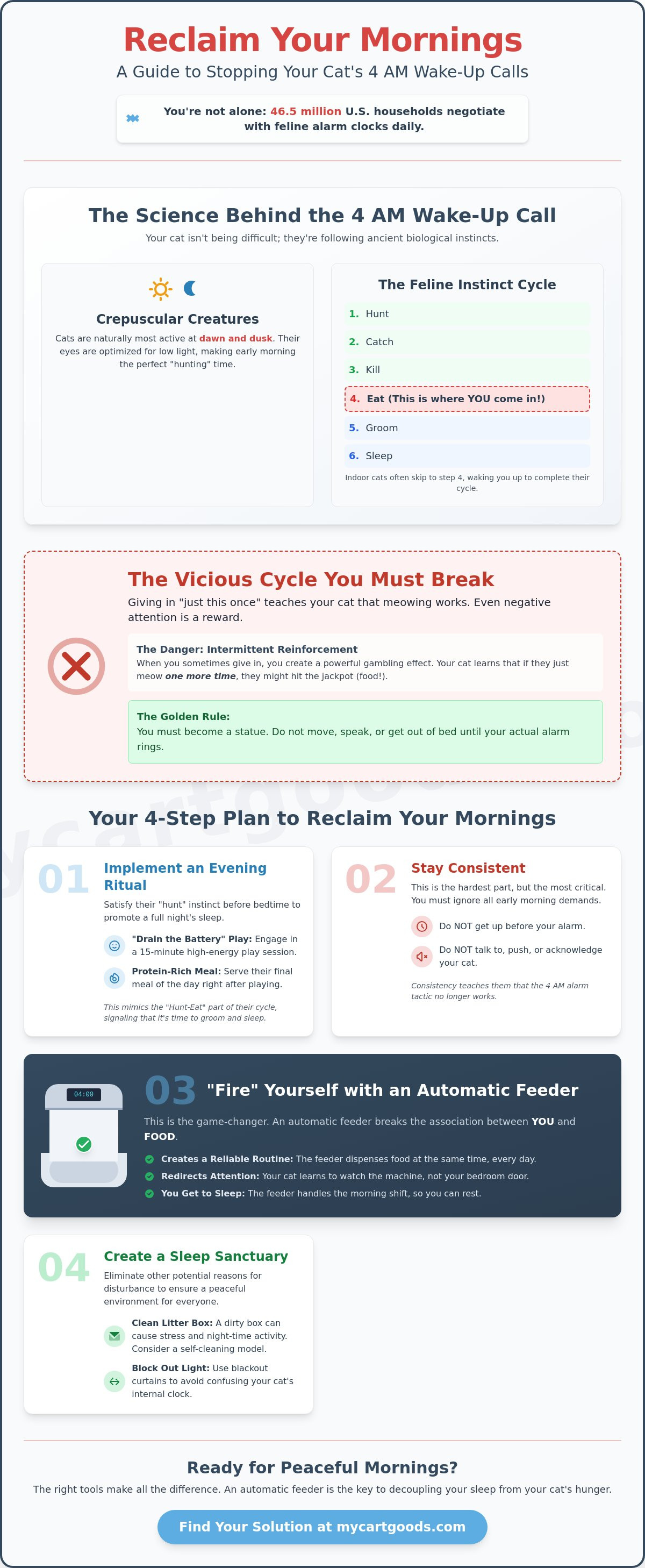
Cats are crepuscular creatures, which means they're naturally most active during the twilight hours of dawn and dusk. In the wild, this is when their prey is most active and the low light gives them a distinct tactical advantage. When the sun begins to peek through your curtains at 4 AM, your cat's internal clock screams that it's time to hunt. Our modern homes often complicate these instincts. Bright indoor lighting and our own erratic schedules can confuse their natural rhythm, making them think the "hunt" should start even earlier than nature intended.
This behavior follows a specific sequence known as the "Hunt-Catch-Kill-Eat-Groom-Sleep" cycle. For an indoor cat, you are usually the primary source of the "Eat" phase. If they haven't had a chance to "Hunt" or "Catch" something physical during the night, they'll skip straight to waking you up to get to the meal. It's a biological misfire, not a behavioral flaw. They're just looking for the next step in their daily routine.
The Crepuscular Instinct: Hunting at Dawn 🐾
Feline eyes are marvels of nature, specifically optimized to see in the dim light of early morning. While you see a dark bedroom, your cat sees a playground full of possibilities. They often aren't "hungry" in the way we think about an empty stomach. Instead, they're driven by an instinctual need for engagement and movement. Senior cats might become more persistent due to age-related changes in their sleep cycles, while kittens are simply bundles of high-octane energy looking for any excuse to pounce on a moving toe under the blankets.
Is it Hunger or Boredom? Identifying the Root Cause
Distinguishing between a cat that needs calories and one that needs a playmate is crucial for a quiet house. If your kitty is meowing at your door, they might just be seeking the dopamine hit of your attention. Every time you get out of bed to quiet them, you're reinforcing that 4 AM is a great time for a chat. Providing high-quality Cat food during the day ensures their nutritional needs are met, but mental stimulation is just as vital for their contentment.
Integrating interactive cat toys into their evening routine can help satisfy that "hunt" instinct before you ever hit the pillow. When they've successfully "hunted" a toy, they're much more likely to move straight to the "Groom" and "Sleep" phases of their cycle, leaving you to enjoy your dreams in peace.
Breaking the Cycle: Why 'Just Five More Minutes' is Ruining Your Sleep
We've all been there. It's dark, you're exhausted, and your darling kitty is performing a persistent symphony of meows right next to your ear. In your sleep-deprived state, you might think that getting up to fill the bowl will finally buy you those last sixty minutes of rest. Unfortunately, this "just this once" mentality is exactly what keeps the cycle alive. To truly stop my cat from waking me up for food, you have to realize that your reaction is the primary fuel for their 4 AM fire.
Cats don't view your groans or movements the same way you do. When you sigh, roll over, or even gently push them off the bed, you're providing engagement. To a cat seeking a reaction, negative attention is still a win. They've successfully moved you from a sleeping state to an active one. In their mind, they're now halfway to breakfast. Breaking this cycle requires a total commitment to the "Golden Rule": you must become a statue until your actual alarm goes off.
The Danger of Intermittent Rewards
This is the most common pitfall for well-meaning pet parents. Think of it like a slot machine. If the machine paid out every single time, it wouldn't be nearly as addictive as one that pays out randomly. When you give in to the begging only once every few days, you're teaching your cat that persistence eventually pays off. Intermittent reinforcement is the #1 reason training fails because it transforms a simple request into a high-stakes game of "how long until the human breaks?"
Surviving the 'Extinction Burst'
Once you commit to total silence, things will likely get louder before they get quiet. This is known as an extinction burst. It's a temporary but intense increase in the unwanted behavior right before the cat finally gives up. It's the ultimate test of your resolve. While it feels like you're being ignored, your cat is actually processing a massive shift in their daily expectations.
- Invest in high-quality earplugs or a powerful white noise machine to mask the dawn chorus.
- Maintain a perfect "poker face" even if they're walking across your chest.
- Remind yourself that an increase in noise actually means your plan is working.
- Stay consistent; even one slip-up during this phase resets the entire clock.
Staying strong during these few difficult mornings is much easier when you have the right tools to support your new routine. Exploring thoughtful pet care essentials can help you transition from being the primary food source to a well-rested companion. Once your cat realizes that the "human alarm clock" is permanently broken, they'll stop trying to set it every morning.
The Bedtime Ritual: Play, Eat, and Sleep Your Way to a Quiet House
Think of your evening routine as the closing act of a play where the final scene is a long, uninterrupted sleep. Establishing a predictable sequence of events tells your kitty that the "human is now off-duty" and it's time for their own rest. When you consistently follow these steps, you'll find it much easier to stop my cat from waking me up for food because their biological needs are being met on your terms, not theirs. It's all about aligning their natural energy spikes with your own need for downtime.
Simulating the Hunt with Interactive Play
High-intensity play is the "Drain the Battery" phase of the night. You should aim for about 30 minutes of engagement right before you start your own bedtime preparations. Use wand toys that mimic the erratic movements of birds or mice to trigger that deep-seated predatory drive. It's not enough to just wave a string; you need to let them experience the "Catch and Kill" phase. Allow them to physically grab and "bunny kick" the toy at the end of the session to release that pent-up energy. Rotating your selection of pet supplies ensures they stay mentally sharp and prevents those frustrating "boredom wake-ups" at 3 AM. By the time you're done, your cat should be panting slightly and ready for the next stage of their cycle: the meal.
The 'Midnight Snack' Strategy
The "Big Meal" Theory suggests that a protein-rich meal right before you go to bed helps cats stay fuller for much longer. If you feed dinner at 6 PM, your cat has gone ten hours without food by 4 AM, which is why their stomach starts sending those pesky hunger signals. Moving that final meal to 10 PM or 11 PM can make a world of difference for your sleep quality. Wet food is often superior for satiety because of its high moisture and protein content, whereas dry kibble can lead to blood sugar spikes and crashes that leave them searching for a snack in the middle of the night.
To make the meal last even longer, try using a Slow Feeder Anti-Gulping Bowl. This turns eating into a calming, mentally engaging activity that transitions them perfectly into the "Groom and Sleep" phase of their natural cycle. This simple shift is a total game-changer when you want to stop my cat from waking me up for food and reclaim your peaceful mornings. Consistency is the glue that holds this entire ritual together. Cats thrive on predictability, and when they see the toys come out followed by a delicious snack, they know exactly what comes next. By creating this stimulating environment that doesn't rely on your active participation during the night, you're giving them the independence they crave while protecting your own sleep sanctuary.
Smart Tech Solutions: How Automatic Feeders Reclaim Your Mornings
Technology isn't just a convenience; it's a bridge to a better relationship with your beloved feline family member. By automating the breakfast bell, you're effectively "divorcing" yourself from the role of the morning food provider. This allows you to remain the source of cuddles and play while the machine handles the calories. Utilizing an Automatic Cat Feeder is the most reliable strategy to stop my cat from waking me up for food because it replaces your presence with a predictable, mechanical routine that your cat can't manipulate with meows or persistent head-butts. Many modern devices even offer voice recording features, so you can still "call" them to dinner without having to leave your warm blankets.
Firing Yourself: Transitioning to the Feeder
Teaching your cat that the machine is the new provider requires a bit of tactical planning. You want to create a Pavlovian response where the sound of the feeder triggers the anticipation of a meal rather than the sound of your voice. This shift in focus is essential for long-term success.
- Step 1: Set the feeder to dispense a small portion about 15 minutes before your cat typically starts their morning wake-up routine.
- Step 2: When the feeder whirs to life, you must stay perfectly still in bed. Let the machine do the heavy lifting while you enjoy the silence.
- Step 3: Once your cat is consistently waiting by the feeder, gradually move the scheduled time later in five-minute increments until you reach your desired breakfast hour.
The goal is for the cat to wait by the feeder, not your door. Using app-controlled scheduling, you can set multiple small "micro-meals" at 4 AM, 5 AM, and 6 AM. This keeps their grazing instincts satisfied and their tummies full throughout the early hours, preventing the desperation that leads to bedroom door scratching.
Beyond Food: Water Fountains and Comfort
While food is often the primary motivator, thirst can also drive a cat to seek out their human at dawn. Stagnant water in a bowl can become unappealing overnight, leading your kitty to nudge you for a fresh pour. Integrating an automatic pet water fountain ensures they always have access to filtered, moving water that mimics a natural stream. This not only keeps them hydrated but also provides a soothing, quiet focal point in their dedicated "Kitty Corner."
Achieving domestic harmony is much simpler when you embrace these forward-thinking care solutions. Whether you're managing a hungry kitten or a senior cat with specific needs, having the right technology in place creates a frictionless morning for everyone. You can find the latest smart feeding and hydration tools right here to help you reclaim your sleep and keep your fur baby content. When the machine becomes the provider, you're free to stop my cat from waking me up for food and finally enjoy your dreams until the alarm goes off.
Designing the Perfect Sleep Sanctuary for You and Your Kitty
Your home should be a haven of domestic harmony for every family member, including the ones with whiskers. While we've covered the importance of rituals and smart technology, the physical layout of your space is the final piece of the puzzle. To truly stop my cat from waking me up for food, you need to create an environment that encourages your fur baby to stay in their own cozy zone until the sun is high. Establishing a dedicated "Kitty Corner" far from your bedroom door creates a psychological boundary that helps your cat understand where their nighttime activities should take place.
Hygiene plays a massive role in whether your cat chooses to disturb your slumber. A kitty might wake you up because their litter environment isn't up to their high standards. Investing in a self cleaning cat litter box ensures they always have a fresh, inviting place to go, which removes one more reason for those 4 AM bedside visits. When their basic needs for cleanliness, food, and water are handled by reliable systems, they're much more likely to settle into the "Groom and Sleep" phase of their natural cycle without involving you.
The Power of a Calming Bed
The right bedding can significantly extend your cat's sleep cycles by providing a sense of deep security and physical relief. A Calming Shag Fur Pet Donut Bed is perfect for kitties that love to curl up and feel protected, as the raised rim creates a cozy nest that eases anxiety. For our senior feline friends, an Orthopedic Memory Foam Dog Bed (which works wonders for cats too!) provides the joint support they need to rest deeply without discomfort. Try placing these beds in "sun traps" or on a Cat Window Perch Hammock. Cats naturally seek out high perches or warm spots where they feel safe from potential "predators," making them less likely to wander into your room looking for engagement.
Managing the Environment
Light is a powerful trigger for a cat's hunting instinct. Using blackout curtains in your bedroom and the areas where your cat spends their night can prevent the early morning sun from signaling that it's time to hunt. You should also decide on a consistent door policy. Whether you choose a strictly closed-door policy or keep it open, sticking to that choice prevents the "intermittent reinforcement" we discussed earlier. A quiet, dark, and comfortable home tells your cat that the world is still asleep.
Before you tuck yourself in, run through this final checklist for a peaceful night:
- Is the self cleaning cat litter box cycled and ready?
- Is the automatic water fountain full and flowing?
- Has the automatic feeder been programmed for those early morning micro-meals?
- Did you finish a high-intensity play session with their favorite toys?
By combining their natural instincts with a solid routine and the right technology, you've built a holistic system for success. You don't have to choose between your sleep and your cat's happiness. With these cozy solutions in place, you can stop my cat from waking me up for food and wake up feeling refreshed, greeted only by a happy, well-rested kitty when your alarm finally goes off.
Wake Up Refreshed and Ready for Feline Cuddles
Transforming your mornings starts with understanding your cat’s natural rhythms and choosing to lead with consistency. You’ve learned that satisfying the instinctual hunt through play and automating the breakfast bell are the most effective ways to stop my cat from waking me up for food. By combining high-energy engagement with the latest smart home solutions, you create an environment where your fur baby feels secure and you get the deep, restorative sleep you deserve. It’s about building a home where everyone's needs are met with love and modern convenience.
Our team of enthusiasts has done the hard work for you by selecting high-quality, durable solutions that promote domestic harmony and long-term comfort. We offer expert-selected pet tech for modern homes that anticipate your every need. Shop our curated collection of Automatic Feeders and Interactive Toys to reclaim your sleep! Your journey to a quieter, happier house begins today. We're so excited for you to experience the joy of a full night's rest alongside your happy, well-fed companion!
Frequently Asked Questions
Is it okay to ignore my cat when they meow for food?
Yes, it is perfectly okay and actually necessary to ignore those early morning serenades. By staying silent and still, you are teaching your beloved feline that their vocalizations won't result in a meal. Any reaction, even a sigh or a roll-over, tells them you're listening. Consistency is your best friend when you want to stop my cat from waking me up for food.
How long does it take to train a cat to stop waking you up?
Most pet parents see a significant change within two to four weeks of consistent training. The first week is usually the hardest because of the extinction burst, where the behavior gets louder before it finally disappears. If you stay strong and never break the rules, your kitty will eventually accept the new schedule as their permanent reality.
My cat paws at my face or knocks things over-what do I do?
Physical persistence like pawing or knocking over lamps is a higher level of attention-seeking. You must maintain your "poker face" and remain completely unresponsive until your alarm goes off. To protect your belongings, move fragile items to a different room or use double-sided tape on nightstands as a temporary deterrent until the new routine sticks.
Should I feed my cat right before I go to bed?
Feeding a protein-heavy meal right before you tuck yourself in is a fantastic strategy for a quiet house. It mimics the natural "Hunt-Eat-Groom-Sleep" cycle and ensures their stomach stays satisfied for several hours. This late-night snack helps bridge the gap between your bedtime and your actual morning alarm, keeping them full and sleepy.
Will an automatic feeder really work for a persistent cat?
An automatic cat feeder is incredibly effective because it removes the human element from the feeding equation. Once your cat realizes the machine is the provider, they'll spend their time waiting by the feeder instead of your bedroom door. It’s a wonderful way to stop my cat from waking me up for food while ensuring they never miss a meal.
Can a health issue cause my cat to wake me up for food suddenly?
Yes, a sudden increase in hunger can sometimes signal an underlying health issue that needs attention. Conditions like hyperthyroidism or diabetes can make a cat feel ravenous regardless of their usual schedule. If your well-behaved cat suddenly starts begging for food at odd hours, it's a good idea to consult your veterinarian for a professional check-up.
What if my cat wakes me up for attention, not food?
Boredom is a common reason for 4 AM wake-up calls in multi-cat and single-cat homes alike. If they aren't actually hungry, they likely just want to engage with their favorite person. Increasing their daytime activity with interactive treat-dispensing toys or high-intensity wand play in the evening will help them burn off that extra energy so they sleep when you do.
How do I stop my cat from scratching the bedroom door at night?
Scratching at the door often means your kitty wants access to you or is frustrated by a closed boundary. You can discourage this by placing a Calming Shag Fur Pet Donut Bed in a cozy "Kitty Corner" far from your room. Making their own dedicated space more appealing than your door is the secret to achieving true domestic harmony.