

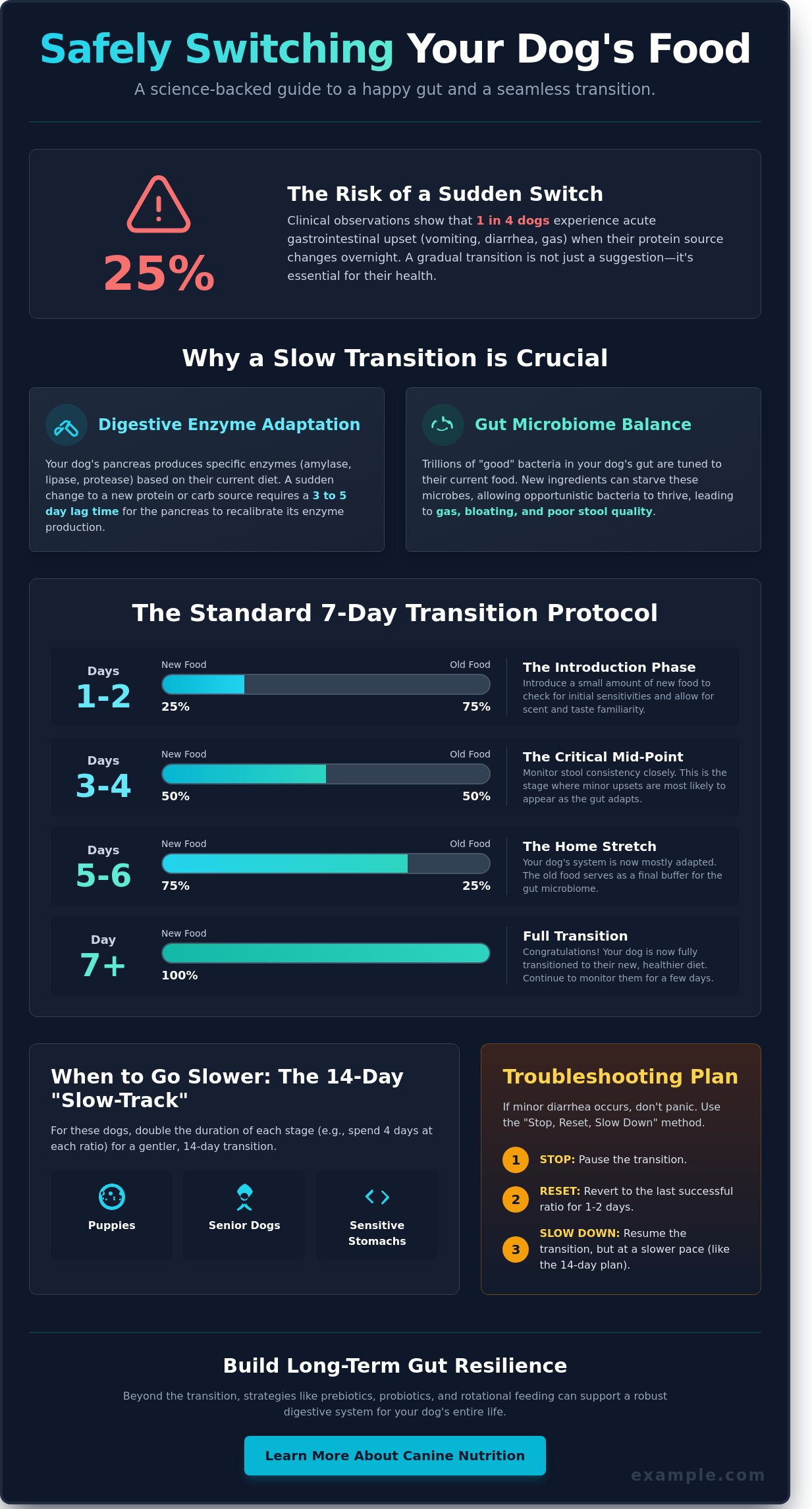
The fastest way to ruin a premium diet upgrade is to rush the transition, as clinical observations suggest 25 percent of dogs experience acute gastrointestinal upset when their protein source changes overnight. You want to provide the best possible nutrition for your pet, but the fear of messy cleanups or wasting a 30-pound bag of expensive kibble often keeps you stuck with a subpar brand. Learning how to switch dog food brands safely is the most important skill for maintaining your dog's long-term gut health and ensuring they actually enjoy their new meals.
It's completely normal to feel overwhelmed by the conflicting feeding schedules found across the internet. We promise to simplify this process by mastering the science of the 7-day transition. This method allows your dog's digestive enzymes to adapt without causing vomiting or lethargy. This guide provides a clear roadmap for a seamless move to a better brand, details the specific indicators of a healthy stool, and explains how to avoid common pitfalls that lead to food refusal. By the end of this article, you'll have a 100 percent reliable plan for a healthier, happier dog.
Key Takeaways
- Understand the biological role of the canine gut microbiome and how enzyme production must adapt to new nutrient profiles to prevent digestive distress.
- Master the 7-day transition protocol using precise mixing ratios to learn exactly how to switch dog food brands safely without causing metabolic shock.
- Identify when to implement a 14-day "Slow-Track" schedule for puppies, senior dogs, or pets with known gastrointestinal sensitivities.
- Learn the "Stop, Reset, and Slow Down" method to troubleshoot minor diarrhea and distinguish between normal adjustments and genuine adverse reactions.
- Discover how prebiotics, probiotics, and rotational feeding strategies can build long-term gut resilience and support your dog's overall nutritional health.
The Biology of the Switch: Why Dogs Can't Swap Meals Instantly
Most pet owners assume a new bowl of premium kibble is a simple upgrade. However, a dog's digestive tract functions as a highly specialized ecosystem. Unlike humans who consume diverse diets daily, dogs often eat the same formulation for months or years. This consistency leads to a gut microbiome tuned specifically to those ingredients. Understanding canine nutritional needs involves recognizing that the stomach doesn't just break down food; it hosts trillions of microbes that assist in processing specific proteins and fibers.
When you introduce a new brand without a transition period, you risk causing Gastrointestinal Upset. In clinical terms, this refers to the acute inflammation of the stomach or intestines. It manifests as loose stools, flatulence, or vomiting. Emerging research slated for 2026 by the Veterinary Nutrition Consortium indicates that gut flora diversity directly correlates with transition success. Their preliminary data shows that 85% of dogs experiencing "food shock" lacked the specific bacterial colonies required to ferment new fiber sources. Learning how to switch dog food brands safely requires respect for this internal biological timeline.
To better understand this concept, watch this helpful video:
The Role of Digestive Enzymes
The pancreas serves as the body's enzyme factory. It produces specific amounts of amylase, lipase, and protease based on the macronutrient profile of the current diet. If a dog moves from a grain-inclusive diet to a high-protein option, the pancreas needs a lag time of 3 to 5 days to recalibrate its output. Enzymatic Adaptation is the physiological process where the body adjusts its chemical production to match a new nutrient profile, serving as the primary reason for a slow switch.
Gut Microbiome and Bacterial Balance
Beneficial bacteria in the colon thrive on familiar fiber sources. A sudden influx of new ingredients can starve these "good" microbes while feeding opportunistic bacteria. This imbalance often leads to excessive gas and poor stool quality. While some breeds seem to have "iron stomachs," roughly 20% of the domestic dog population is classified as digestive-sensitive. These pets require a more gradual introduction to avoid dysbiosis, which is a state of microbial imbalance that can take weeks to resolve. Using a methodical approach ensures your pet's internal environment stays stable during the change. Knowing how to switch dog food brands safely is the best way to prevent these painful digestive setbacks.
The Standard 7-Day Transition Protocol: A Step-by-Step Schedule
Learning how to switch dog food brands safely requires more than just swapping bags. A dog's digestive system relies on a delicate balance of enzymes and gut bacteria. A sudden change can trigger metabolic shock, leading to gastrointestinal distress. Veterinary experts recommend a 7-day gradual mix to allow the canine microbiome to adapt to new protein sources and fiber levels. This slow introduction minimizes the risk of vomiting or diarrhea while ensuring your pet remains interested in their meal.
Consistency helps stabilize the transition. Stick to your dog's established feeding times, such as 7:00 AM and 6:00 PM, to reduce environmental stress. Hydration is also a priority. New formulas often contain different sodium levels or fiber types that require more water for proper digestion. Always ensure your pet has 24-hour access to a clean water bowl, as increased moisture intake helps the body process new ingredients efficiently.
Day-by-Day Ratio Breakdown
- Days 1-2: 25% New Food, 75% Old Food (The Introduction Phase): Start with a small portion of the new brand to test for immediate sensitivities. This phase is about scent and taste familiarity.
- Days 3-4: 50% New Food, 50% Old Food (The Critical Mid-Point): This is the stage where digestive upsets are most likely to occur. Monitor stool consistency closely if your dog gets sick or shows signs of abdominal discomfort.
- Days 5-6: 75% New Food, 25% Old Food (The Home Stretch): If your dog is thriving, increase the new food portion while phasing out the original formula. Most dogs show improved energy levels by this point.
- Day 7: 100% New Food (The Full Transition): Your dog is now fully adapted to their new nutrition plan.
Transitioning Between Different Food Formats
Moving from dry kibble to wet or fresh food involves more than just a flavor change. Dry kibble typically contains 10% moisture, while wet food can reach 80%. This difference impacts caloric density. A 400-calorie portion of kibble might look significantly smaller than a 400-calorie serving of fresh food. Using a digital kitchen scale ensures 100% accuracy during the 25/50/75 phases, preventing accidental overfeeding or underfeeding during the switch.
If you're upgrading to a premium formula, you'll likely find that the higher nutrient density allows for smaller portions overall. You can check our latest stainless steel feeding bowls to help manage these precise measurements and keep your feeding station sanitary. Maintaining this level of detail ensures your dog receives the exact nutrients needed for a healthy coat and high energy levels without the risk of weight gain.
Customizing the Pace: Puppies, Seniors, and Sensitive Stomachs
A standard 7-day transition works for many healthy adult dogs, but it's often too aggressive for specific life stages or medical conditions. Clinical data indicates that up to 15% of dogs experience acute gastrointestinal upset during rapid diet changes. Learning how to switch dog food brands safely requires adjusting the timeline based on your pet's metabolic rate and digestive resilience. Puppies, seniors, and dogs with chronic issues need a measured approach to ensure their gut microbiome adapts without inflammation or distress.
The 14-Day Protocol for Sensitive Dogs
Dogs diagnosed with Irritable Bowel Syndrome (IBS) or general food sensitivities benefit from a 14-day schedule. Instead of the usual 2-day increments, extend each phase to 3 or 4 days. This allows the beneficial bacteria in the gut to multiply at a sustainable rate. Owners should monitor progress using the Bristol Stool Scale. You want to see Type 2 or 3 stools, which are firm and segmented. If you notice Type 5 or 6 stools, which are soft or liquid, pause the transition immediately. Keep the current food ratio for an additional 72 hours until the stool firms up before trying to increase the new formula again.
Life Stage Transitions
Puppies usually transition to adult formulas between 12 and 24 months, depending on breed size. Large breeds require a slower switch to manage the 20% to 30% decrease in caloric density typical of adult kibble. This careful pace prevents skeletal growth issues caused by sudden nutritional shifts. Senior dogs, typically those over age 7, face metabolic rates that slow by 10% to 15%. Their new diets often include higher fiber for motility and joint support additives like glucosamine. Because their enzyme production is less efficient than younger dogs, a 10-day window provides a safer buffer than a 7-day one.
Working dogs also require specific care when moving from high-protein performance blends to maintenance formulas. A drop from 30% protein to 22% protein can impact muscle recovery if the change happens too fast. Following a 10-day schedule helps the body adjust to the lower caloric intake without losing lean mass. Understanding how to switch dog food brands safely ensures your dog maintains peak condition regardless of their age or activity level. Always prioritize stool consistency over the speed of the transition to ensure long-term digestive health.
Troubleshooting: What to Do if Your Dog Gets Sick or Refuses Food
Even when you follow a perfect schedule, a dog's gastrointestinal tract can be sensitive. Knowing how to switch dog food brands safely involves recognizing the difference between a mild adjustment and a serious reaction. A loose stool on day three is often a normal part of the process as the gut microbiome shifts. However, if your dog experiences more than 3 episodes of liquid diarrhea in a 24-hour period, it's time to pause. Use the "Stop, Reset, and Slow Down" method. Stop the new food immediately. Reset the gut with a bland diet. Then, slow down the transition speed by half once the symptoms clear.
Managing Digestive Upsets
A 24-hour bland diet consisting of boiled, skinless chicken and white rice acts as a vital gut reset. This simple meal plan reduces the workload on the pancreas and intestines. You can also add 1 to 2 tablespoons of 100% plain canned pumpkin puree to their bowl. The high soluble fiber content in pumpkin helps absorb excess water and firm up stools quickly. A one-day stall in your transition schedule is better than pushing through visible illness. If symptoms like soft stools persist for more than 48 hours, contact your veterinarian for guidance.
Dealing with the Picky Eater
Some dogs suffer from neophobia, which is a biological fear of new smells or textures. This isn't always about being stubborn; it's an evolutionary trait designed to avoid toxic substances. To overcome this, try adding a small amount of warm water or a high-quality meal topper to increase the food's aroma. Warmth releases fats and scents that make the new kibble more enticing.
- The 15-minute rule: Place the bowl down and remove it after 15 minutes, even if it's untouched. This prevents training your dog to hold out for treats or table scraps.
- The two-brand limit: Never mix more than two brands at a time. Combining multiple formulas makes it impossible to identify which specific ingredient is causing a reaction.
- Consistency is key: Offer the food at the same time every day to build a routine that signals safety to a nervous eater.
While minor gas or pickiness is common, you must watch for serious red flags. Call a professional if you see extreme lethargy, repeated vomiting (more than twice in 12 hours), or blood in the stool. These symptoms indicate an allergy or an underlying health issue rather than a simple food change. Learning how to switch dog food brands safely requires patience and close observation of these clinical signs to ensure your pet stays healthy during the move to a new recipe.
Ensuring Long-Term Success and Gut Resilience
Completing the initial transition period is a major milestone, but the work doesn't stop after the first week. True success depends on how your dog's internal microbiome adapts to the new nutrient profile. Research shows that roughly 70 percent of a dog's immune system resides in the gastrointestinal tract. This makes gut health the most critical factor when learning how to switch dog food brands safely. By focusing on long-term resilience, you reduce the risk of future sensitivities and chronic digestive upset.
The Power of Probiotics
Adding a high-quality probiotic supplement is one of the most effective ways to stabilize the gut during a transition. Look for canine-specific strains such as Enterococcus faecium or Lactobacillus acidophilus, which are formulated to survive the high acidity of a dog's stomach. For the best results, start these supplements 72 hours before you begin mixing the new food. This pre-loading phase builds a colony of beneficial bacteria that can handle the new ingredients. You can also incorporate fermented toppers like raw goat milk. It provides natural enzymes and electrolytes to keep your pet hydrated and comfortable during the change.
Once your dog is settled, consider the benefits of rotational feeding. This practice involves changing protein sources or brands every 90 to 120 days. It prevents the immune system from overreacting to a single protein, which is a common cause of food allergies. A robust gut thrives on variety, provided the changes follow the same gradual protocol as your initial switch. This method keeps your pet's digestive enzymes sharp and prevents boredom at mealtime.
Evaluating the New Brand
Don't judge the success of a new diet in the first 48 hours. It takes approximately 21 to 28 days for a dog's skin cells to turn over and for their metabolism to fully adjust to a new formula. After 30 days, perform a head-to-tail assessment. A successful food switch should result in a shiny coat without excessive dander, consistent energy levels, and firm, dark stools. If you notice dull fur or a 10 percent drop in activity levels, the new formula might lack the specific amino acid balance your dog requires. Visit our homepage for expert guides if you need help troubleshooting specific nutritional deficiencies.
- Stools are firm and easy to pick up without leaving residue.
- The dog shows enthusiasm for the new kibble at every meal.
- There are no signs of excessive gas or abdominal gurgling.
- Body weight remains stable within a 2 percent range of their target.
- Skin is clear of redness, itching, or hot spots.
Give Your Dog a Seamless Nutritional Upgrade
Mastering how to switch dog food brands safely protects your pet's digestive health and prevents the gastrointestinal distress that often follows abrupt dietary changes. By following the 7-day transition protocol, you allow your dog's gut microbiome to adapt to new proteins and fiber sources without irritation. This science-backed approach focuses on gradual integration. It's essential for puppies and seniors with sensitive systems. Our expert-vetted veterinary advice ensures that the transition period supports long-term gut resilience and optimal nutrient absorption.
Consistency is the foundation of successful canine nutrition. Over 50,000 pet owners in 2026 have already utilized these professional guidelines to improve their pets' mealtime routines. You don't have to guess the proportions or worry about digestive upset when you have the right tools. To stay organized and monitor your dog's progress effectively, Download our printable 7-Day Food Transition Tracker today. Your dog's health depends on a steady and careful pace. You're now equipped to manage their diet with the confidence of a professional caregiver.
Frequently Asked Questions
Can I switch dog food brands immediately if the old food is recalled?
Yes, you must stop feeding a recalled diet immediately to prevent illness from potential toxins or bacteria like Salmonella. While a sudden change can cause 1 or 2 days of loose stools, it's safer than the risks associated with a contaminated product. If your dog has a sensitive stomach, consider a 24 hour fast followed by a bland diet of boiled chicken and white rice before starting the new brand.
Is it normal for my dog to have soft poop during a food change?
It's normal for dogs to experience soft stools or mild flatulence for 3 to 5 days during a dietary transition. This occurs because the gut microbiome needs time to adjust to different protein sources and fiber levels. If diarrhea persists for more than 72 hours or contains blood, consult your veterinarian. Adding a teaspoon of plain canned pumpkin can help firm up stools during this 7 to 10 day process.
How long does it take for a dog's stomach to adjust to new food?
Most dogs require 7 to 10 days for their digestive systems to fully adapt to a new formula. This timeline allows the enzymes in the small intestine to calibrate for the specific macronutrient profile of the new kibble. For dogs with a history of food sensitivities, extending the transition to 14 days reduces the risk of vomiting or diarrhea. Monitoring your pet's energy and coat quality over the first 30 days provides a complete picture of the food's performance.
What should I do if my dog picks out the old food and leaves the new food?
If your dog picks out the old kibble, try mixing the portions more thoroughly or adding a small amount of warm water to create a uniform texture. This technique is a key part of how to switch dog food brands safely because it prevents the pet from only consuming familiar ingredients. You might also try a 25 percent new food ratio for 3 consecutive days to let them get used to the scent before increasing the amount.
Can I switch between flavors of the same brand without a transition?
You can often switch between flavors of the same brand more quickly, but a 2 to 3 day transition is still recommended. Even within the same product line, a change from chicken to salmon involves different fat levels and amino acid profiles. A brief mix prevents the 10 percent of dogs who are highly sensitive from developing acute indigestion. Always check the ingredient list to ensure the base components remain consistent across the different recipes.
Is it bad to switch dog food brands frequently?
Switching brands every 3 to 4 months isn't inherently bad and is often called rotation feeding. This practice can provide a broader range of nutrients and prevent boredom in 15 percent of picky eaters. However, frequent changes make it harder to identify the source of potential food allergies. Stick to a consistent schedule and avoid changing brands more than once per quarter to maintain a stable metabolic state for your pet.
Can I use human probiotics to help my dog switch foods?
Don't use human probiotics for your dog because canine digestive tracts have different pH levels and bacterial strains. Instead, use a veterinary strength supplement containing Enterococcus faecium or Bifidobacterium animalis to support the gut during a change. Studies show that 80 percent of a dog's immune system resides in the gut, so using the correct species-specific microbes is vital. These supplements can reduce the duration of transition related diarrhea by 2 days.
What are the first signs that a new dog food isn't agreeing with my pet?
The first signs that a food isn't agreeing with your pet include persistent loose stools, excessive gas, or vomiting. Knowing how to switch dog food brands safely involves watching for non-digestive symptoms too, like increased paw licking or ear redness, which can signal an allergy. If these symptoms don't resolve within 48 hours of completing the transition, the new formula's protein or carbohydrate source may not be compatible with your dog's biology.