

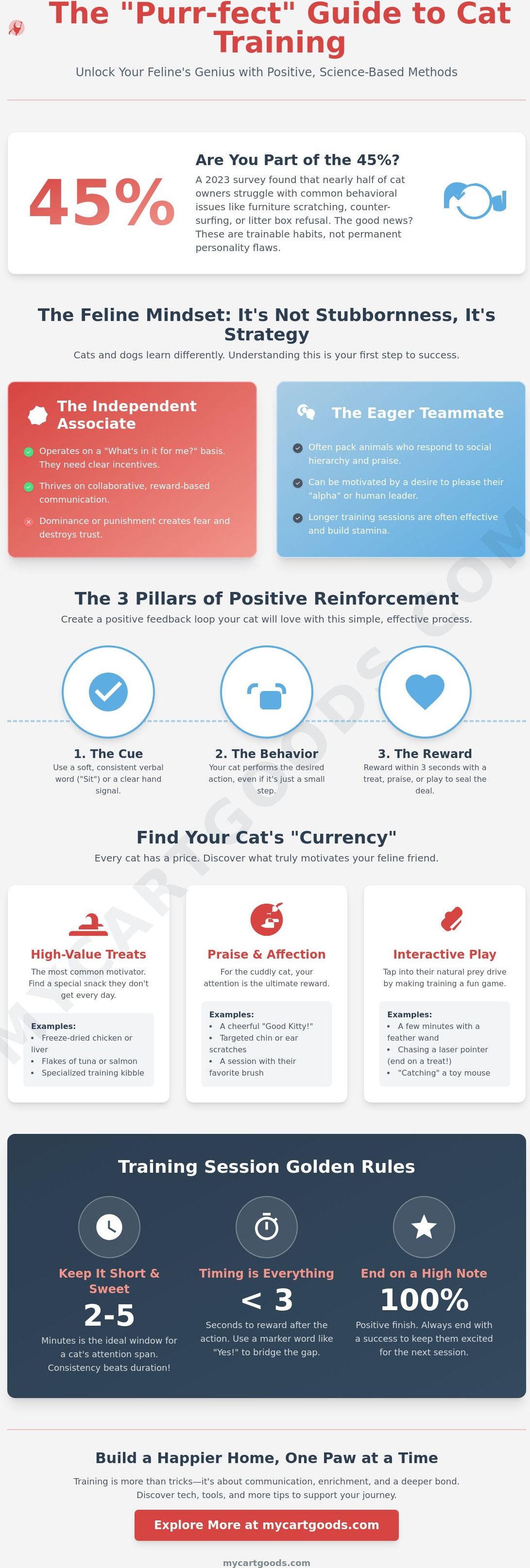
What if the secret to a scratch-free sofa isn't a spray bottle, but a deeper understanding of your fur baby's brilliant mind? Many pet parents feel defeated when their kitty ignores commands or treats a new high-tech automatic feeder like a terrifying alien prop. You aren't alone; a 2023 survey by the American Pet Products Association highlighted that 45% of cat owners struggle with behavioral issues like furniture scratching or litter box refusal. It's a common frustration, yet the idea that cat training is impossible is simply a myth we're ready to bust together. 🐾
We're here to help you master the art of feline education using love, rewards, and the handpicked tools that provide everything your fur baby deserves. You'll discover how to communicate from nose to tail, ensuring your home remains a cozy sanctuary for every family member. This guide provides a step-by-step look at feline psychology and the specific techniques needed to build a well-behaved, joyful companion. We'll show you how to turn those stressful moments into opportunities for connection while building your confidence in using the latest pet technology. 🐾
Key Takeaways
- Unlock the secrets of feline psychology to understand what truly motivates your fur baby, transforming every interaction into a joyful bonding session.
- Master the "Big Three" essential commands using positive reinforcement and high-value rewards to make cat training both effective and fun. 🐾
- Learn how to seamlessly introduce tech-savvy tools like self-cleaning litter boxes and smart gadgets without causing your feline friend any stress.
- Discover "nose to tail" strategies to curb unwanted behaviors like counter-surfing using gentle, fear-free techniques that protect your home's harmony.
- Explore how a carefully curated environment, from Panda Cows accessories to interactive play, supports your pet’s mental growth and physical well-being.
The "Purr-fect" Mindset: Can You Really Train a Cat?
You've probably heard the old saying that training a cat is like herding, well, cats. It's a common misconception that our feline friends are too stubborn or aloof to learn new behaviors. In reality, your fur baby is a tiny genius waiting for the right motivation. While dogs often work for praise, cats operate on a more transactional level. They're highly intelligent creatures that simply require a different set of rules to succeed. 🐾
Understanding feline motivation is the secret ingredient to success. It's always about "what's in it for me?" in the feline world. By using mouthwatering treats or their favorite feather wand, you can encourage your cat to perform amazing feats. Beyond the fun tricks, cat training provides vital mental stimulation that can reduce anxiety by up to 25% in indoor pets according to behavioral experts. It strengthens your bond from nose to tail, creating a happy home where everyone understands each other. Cat training is a collaborative, reward-based communication system rather than a command-based one.
Cat vs. Dog Training: The Key Differences
Dogs are pack animals that often respond to social hierarchy, but cats don't care about being "alpha." Dominance-based methods will only make your cat hide under the sofa. You'll see the best results by keeping your sessions high-energy and incredibly brief. A 2021 study of feline behavior suggests that 2 to 5 minutes is the ideal window for learning. Anything longer and your cat will likely wander off to find a sunbeam for a nap. Consistency matters more than duration when you're working with their unique attention spans.
The Science of Positive Reinforcement
Learning happens through associative logic. When your cat performs a specific action and immediately receives a handpicked, nutritious treat, they connect that behavior with a positive outcome. Punishment methods like spray bottles or shouting are counterproductive. These tactics create fear and destroy the trust you've worked so hard to build with your pet. Instead, focus on these core elements:
- Immediate Rewards: Give the treat within 3 seconds of the desired action.
- Gentle Cues: Use soft, consistent hand signals or verbal words.
- Trust Building: Always end on a positive note to keep them eager for the next session.
Using cat training to bridge the communication gap ensures your pet feels safe and loved while they learn. This science-based approach turns every interaction into a moment of joy. Everything Your Fur Baby Deserves starts with a foundation of trust and celebratory interaction. 🐾
Motivation & Rewards: Finding Your Fur Baby’s "Why"
Cats aren't small dogs; they operate on a "what's in it for me?" basis that requires a bit of detective work from their favorite humans. To succeed at cat training, you must identify the specific reward that makes your kitty's heart sing. Every fur baby has a unique "currency" that unlocks their cooperation, and discovering it is the secret to a happy, well-behaved companion. 🐾
High-value treats are the most common motivators for a food-driven feline. Think beyond standard meals and look for mouthwatering options like tuna flakes, freeze-dried chicken liver, or handpicked specialized kibble that feels like a rare delicacy. Whether your kitty is a picky eater or a gourmet snacker, these nutritious rewards create a strong positive association with your commands. For cats that aren't motivated by their stomachs, verbal praise or a targeted chin scratch can be just as effective. A cheerful "Good kitty!" or a session with a soft brush helps build a "nose to tail" bond of trust and affection.
The Art of Timing: When to Reward
Timing is everything when you are working on cat training. You must follow the "three-second rule" to ensure your pet connects the reward with the desired action. If you wait longer than three seconds to deliver a treat, your cat might think they are being rewarded for sitting, blinking, or simply looking cute. Using a consistent marker word like "Yes!" or a mechanical clicker helps bridge this gap. This clear communication prevents you from accidentally rewarding bad behavior, such as meowing for food at the dinner table. When you reward only the specific moments of success, your fur baby learns exactly how to earn those extra snuggles and snacks.
Using Interactive Toys for Mental Training
Interactive toys are incredible tools for cats with a high prey drive. These items mimic the natural hunting instinct, turning a training session into a rewarding game of "catch and eat." You can start by using treat-dispensing gadgets that require your cat to solve a puzzle before getting their prize. This provides essential mental stimulation while reinforcing good habits. As your cat becomes more confident, you can transition from food-based rewards to play-based rewards using feather wands or laser pointers. Check out our favorite interactive cat toys for training! These tools help create a happy home where your fur baby feels challenged, loved, and completely understood.
Step-by-Step: Teaching the Essential "Big Three" Commands
Training your fur baby is a beautiful way to strengthen your bond while ensuring their safety and happiness. While some skeptics believe felines are too independent for lessons, cat training is actually a rewarding experience that taps into their natural curiosity and intelligence. By using positive reinforcement, you can guide your pet from nose to tail with these three foundational skills. 🐾
- Step 1: The "Sit" command. Hold a mouthwatering treat just above your cat's nose. Slowly move your hand back toward their ears. As their nose goes up to follow the scent, their rear end will naturally lower into a sitting position. Click or say "Yes!" the moment their bottom hits the floor, then deliver the reward immediately.
- Step 2: The "Come" command. This is the most vital safety skill your cat can learn. It builds a reliable recall that helps you locate them if they slip out the door or hide during an emergency. It turns a potential panic into a simple request.
- Step 3: The "Target" command. This involves teaching your cat to touch a specific object, like your finger or a target stick, with their nose. It serves as the "steering wheel" of cat training, allowing you to guide them without the stress of being picked up or forced.
If your feline friend decides to walk away mid-session, don't take it personally. A 2019 study published in Scientific Reports highlights that while cats recognize their names and instructions, their social focus is often shorter than a dog's. Most sessions should only last 5 to 10 minutes. If they lose interest, simply end on a high note and try again later when they are feeling more motivated for snacks. 🐾
Mastering the Recall (Coming When Called)
Success starts in a quiet room with zero distractions. You want your cat to focus entirely on your interaction. Use a unique sound, such as a soft whistle or a specific vocal cue, that is reserved strictly for this command. Start just two or three feet away. When they move toward you, reward them with their favorite handpicked treat. Gradually increase the distance across the house until they are sprinting from the bedroom to the kitchen the moment they hear your signal.
Target Training for Easier Vet Visits
Target training is a game-changer for a stress-free lifestyle. You can use a target stick to lead your cat directly into their carrier, which eliminates the struggle before vet visits. This technique makes handling and grooming much smoother for both of you. Pair training with a self-cleaning slicker brush for a happy grooming experience. By making the brush the target, your fur baby learns to associate grooming with rewards and play. This proactive approach ensures your home remains a peaceful sanctuary from nose to tail. 🐾
Beyond Tricks: Training for Gadgets, Grooming, and Good Manners
Cat training extends far beyond the "sit" and "stay" commands we love to show off to friends. It's about creating a lifestyle where your fur baby feels confident using modern conveniences while respecting your home's boundaries. In a modern home, this often means helping your pet embrace the technology designed to make their life better. To ensure your pet feels safe with new electronics, practice a gradual desensitization process by letting them explore the unplugged device for 5 to 7 days while offering mouthwatering rewards to build positive associations. 🐾
Conquering the Self-Cleaning Litter Box
Transitioning to a high-tech litter solution requires patience and a "nose to tail" approach to comfort. Start by placing the new box near the old one without turning it on. Cats are sensitive to sudden movements and mechanical whirs; a surprise cleaning cycle can cause a setback that lasts weeks. To bridge the gap, mix about 2 cups of "old litter" into the new machine to provide a familiar scent that signals safety. Reward your cat with a favorite treat every time they simply stand near or step inside the box. Once they're using it consistently for 10 days, you can finally activate the automatic features while they're out of the room.
Automatic Feeder Etiquette
Smart feeders are a game-changer for maintaining a consistent schedule, but they require a bit of feline education. You can use these gadgets to manage those "hangry" 5:00 AM wake-up calls by training your cat to associate the "chime" of the feeder with mealtime rather than your face. When the feeder alerts, ignore your cat's meows and let the machine do the work. This redirection teaches them that the gadget, not the human, is the provider of kibble. Discover our top-rated automatic feeders to simplify your routine.
Training for the table is another essential part of a happy home. Prevent counter-surfing by providing a dedicated "high perch" nearby, such as a cat tree or stool. When your cat jumps on the counter, calmly place them on their perch and offer a treat there. This positive redirection works much better than fear-based methods like spray bottles, which only teach your fur baby to be afraid of you. Consistency is the secret; a 2019 study on feline behavior suggests that cats respond most effectively to rewards-based boundaries established over a 3-week period.
Grooming training is the final piece of the puzzle. You can make the slicker brush a source of joy by starting with 30-second sessions while your cat is relaxed. Touch the brush to their shoulder, give a treat, and stop. By slowly increasing the duration, you turn a potentially stressful chore into a cozy bonding experience. Your fur baby deserves to feel pampered and loved during every step of their care routine.
Building a Happy Home: Tech and Tools to Support Your Journey
Successful cat training doesn't just happen on a yoga mat or a kitchen counter. It starts with a home environment that whispers "you are safe" to your feline friend. When your cat feels secure, their brain moves out of survival mode and into a state of curiosity. We call this our "Nose to Tail" philosophy. It's the belief that balancing a cat's physical needs for comfort with their mental need for growth creates a harmonious household. By setting up a dedicated Training Zone, you give your fur baby a predictable space to excel. This could be a window perch set 4 to 5 feet high to boost their confidence or a quiet corner away from the hum of the refrigerator where they can focus 100% on you. 🐾
Think of your home as a classroom. If the classroom is loud or uncomfortable, no one learns well. You can optimize your space by:
- Using vertical perches to help your cat feel "in control" of the room.
- Designating a specific rug or mat as the "learning spot" to trigger focus.
- Minimizing background noise during the first 10 sessions of any new trick.
The Role of Comfort in Learning
A well-rested cat is a focused student. Research from veterinary behaviorists shows that cats spend 12 to 16 hours a day sleeping to maintain cognitive function. If your fur baby is stiff or tired, they’ll be irritable and less likely to engage in cat training. High-quality rest allows their brain to process the day's lessons. Using calming donut beds provides a "safe base" where they can retreat after a successful session. This positive association between work and luxury rest makes them eager for the next round. Explore our orthopedic memory foam beds for the ultimate post-training nap.
Your Next Steps as a Pro Pet Parent
Consistency is the secret sauce to a happy home. A quick 5-minute session every single day is 60% more effective than a grueling 1-hour session once a week. Keep the energy light and celebratory. If you feel your frustration levels rising because they won't "sit" on command, stop immediately. Your cat reads your body language in milliseconds. If you're not having fun, they won't be either. Training is a lifelong conversation that makes purrs louder and tails wag faster over their 15 to 20 year lifespan. It's about the bond, not just the behavior. Browse our full collection for everything your fur baby deserves to live their best, most educated life. 🐾
Just as you meticulously select the best tech and tools for your cat’s environment, you can apply that same standard of excellence to your car’s maintenance; check out SKY MAXPRO to discover how professional-grade ceramic restorers can protect your vehicle's surfaces. 🐾
Unlock Your Cat's Full Potential Today
Training your feline friend is more than just a fun hobby; it's a way to build a deeper bond through positive reinforcement and the right motivation. You've learned that successful cat training starts with understanding your fur baby's unique personality and using high-value rewards to master the "Big Three" commands. Whether you're teaching them to sit or helping them get comfortable with a smart feeder, the journey is all about patience and love.
Creating a happy home means providing the best tools for your companion's growth. We've already helped over 10,000 happy pet parents find the perfect balance of comfort and innovation. Our team at MyCartGoods curates ultra-safe pet technology that makes every day easier for you and your fur baby. You can browse our handpicked selection with confidence, and we'll even provide free shipping on all innovative pet gear to ensure your home is fully equipped for success.
Give your fur baby the tech and comfort they deserve; Shop MyCartGoods now!
Your journey to a more harmonious home is just beginning, and we're so excited to see your bond grow stronger with every purr and high-five!
Frequently Asked Questions
Can you really train an older cat, or is it only for kittens?
You can absolutely train an older cat, as feline brains remain plastic and capable of learning throughout their lives. A 2020 study from Oregon State University confirmed that 75% of cats respond to social cues regardless of their age. Whether your fur baby is a kitten or a 10 year old senior, they crave mental stimulation. Start with 5 minute sessions to keep your mature companion engaged and happy. 🐾
How long does it typically take to train a cat to do a trick?
It typically takes 1 to 2 weeks for a cat to master a simple trick like sitting or giving a high five. Most cats require 5 to 10 consistent sessions to fully grasp a new behavior. Success depends on the complexity of the task and the frequency of your interactions. Short, daily repetitions ensure your fur baby remembers their new skills from nose to tail. 🐾
What should I do if my cat is scared of the self-cleaning litter box?
You should leave the self-cleaning litter box turned off for 3 to 5 days while your cat gets used to its presence. Feline behavioral surveys show that 25% of cats feel hesitant around new automated machinery initially. Place familiar litter inside and reward them with treats when they investigate the unit. Once they're comfortable using it as a regular box, you can safely activate the cleaning cycle. 🐾
Is clicker training better than just using treats?
Clicker training is more precise because it marks the exact moment of success within 0.5 seconds, which is much faster than reaching for a treat. This clear communication helps your fur baby understand exactly what they did right. Using a clicker alongside handpicked, nutritious treats creates a powerful learning environment. This combination speeds up the cat training process by bridging the gap between action and reward. 🐾
My cat isn’t food-motivated; how else can I reward them?
You can use favorite toys, chin scratches, or enthusiastic praise as effective rewards for your fur baby. Research by animal behaviorists suggests that 35% of cats actually prefer social interaction over kibble or treats. Identify if your pet loves a specific feather wand or a cozy grooming session. Using what they love most makes every session a celebratory experience for both of you and builds a deeper bond. 🐾
How do I stop my cat from scratching the furniture using training?
You can stop furniture scratching by providing 2 or 3 sturdy scratching posts that are at least 32 inches tall. This height allows your fur baby to get a full, satisfying stretch without targeting your sofa. Use positive cat training techniques by placing treats on the post to encourage its use. Redirecting their natural instincts to these designated spots keeps your home stylish and your pet content. 🐾
Is it okay to use a spray bottle as a training tool?
You should avoid using a spray bottle because negative reinforcement often causes fear and breaks the trust between you and your fur baby. Studies indicate that punishment can increase a cat's cortisol levels by 30%, which leads to more behavioral issues. Focus instead on rewarding the good things they do. Providing nose to tail care means using gentle, supportive methods that make your home a happy sanctuary. 🐾
How often should I have training sessions with my cat?
You should aim for 2 or 3 training sessions every day to keep the lessons fresh in your cat's mind. Keep these interactions short, ideally between 2 and 5 minutes, so your fur baby doesn't lose interest or feel overwhelmed. Consistency is the secret to success. Frequent, brief bursts of learning fit easily into your lifestyle and ensure your pet gets everything they deserve. 🐾