

What if your high-tech litter solution could smell as fresh on day 1,000 as it did the very first moment you brought it home? You've likely invested in a self cleaning cat litter box to reclaim your time and keep your living space pristine, yet the cleaning and maintenance of automatic litter boxes can sometimes feel like a high-stakes puzzle. Lingering ammonia scents or a sudden mechanical jam from hidden dust can quickly dampen that domestic harmony you've worked so hard to create. It's natural to feel protective of your tech, especially when you're unsure which components are waterproof and which sensors need a gentle, expert touch.
We all want our precious fur babies to enjoy a hygienic, sparkling environment that supports their health and happiness every single day. Mastering these simple habits is a true love language for the modern pet parent, ensuring your device runs perfectly for five years or more. This guide covers the best enzymatic cleaning secrets, simple ways to prevent motor jams, and a step by step routine that turns high-tech upkeep into a quick, effortless joy for your entire household.
Key Takeaways
- Discover how proactive care can extend your unit's lifespan by five years and keep your home smelling completely fresh for your family.
- Identify the delicate sensors and motor parts that require special attention to prevent mechanical jams and ensure your cat's safety.
- Master a streamlined routine for the cleaning and maintenance of automatic litter boxes that separates quick daily tasks from deep monthly scrubs.
- Learn the proper way to power down and disassemble your device so you can reach every hidden corner without damaging the electronics.
- Choose the perfect low-dust litter to protect your sifting mechanism and keep the motor running smoothly for years to come.
Why Proactive Care is the Heart of a Happy, Odor-Free Home
Your home is a sanctuary, a place where the rhythmic purring of your happy kitty creates a sense of pure domestic harmony. While your Self-cleaning litter boxes are designed to handle the heavy lifting, the cleaning and maintenance of automatic litter boxes is about more than just a tidy room; it's a commitment to your pet's long-term joy. When we prioritize hygiene, we aren't just scrubbing a machine; we're crafting a welcoming space that prevents behavioral issues like litter box avoidance. Cats are famously fastidious creatures, and a neglected box is often the primary source of household stress and feline anxiety.
By staying ahead of the grime, you can easily extend the life of your premium device by three to five years, protecting that initial investment while keeping your home smelling like a fresh spring morning. These sophisticated machines rely on hyper-sensitive infrared and weight sensors to keep your fur baby safe, and even a thin layer of litter dust can interfere with their 100% accuracy. A quick wipe-down ensures the "brain" of your unit stays sharp, preventing the mechanical errors that lead to frustration and potential jams.
The Link Between Hygiene and Feline Health
Every pet parent knows that a happy kitty is a healthy kitty. By reducing bacteria buildup through regular deep cleans, you're actively protecting your cat from common urinary tract infections and uncomfortable skin irritations. It's not just about the box itself; clean stations prevent the spread of dust-borne allergens that can float through your living space and affect everyone in the family. When your cat steps into a spotless, fresh-smelling globe, they feel safe, respected, and pampered. This sense of security reduces feline anxiety, ensuring that your bond remains strong and full of affectionate head-butts. A sparkling station is a clear signal to your pet that their comfort is your top priority.
Protecting Your High-Tech Investment
It's tempting to think of automated pet tech as a "set it and forget it" solution, but that's a common myth that can lead to early mechanical failure. Even the most advanced Self Cleaning Cat Litter Box needs a little human love to stay in peak condition. Consistent cleaning and maintenance of automatic litter boxes prevents the gears from grinding against stray granules, which is the leading cause of motor burnout. Preventing motor strain is as simple as managing litter weight and clearing out clump buildup before it hardens against the internal liner.
Think of it as a small weekly ritual that pays massive dividends:
- Check the tracks: Ensure no stray litter has entered the gear mechanisms.
- Wipe the sensors: Use a dry microfiber cloth so the unit sees your pet clearly.
- Refresh the liner: Quick sprays with an enzymatic cleaner prevent sticky residue.
Investing just ten minutes of weekly care is a small price to pay compared to the frustration of expensive repairs or a total device replacement. You've chosen a modern, automated lifestyle for the convenience, and a proactive approach ensures that convenience lasts for many years to come.
Understanding the Anatomy: Sensors, Motors, and Moving Parts
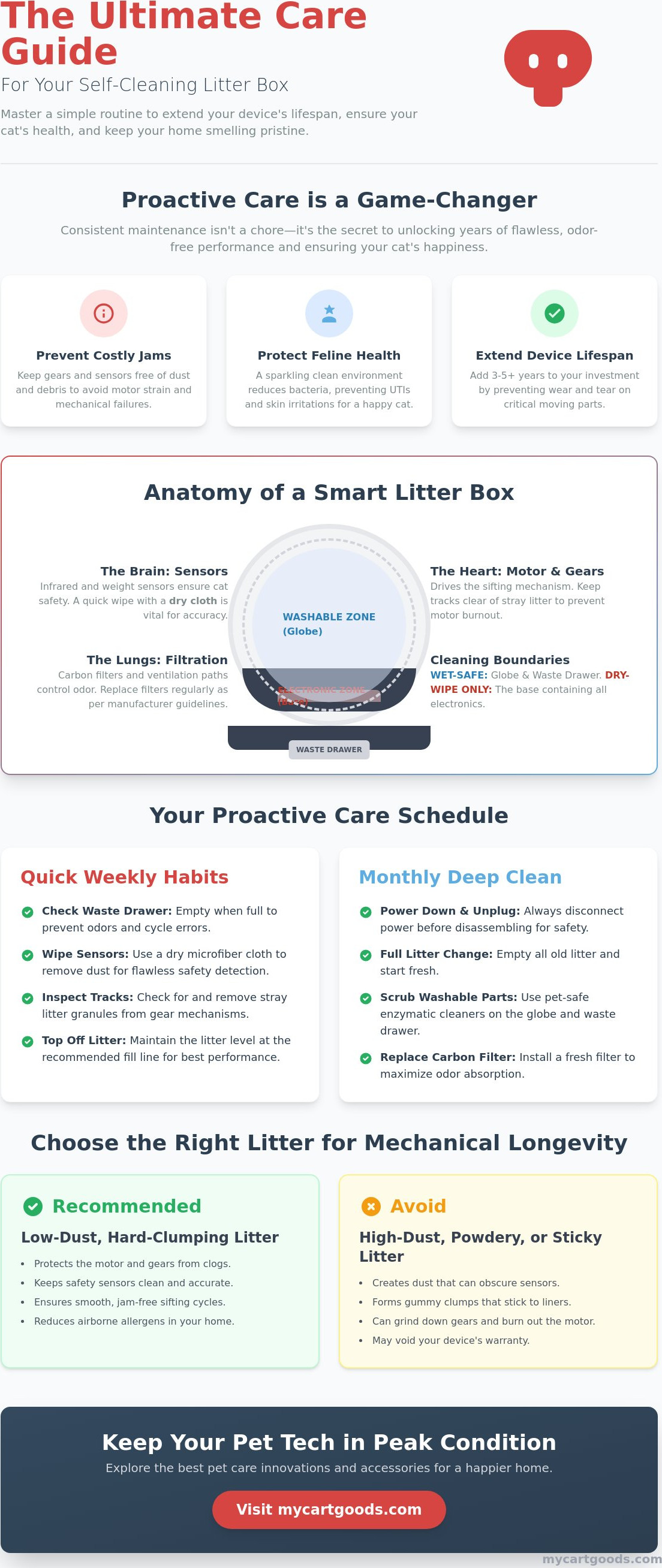
To keep your fur baby's environment pristine, you have to know what's happening under the hood. Think of your Self Cleaning Cat Litter Box as a living part of your household ecosystem. It has a "Brain" made of infrared and weight sensors that constantly monitor your kitty's movements. These components are vital for safety; they ensure the cycle only starts when your pet is safely outside. Citing veterinary advice on litter box maintenance helps us understand that a malfunctioning sensor doesn't just cause a mess; it can stress your cat and lead to box avoidance. A clean machine is a reliable one.
The "Heart" of the machine is the motor. This powerhouse drives the rotation or raking mechanism that sifts through the waste. Then you have the "Lungs," which are the ventilation paths and carbon filtration systems designed to keep your home smelling like a dream. Before you grab the sponge, remember that only certain parts are wet-safe. The globe and waste drawer are usually ready for a deep scrub, but the base is an electronic-only zone that requires a gentle, dry touch. Mastering the cleaning and maintenance of automatic litter boxes starts with respecting these boundaries.
Sensor Care: The Secret to Reliable Cycling
Sensor failure is the most common reason for a "false full" reading or a stalled cycle. To keep the cleaning and maintenance of automatic litter boxes effortless, keep a can of compressed air nearby. Use it to blow out dust from the recessed infrared eyes every time you change the drawer liner. Dust acts like a blindfold for your machine. You should also wipe down the weight sensors located in the feet or base with a dry microfiber cloth. This ensures the unit accurately detects your cat's weight, which is a critical safety feature that keeps your kitty feeling protected and pampered.
Motor and Gear Maintenance
A grinding sound is the last thing you want to hear in your peaceful home. It usually means stray litter granules have found their way into the gear tracks. Check these tracks weekly to prevent the motor from straining against the grit. If you notice the movement becoming sluggish, a tiny drop of pet-safe lubricant on the moving joints can work wonders. Catching these signs of motor stress early prevents a total mechanical failure. By performing these small acts of care, you're ensuring your high-tech investment stays in peak condition for years of happy purrs and domestic harmony.
Creating Your Care Schedule: Daily Habits vs. Monthly Deep Cleans
Maintaining a rhythmic care routine is the secret to a home that feels like a sanctuary. While your Self Cleaning Cat Litter Box handles the heavy lifting, a tiny bit of human attention keeps the magic alive. Consistent cleaning and maintenance of automatic litter boxes ensures your device remains a welcoming place for your fur baby rather than a source of lingering odors. Think of these micro-tasks as small acts of devotion that keep your household humming with happiness. When you stay ahead of the grime, you create a seamless experience that feels less like a chore and more like part of your shared domestic harmony.
A quick 60-second daily check makes a world of difference. Perform a simple "sniff test" to ensure the carbon filters are doing their job and check that the waste drawer isn't nearing its limit. If you notice a stray paw print on the step, a quick wipe with a pet-safe cloth keeps the entrance inviting. These tiny moments prevent small issues from turning into big, smelly problems. It's the easiest way to keep your living space fresh while ensuring your kitty feels pampered every time they step inside.
The Weekly Wellness Check
Every week, take a few minutes to perform a more thorough wellness check. Wiping the exterior with a non-toxic enzymatic cleaner removes the microscopic dust that sensors hate. It's the perfect time to check the waste drawer seal for any gaps that might let odors escape. Following litter box cleaning best practices ensures your cat enjoys a consistent environment. Always top off your litter to the "ideal fill line" to prevent waste from sticking to the liner.
The Monthly Deep Clean Framework
Once a month, your high-tech station deserves a "Monthly Reset." Plan this teardown when your litter level is naturally low. This non-negotiable step involves a full disassembly where you separate the non-electronic globe from the base. Give these components a safe soak in warm, soapy water to break down stubborn residue. While parts dry, inspect the liner for tiny tears where bacteria love to hide. This keeps the cleaning and maintenance of automatic litter boxes effective and your pet healthy.
Don't forget your seasonal filter replacements to keep your home smelling like a fresh meadow. Swapping out carbon filters every three months ensures the ventilation system works at peak efficiency. This simple habit, combined with your daily and monthly rituals, creates a sparkling environment that both you and your precious fur baby will love for years to come.
The Ultimate Step-by-Step Deep Cleaning Masterclass
Deep cleaning is essentially a monthly spa day for your favorite pet tech. It's the moment where you go beyond the surface to ensure every nook and cranny is as fresh as a daisy. To begin this ritual, you must first power down and unplug the unit. This simple step is the only way to protect the sensitive internal circuitry from accidental moisture while you work. Once the power is off, perform a complete disassembly by separating the globe or sifting tray from the electronic base. Set the base aside in a safe, dry location, as this separation is the cornerstone of safe cleaning and maintenance of automatic litter boxes.
With the non-electronic components separated, it's time for the "Enzymatic Soak." Submerge the globe or tray in warm water mixed with a pet-safe cleaner. This process breaks down stubborn organic waste and those microscopic odors that standard detergents often leave behind. While the globe is soaking, use a lightly dampened cloth to wipe the exterior of the base, being careful to stay away from the sensor windows we identified in the anatomy section. This thoroughness ensures your device runs perfectly for years while providing a hygienic haven for your precious kitty.
Choosing Pet-Safe Cleaning Agents
Selecting the right supplies is a true act of love for your fur baby. You must avoid ammonia-based cleaners at all costs because ammonia mimics the scent of feline urine, which can actually trick your cat into spraying outside the box. High-quality enzymatic cleaners are your best friend; they specifically target and neutralize feline pheromones and odors. If you prefer a gentle, home-grown touch, a simple mixture of baking soda and mild dish soap provides a safe, effective alternative that keeps the station sparkling without harsh chemicals.
The Drying Phase: Don’t Rush the Magic
Patience is key during the drying phase. Even a single drop of hidden moisture can cause fresh litter to "cement" to the liner, creating a sticky mess that puts unnecessary strain on the motor. Use a soft microfiber cloth to reach into the hidden crevices of the sifting screen and the liner's edges. If it's a beautiful day, let the components air-dry in direct sunlight. The sun's natural UV rays provide an extra layer of disinfection that leaves the station feeling truly rejuvenated. Once everything is bone-dry, reassemble the unit and run a "System Test" to ensure the sensors are perfectly calibrated. If you're looking to simplify your routine even further, consider adding a new Self Cleaning Cat Litter Box to your home for the ultimate in high-tech harmony.
Beyond the Scrub: Choosing the Right Litter for Mechanical Longevity
Choosing the right litter is the final piece of the puzzle in your journey toward a perfect, high-tech sanctuary. It's the fuel that powers your machine; picking the wrong type is like putting the wrong oil in a luxury car. Low-dust litters are the true best friends of your automatic box’s motor. Dust is a silent villain that finds its way into gear tracks and onto sensor windows, leading to the mechanical stress we want to avoid. When you select a litter with superior clump strength, the sifting mechanism works with effortless efficiency. This prevents the motor from straining against half-formed, heavy clumps that can stick to the liner and cause unnecessary wear. Keeping the cleaning and maintenance of automatic litter boxes simple starts with what you pour inside the globe.
While lightweight litters are easy on your back, they can sometimes confuse weight-sensitive safety sensors by not providing enough resistance to trigger an accurate reading. This can lead to safety pauses or missed cycles. To ensure you've picked a machine designed to handle these nuances with grace, you can explore our curated list of the best self-cleaning cat litter boxes. Matching the right litter to the right machine is a love language that ensures your fur baby always has a fresh place to step.
Litter Texture and Gear Wear
The texture of your litter plays a massive role in how long your gears will last. Silica or crystal litters can be dangerous in certain raking models, as the hard, jagged pieces can jam the rake or grind down the plastic tracks. For rotation-based tech, premium clumping clay is often the "gold standard" because it creates predictable, solid waste that rolls easily into the drawer. Always monitor for "litter tracking" into the base of the machine. If you see granules escaping the globe and entering the electronic base, it's time to adjust your fill levels or try a different brand to protect the heart of your unit.
The Finishing Touch: Odor Neutralizers
Once you've mastered the cleaning and maintenance of automatic litter boxes, you can add a few final touches for a truly fresh home. Litter additives like baking soda or specialized crystals can boost the machine’s built-in filtration, especially during the humid summer months. Activated carbon in the waste drawer environment is a game-changer; it traps ammonia before it ever reaches your nose. These small additions are part of a modern pet supply setup that prioritizes both convenience and your fur baby's well-being. By combining the right litter with a proactive care schedule, you're creating a home where domestic harmony and high-tech hygiene live side by side.
Step Into a World of Sparkling Pet Care Harmony
You've now unlocked the secrets to keeping your high-tech sanctuary running with effortless precision. By mastering the cleaning and maintenance of automatic litter boxes, you aren't just protecting a sophisticated device; you're crafting a pristine environment that supports your pet's health and happiness. Remember that consistent sensor care and the right choice of low-dust litter are the keys to a motor that lasts for years. These simple, proactive habits transform a routine chore into a celebration of your shared bond, ensuring your home remains a fresh and welcoming haven for everyone.
At MyCartGoods.com, we've already served over 10,000 happy fur babies with our specialized range of innovative pet technology. We understand that modern, busy pet parents deserve solutions that are as reliable as they are convenient. It's time to say goodbye to lingering odors and hello to a future of domestic bliss. Explore the most advanced Self-Cleaning Litter Boxes at MyCartGoods.com! Your journey toward a more hygienic, stress-free lifestyle is just a click away, and your precious fur baby is going to love every sparkling moment of it.
Frequently Asked Questions
Can I use a hose to wash my automatic litter box?
You can use a hose only for the non-electronic components like the globe and the waste drawer. Never spray the base or any part containing a motor or circuit board, as water will cause permanent damage to the internal electronics. A garden hose is perfect for a deep monthly scrub of the plastic parts as long as you ensure every piece is bone-dry before reassembly.
How often should I replace the carbon filters in my self-cleaning box?
You should replace your carbon filters every three months to maintain peak odor control in your home. This seasonal swap keeps your living space smelling like a fresh meadow and prevents the ventilation system from getting clogged with fine dust. If you have multiple fur babies, you might find that changing them every two months provides that extra layer of domestic harmony you crave.
What should I do if my automatic litter box still smells after cleaning?
If odors linger, you likely need a deeper enzymatic soak to reach bacteria trapped in the liner's microscopic scratches. Check the seal around the waste drawer for gaps and ensure you aren't using ammonia-based cleaners that mimic the scent of urine. A thorough cleaning and maintenance of automatic litter boxes routine should always include a "sniff test" of the carbon filter and the internal sifting screen.
Is it safe to use bleach to disinfect the litter globe?
It's best to avoid bleach because it's too harsh for the rubber liners and its strong scent can actually discourage your cat from using the box. Bleach lacks the enzymatic power needed to break down feline pheromones effectively. Stick to pet-safe enzymatic cleaners or a gentle mixture of baking soda and mild dish soap to keep the environment inviting and safe for your precious kitty.
Why is my automatic litter box sensor light blinking after I cleaned it?
A blinking light usually indicates that a sensor is blocked by dust or that the unit needs to be reset. Use a dry microfiber cloth to wipe the infrared eyes and weight sensors to clear any remaining debris. If the light persists, ensure the globe is seated perfectly on the base, as even a tiny misalignment can prevent the "brain" from starting a new cleaning cycle.
Can I use any type of cat litter in an automatic litter box?
No, you must use high-quality clumping litter that is compatible with your specific sifting mechanism. Most rotating models require premium clumping clay to ensure solid waste rolls easily into the drawer. Avoid using non-clumping, wood-based, or large-crystal litters unless your manual specifically recommends them, as these can jam the gears and strain the motor over time. Choosing the right texture is vital for mechanical longevity.
How do I clean the sensors without scratching them?
Use a clean, dry microfiber cloth or a can of compressed air to remove dust without leaving scratches. These sensors are the "brain" of your unit and require a very gentle touch to stay accurate. Avoid using paper towels or abrasive sponges, as microscopic scratches on the sensor windows can lead to "false full" readings and interrupted cycles. Keeping these windows clear is a simple way to ensure 100% accuracy.
What are the best pet-safe cleaners for automated gadgets?
Enzymatic cleaners are the gold standard for the cleaning and maintenance of automatic litter boxes because they naturally dissolve organic waste and pheromones. For a DIY touch, a simple solution of warm water, mild dish soap, and a sprinkle of baking soda works wonders. These choices are safe for your fur baby's sensitive paws and won't damage the high-tech components of your favorite modern pet supplies.