

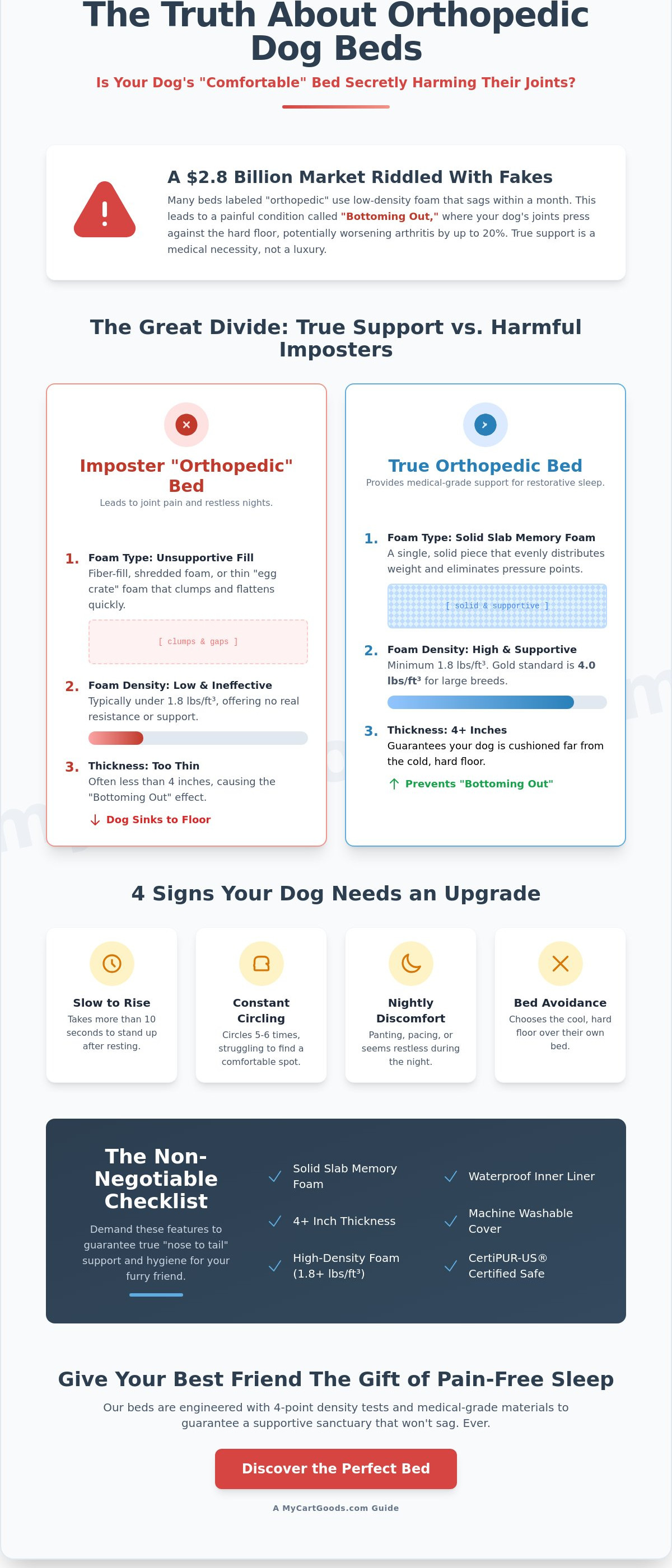
What if the bed you bought to help your dog's aching joints is actually making their pain worse? With the global orthopedic dog bed market hitting $2.8 billion in 2025, it's clear we all want the best for our pets, yet many "orthopedic" labels are just clever marketing for low-density foam that sags within a month. Choosing a high-quality orthopedic memory foam dog bed is a medical necessity for your fur baby, especially since true joint relief requires a foam density of at least 1.8 lbs/cubic foot and a thickness of 4 inches to prevent "bottoming out" on the cold floor. 🐾
We know it's hard to watch your loyal companion limp or struggle with the stairs, and we believe every pet deserves a happy home and restorative sleep. You are about to discover how to decode 2026 CertiPUR-US safety standards and comprehensive chemical safety standards to find a durable, supportive sanctuary. This guide explains how to select a bed that won't flatten, ensuring your dog enjoys improved mobility and cozy, nose to tail comfort for years to come.
Key Takeaways
- Learn why a medical-grade sleep surface is essential for your fur baby’s "nose to tail" health and daily energy levels.
- Discover the science behind solid slab memory foam and why it’s the only way to truly eliminate painful pressure points.
- Identify the must-have features like waterproof liners and washable covers that keep your pup’s sanctuary hygienic and cozy.
- Master the art of measuring your dog to find the perfect orthopedic memory foam dog bed that supports every limb comfortably.
- See how our handpicked selection process and 4-point density tests take the guesswork out of finding a bed that won't sag. 🐾
Why Your Fur Baby Needs a Real Orthopedic Memory Foam Dog Bed
Watching your fur baby age is one of the hardest parts of being a pet parent. You might notice they don't jump on the couch quite as fast as they did in 2023, or they take a few extra seconds to stretch out their legs after a nap. This is exactly where an orthopedic memory foam dog bed becomes more than just a luxury; it’s a medical-grade tool designed to distribute their body weight evenly across the entire surface. By cradling every curve, it eliminates the painful pressure points that cause restless nights and morning grogginess. This technology relies on the Science of Memory Foam, which uses viscoelastic properties to respond to heat and pressure, ensuring your pup doesn't just sink, but is actually supported from the ground up.
We focus on "nose to tail" care because your dog’s spine is the highway for their entire nervous system. Proper alignment on a high-density bed helps keep their digestive organs in the right position and keeps their energy levels high for afternoon walks. When a dog sleeps on a cheap, fiber-fill bed, they often "bottom out." This means their heavy joints are essentially resting on the hard, cold floor, which can increase inflammation and worsen arthritis symptoms by 15% to 20% over time. If you see these signs, your pup is likely ready for a serious upgrade:
- Taking longer than 10 seconds to stand up in the morning.
- Circling their bed five or six times without finding a comfortable spot.
- Panting or pacing during the night due to joint heat or discomfort.
- Avoiding their current bed entirely to sleep on the flat rug or cool tile.
Understanding Joint Health and Sleep
Restorative sleep is the secret to a happy, vibrant senior dog. For pups dealing with hip or elbow dysplasia, a supportive orthopedic memory foam dog bed reduces the swelling that makes daily walks a struggle. It also protects their cognitive function; deep, uninterrupted sleep cycles help older dogs process memories and stay mentally sharp as they age. Orthopedic support is the essential intersection of weight distribution and temperature regulation. 🐾
The Difference Between 'Soft' and 'Supportive'
Many parents buy a bed because it feels "fluffy" to the touch, but fluff is often the enemy of joint health. A soft bed usually lacks the density to hold a dog's weight, leading to the "Bottoming Out" effect. To test this, press your palm firmly into the center of the bed. If you can feel the floor through the padding, your fur baby’s joints are hitting that same hard surface. Transitioning from a standard "lifestyle" bed to a dedicated "care" bed means choosing a solid slab of foam that resists sagging and provides the consistent lift your pup needs to feel like a puppy again.
Memory Foam vs. Traditional Padding: The Science of Support
Not all foam is created equal, and your fur baby’s joints can tell the difference. Traditional padding, like fiber-fill or shredded foam, is essentially a collection of loose materials stuffed into a cover. It shifts and clumps, leaving your pup's elbows resting on the hard floor after just a few weeks of use. True memory foam is different. At a microscopic level, it features an open-cell structure that reacts to your dog’s body heat. This allows it to mold perfectly to their unique shape, providing a custom sleep surface every single night. As highlighted by the Cornell Vet School on Joint Health, managing chronic orthopedic conditions requires an environment that minimizes stress on the skeletal system.
Many retailers sell "egg crate" foam as orthopedic, but this is often a cost-cutting measure. While it feels soft, the peaks in egg crate foam collapse under a large dog's weight, providing about 50% less support than a solid slab. For larger breeds like Labs or German Shepherds, the 4lb density factor is the gold standard. This means the foam is heavy enough to provide a consistent "push back" that keeps their spine aligned from nose to tail. You can explore the technical differences in our detailed post on The Science of Pet Sleep: Memory Foam vs Fiber Fill.
Solid Foam vs. Shredded Foam
Senior dogs need the unwavering stability of a solid slab orthopedic memory foam dog bed. Shredded foam might be okay for a 15-pound puppy who likes to "nest," but it lacks the structural integrity needed for a heavy senior. Solid slabs maintain their rebound ability for 5 to 7 years, whereas shredded alternatives often lose their loft in under 12 months. This durability gap is why we prioritize solid construction for long-term wellness.
The Infamous 'Squish Test'
You don't need a lab to test quality. Place the bed on the floor and press your knee or fist into the center with your full weight. High-quality visco-elastic foam should feel firm at first, then slowly yield to your pressure. Watch the "rebound time" once you let go; true memory foam should take exactly 3 to 5 seconds to return to its original flat shape. If it pops back instantly like a sponge, it’s just standard polyurethane foam, not the medical-grade support your fur baby deserves. If you're looking for a bed that passes this test every time, our handpicked orthopedic collection is designed for long-term joint health. 🐾
Essential Features of a High-Quality Orthopedic Bed
Selecting the right orthopedic memory foam dog bed isn't just about the foam inside; it's about the practical details that make life easier for you and your fur baby. While the support slab does the heavy lifting for their joints, the external features determine how long the bed lasts and how safe it is for daily use. A high-quality bed must balance medical-grade function with the realities of a busy home. We look for features that protect the "nose to tail" health of your pup while keeping your living room looking and smelling fresh. 🐾
Safety is a major concern for senior dogs who struggle with stability. If your home has hardwood or tile floors, a non-slip bottom is a non-negotiable safety feature. Dogs with weak hips often use a lot of force to stand up; if the bed slides even two inches during that process, they can lose their balance and suffer a painful setback. Additionally, because traditional memory foam can trap body heat, look for beds with cooling gel infusions. These gel beads help dissipate heat, ensuring your pup stays on the bed rather than migrating to the cold, hard floor to cool down in the middle of the night.
The Hygiene Factor: Covers and Liners
A waterproof inner liner is actually more important than a waterproof outer cover. While many brands claim their covers are "water-resistant," only a dedicated inner liner can truly protect the porous memory foam from deep-set odors and mold. This is especially vital since about 25% of senior dogs may deal with occasional incontinence or spills. We recommend choosing removable covers made from durable suede or heavy-duty canvas for long-term wear. For specific maintenance steps, you can read our expert advice on Cleaning Your Orthopedic Bed: Tips for Longevity.
Bolsters vs. Flat Mattress Style
Matching the bed's shape to your dog's sleeping style is the secret to a happy pup. Does your fur baby like to lean? Bolsters provide a "sofa-style" feel that offers essential head and neck support, which is often recommended by experts like VCA Hospitals on Osteoarthritis for managing spinal comfort. However, if your dog is a "sprawler" who loves to stretch out completely, a flat mattress style might be better. This allows them more surface area to move and helps them regulate their body temperature more effectively. Whether they are a curler, a leaner, or a sprawler, the right shape ensures every inch of their body is cushioned and supported.
Finding the Perfect Fit: Sizing and Placement
Many pet parents make the mistake of choosing a bed based solely on their dog's weight. While a weight chart is a helpful starting point, it doesn't account for the unique way your fur baby sprawls or curls. To find the right orthopedic memory foam dog bed, you need to measure your pup from nose to tail while they are in their favorite sleeping position. Add at least 6 to 10 inches to that measurement to ensure they have plenty of room to stretch. If your dog is exactly between sizes, always choose the larger option. No hanging paws allowed; every limb needs to stay on the supportive foam to prevent joint strain throughout the night. 🐾
Bed height is another critical factor for senior dogs. A bed that is too high can feel like a mountain to a dog with stiff hips. Look for a "step-in" design that allows them to walk directly onto the surface without a painful climb. Once you've found the perfect size, placement is key. You want to keep the bed away from cold drafts or high-heat vents, but it should still be close to the family action. Dogs are pack animals and feel most secure when they can see their humans, even while resting.
The Large Breed Challenge
For giant breeds like Great Danes or Mastiffs, standard thickness simply won't cut it. These dogs need at least 6 inches of high-density foam to prevent them from bottoming out. Consistent orthopedic cushioning is also the best defense against hygromas, which are painful elbow callouses that often form when heavy dogs sleep on hard surfaces. If you have a slightly smaller pup, check out our guide on How to Choose the Right Size Bed for Medium Breeds to ensure a snug fit.
Creating a Sleep Sanctuary
A new bed can sometimes be intimidating for an anxious pup. To make the transition easier, try "scent-swapping" by placing their favorite old blanket or one of your worn t-shirts on the new surface. This makes the orthopedic memory foam dog bed feel safe and familiar immediately. The ideal spot is a low-traffic corner of a high-traffic room, like the living room or bedroom. This gives them a private sanctuary where they won't be stepped on, but they still feel included in the "pack" activities. Ready to upgrade your pup's rest? Explore our handpicked collection of supportive dog beds today.
Why MyCartGoods.com Offers the Best Orthopedic Support for Your Pup
Choosing the right sanctuary for your pup shouldn't feel like a guessing game. At MyCartGoods.com, we take our curator-advocate role seriously by doing the hard work of handpicking every product in our catalog. We don't just fill our inventory with generic options; we only stock an orthopedic memory foam dog bed if it passes our rigorous 4-point density test. This internal quality check ensures that the foam provides the high-density support needed to prevent the sagging issues that often plague standard beds. We balance this medical-grade performance with stylish designs that complement your home decor, so you don't have to sacrifice your aesthetic for your pup's health.
Our community of pet parents has seen real results. Since January 2025, over 5,000 families have shared stories of their senior dogs regaining their "zoomies" after switching to our curated beds. These aren't just reviews; they're "happy tail" testimonials that fuel our passion for pet well-being. We combine this heart-centered approach with the efficiency of a tech-savvy caregiver, offering fast shipping and a dedicated team of pet lovers ready to help you find the perfect match for your home. 🐾
Everything Your Fur Baby Deserves
The curated selection of Orthopedic Memory Foam Dog Beds we offer is designed with the "Everything Your Fur Baby Deserves" philosophy in mind. Every bed features ultra-soft, sensory-friendly covers that make every nap feel like a warm, secure hug. We know that a high-quality bed is an investment in your dog's future, which is why our products are built to last from nose to tail. Whether it's the reinforced stitching or the premium tear-resistant liners, these beds are engineered to withstand years of nesting, dreaming, and daily use.
Your Partner in Pet Care
We stay ahead of the curve by sourcing the latest in cooling gel and high-resiliency foam technology. This ensures your pup stays comfortable and supported regardless of the season. Choosing the right bed is one of the most impactful ways you can advocate for your dog's long-term mobility and joint health. Give your pup the gift of pain-free, restorative sleep today. We're here to support you every step of the way because we know that a happy home always starts with a happy, healthy pet.
Give Your Fur Baby the Gift of Restorative Sleep
You now have the expertise to distinguish between a marketing gimmick and a medical-grade sanctuary for your pup. Choosing a high-density orthopedic memory foam dog bed is the most important step you can take to protect your companion's joints and ensure they stay mobile well into their senior years. By focusing on solid slab construction and accurate "nose to tail" measurements, you are providing the support they need to wake up with a wagging tail every single morning. It is about more than just comfort; it is about providing the foundation for a long, vibrant life together.
We are proud to be your partner in pet care. Every bed in our collection is handpicked for high-density support and passes our strict quality standards to ensure it never sags. With our 4.9/5 star customer support rating and free shipping on all US orders, you can feel confident that you are getting the very best for your family. Give your fur baby the joint relief they deserve; Shop our Handpicked Orthopedic Beds now! 🐾 We can't wait to help you make your home even happier and your pup even cozier.
Frequently Asked Questions
Is a memory foam bed better for a dog than a regular one?
Yes, a memory foam bed is significantly better because it uses viscoelastic properties to mold to your dog’s unique shape. Unlike regular fiber-fill beds that clump and often lose 30% of their height within the first year, memory foam provides consistent support. It prevents your fur baby from hitting the hard floor, which is a leading cause of joint inflammation in aging pets. 🐾
How thick should an orthopedic dog bed be for a large breed?
A large breed requires an orthopedic memory foam dog bed that is at least 4 inches thick. For giant breeds like Great Danes or Mastiffs, 6 inches of solid foam is mandatory to ensure their 100+ pound weight does not compress the material entirely. This specific thickness prevents the "bottoming out" effect that causes painful pressure on their heavy elbows and hips.
Can an orthopedic bed help with my dog's hip dysplasia?
Yes, an orthopedic bed is a vital tool for managing hip dysplasia by distributing weight evenly across the entire sleep surface. By reducing the load on specific joints, it helps lower inflammation levels and morning stiffness. Proper sleep surfaces are often considered as important as supplements for maintaining mobility in dogs with dysplasia according to veterinary health standards.
How do I know if the bed is actually 'orthopedic' or just regular foam?
You can identify a genuine orthopedic bed by its density and its rebound time. True visco-elastic foam should take exactly 3 to 5 seconds to return to its original shape after you press your palm into it. If it pops back instantly like a kitchen sponge or feels like shredded scraps, it lacks the 1.8 lbs per cubic foot density required for medical-grade support.
Are memory foam dog beds worth the extra cost for younger dogs?
Investing in a quality bed early is a smart preventative measure for younger dogs. Since nearly 20% of dogs over one year old show early signs of joint wear, starting them on a supportive surface can delay the onset of chronic pain. It is much easier to protect healthy joints now than to manage advanced arthritis later in their life. 🐾
What happens if my dog refuses to sleep on their new orthopedic bed?
If your pup is skeptical, try the "scent-swapping" technique by placing your worn t-shirt or their favorite old blanket on the new surface. This makes the bed feel like a safe, familiar part of the home immediately. Most dogs will transition within 3 to 5 days once they realize the new foam relieves the pressure on their joints during long naps.
How often should I replace my dog's orthopedic memory foam bed?
You should replace a high-quality solid slab bed every 5 to 7 years. While cheaper fiber-filled options might flatten in 6 months, a premium orthopedic memory foam dog bed maintains its structural integrity for much longer. If the foam takes longer than 10 seconds to rebound or shows permanent indentations, it is time for a fresh sanctuary for your fur baby.
Is cooling gel memory foam necessary for dogs that get hot easily?
Cooling gel is highly recommended for breeds with thick double coats or dogs that pant frequently at night. Traditional memory foam is a dense insulator that can trap heat, causing your pup to move to the cold tile floor. Gel infusions help dissipate this heat, keeping their body temperature regulated for a full night of restorative sleep. 🐾