

What if the most stressful part of your day was actually the five minutes you spend staring at a confusing bag of dog food? You want the absolute best for your fur baby, but with over 630 brands currently competing for space on store shelves, it's easy to feel overwhelmed by cryptic ingredient lists and the constant fear of a sudden Salmonella recall. We know you're a devoted pet parent who just wants to see that tail wagging at mealtime without the nagging guilt of accidentally feeding "low-quality" fillers. 🐾
At MyCartGoods.com, we agree that your pup deserves a bowl filled with handpicked, nutritious ingredients that promote a shiny coat and boundless energy. That's why we've created this comprehensive 2026 guide to help you master canine nutrition from nose to tail. You'll gain the confidence to decode every label and transform your picky eater's routine into a streamlined, mouthwatering experience. We're diving into the science of ultra-safe ingredients, the truth about filler-free kibble, and our curated secrets for a happy, healthy home. 🐾
Key Takeaways
- Learn how to identify "complete and balanced" nutrition using the latest 2026 standards to ensure your fur baby gets the premium, human-grade fuel they deserve.
- Master the "Rule of Three" to see past marketing fluff and determine if your chosen dog food actually prioritizes high-quality protein in every bowl.
- Discover the perfect balance between convenience and nutrition by comparing the unique benefits of dry, wet, fresh, and raw feeding philosophies.
- Tailor your pup's diet to their specific life stage, from puppy-powered growth to specialized joint support for your senior fur baby.
- Ensure a happy tummy and perfect portions by following our 7-10 day transition guide and exploring the world of tech-savvy smart feeding tools.
Navigating the Modern Landscape of Dog Food in 2026
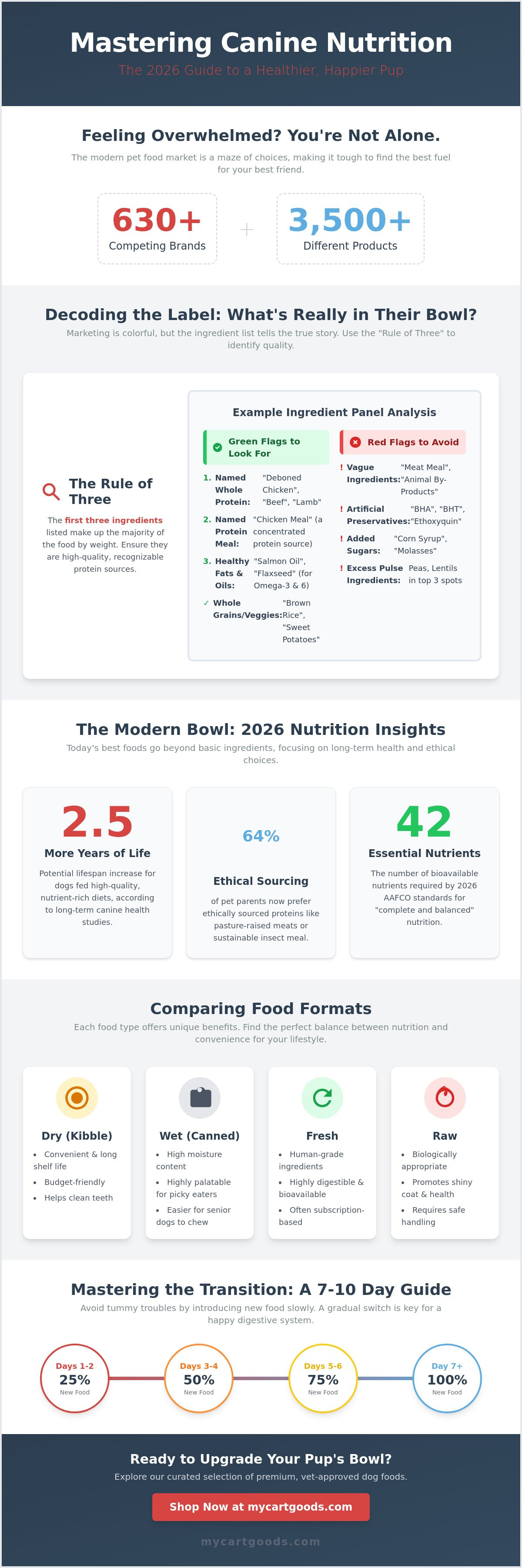
Staring at a wall of over 3,500 different bags and fresh-frozen pouches at the local pet store can feel paralyzing 🐾. To see how a dedicated local retailer curates their selection for pet wellness, you can discover Garden State Pet Center. Your fur baby deserves the absolute best, yet the sheer volume of choices makes it hard to know which bowl filler actually delivers on its promises. The 2026 AAFCO (Association of American Feed Control Officials) standards now define "complete and balanced" nutrition through a lens of high bioavailability. This means 42 essential nutrients must be present in forms your dog's body can actually absorb, rather than just appearing on a lab report. We've moved past the era of "one size fits all" fillers. Today, being a pet parent means seeking out human-grade ingredients that mirror the quality of our own dinner plates. This guide takes a nose to tail approach to help you cut through the noise and find the perfect fuel for your best friend.
The Evolution of Canine Nutrition
Canine nutrition has transformed since the first commercial biscuit appeared in 1860. While the industry relied on generic kibble for decades, the 2026 market prioritizes functional, personalized diets. Modern pet parents now use DNA testing kits to identify specific breed predispositions. This allows for customized nutrient profiles that match a dog's exact metabolic rate and activity levels. Sustainability has also taken center stage. A 2025 industry report showed that 64 percent of owners now prefer ethically sourced proteins like pasture-raised venison or certified sustainable insect meal. For a comprehensive overview of dog food and its various formats, looking at historical shifts helps us appreciate the high-tech, ethical options we have today.
Why Your Choice Matters for Long-Term Health
The dog food you choose acts as the foundation for your pet's entire life. High-quality nutrition serves as preventative medicine, potentially extending a dog's lifespan by up to 2.5 years according to long-term canine health studies. When you prioritize premium ingredients, you'll see the results in a glossy coat, sturdy joint support, and sharper cognitive function in senior years. Investing in superior dog food now often means fewer veterinary medical consultations later. Proper ratios of Omega-3 fatty acids and glucosamine don't just make your fur baby look good; they keep their tail wagging and their body moving comfortably well into their golden years. Choosing the right meal is the most impactful daily decision you make for your home's happiness.
Decoding the Label: What is Really in Your Fur Baby’s Bowl?
Don't let those vibrant photos of roasting meats and fresh vegetables fool you. Marketing teams spend millions to make a bag of dog food look like a five-star meal, but the truth hides in the fine print of the nutritional panel. You need to focus on the "Rule of Three." The first three ingredients listed on the back represent the vast majority of the recipe by weight. If these top spots aren't occupied by recognizable, high-quality protein sources, your pet isn't getting the nose to tail nourishment they deserve. Since the FDA's regulation of pet food requires ingredients to be listed in descending order of weight before processing, those first three items define the quality of the entire bag.
Identifying Premium Proteins and Ultra-Safe Fats
Look for specific names like "Chicken" or "Beef" as the primary ingredient. While "Chicken Meal" might sound less fresh, it's actually a powerhouse of nutrition because it is a concentrated protein source with most water removed. This provides more actual meat content than fresh chicken, which is approximately 70% water before cooking. Avoid generic "meat meal" or "by-products," as these lack transparency regarding their origin. Whole protein remains the gold standard for 2026 canine health. Healthy fats are just as vital; look for Omega-3 and Omega-6 fatty acids from salmon oil or flaxseed to ensure a shiny coat and healthy skin. Once you've found the perfect blend, serving it in a stylish, easy-to-clean bowl makes every mealtime a celebration for your pet.
Red Flags and Ingredients to Avoid
Some ingredients do more harm than good for your fur baby. Watch out for artificial preservatives like BHA and BHT, which 2026 veterinary studies continue to link to long-term health risks. Be cautious with "pulse" ingredients such as peas, lentils, and chickpeas if they appear in the top three positions. While they replaced grains in many grain-free diets, a 2025 report showed that 85% of specialists recommend monitoring their intake due to potential links to heart issues like DCM. High sodium levels and hidden sugars like corn syrup or molasses are often used to make bland kibble taste better, so skip any brand that uses sweeteners to entice your pet.
The "filler" myth also needs a reality check. Grains like brown rice, barley, and oatmeal aren't just empty calories; they provide essential fiber and B vitamins for sustained energy. The real value often comes from what's added at the end of the list. Probiotics support a happy gut and strong immune system, while chelated minerals are minerals bound to organic molecules, making them 40% easier for your pet's body to absorb. 🐾
Comparing Food Formats: Dry, Wet, Fresh, and Raw
Choosing the right dog food is one of the most impactful decisions you'll make for your fur baby's long-term health. Every pup is a unique individual with their own specific cravings and nutritional needs. Today's market offers four primary feeding philosophies, each designed to nourish your pet from nose to tail. Whether you prioritize the ease of a scoop-and-serve meal or the nutrient density of a raw diet, understanding the trade-offs in cost, convenience, and safety is the first step toward a happy home. 🐾
The balance between your budget and your schedule often dictates your choice. Kibble remains the most cost-effective and convenient option, while fresh and raw diets represent a significant investment in both time and money. According to 2024 pet industry reports, premium fresh food subscriptions can cost up to four times more per day than high-quality dry alternatives. However, the "best" food isn't just about the price tag or the latest trend; it's the specific formula your dog thrives on, evidenced by a shiny coat, clear eyes, and boundless energy.
The Case for Kibble and Wet Food
High-quality dry kibble is a beloved staple for many pet parents because it's incredibly shelf-stable and easy to store. The crunchy texture serves a functional purpose, too; it helps scrape away plaque to support dental health. If you have a picky eater, wet food is a mouthwatering hydration booster that adds variety and essential moisture to their diet. Many families find success with a mix-and-match strategy. By using kibble as a nutritious base and adding a scoop of wet food as a topper, you create a balanced, exciting mealtime that keeps tails wagging without breaking the bank.
The Rise of Fresh and Gently Cooked Diets
Human-grade fresh food is the fastest-growing segment in 2026 as more owners seek transparency in what they feed their pets. These meals are often gently cooked to preserve bioavailable nutrients that can be lost in high-heat processing. Because these recipes use whole ingredients like lean meats and vibrant vegetables, they are often easier for sensitive stomachs to digest. These carefully curated plans do require some logistical planning; you'll need dedicated fridge or freezer space to keep these handpicked meals fresh and ultra-safe. 🐾
While raw and freeze-dried diets are praised for their minimal processing, they come with specific safety considerations. The FDA’s Center for Veterinary Medicine has frequently cautioned that raw pet food has a higher risk of contamination with bacteria like Salmonella or Listeria compared to cooked formats. If you choose a raw path, it's vital to follow strict hygiene protocols, including disinfecting bowls and surfaces after every single meal to protect everyone in your household.
Tailoring Nutrition to Life Stages and Special Needs
Every wagging tail tells a unique story, and that story requires a specific kind of fuel. Your tiny puppy isn't just a smaller version of an adult; they're a biological engine running at full speed. Because their needs change from nose to tail as they grow, choosing the right dog food means looking closely at their current chapter of life. Whether you're raising a rambunctious Great Dane or a spunky Pomeranian, nutrition is the foundation of a happy home. 🐾
Puppy Growth and Senior Vitality
Puppies require a powerhouse of nutrients to support their rapid development. Specifically, look for formulas rich in DHA, an omega-3 fatty acid that's scientifically proven to aid in brain and eye development during those first 12 months. As your fur baby enters their golden years, the focus shifts toward preservation and comfort. Senior dogs often benefit from supplements like Glucosamine and Chondroitin to keep their joints fluid. To provide complete support for their aging bodies, many pet parents pair a joint-focused diet with orthopedic dog beds that soothe weary bones. It's also vital to monitor caloric density; aging pets typically need 20% fewer calories than active adults to prevent unhealthy weight gain as their metabolism naturally slows after age 7.
Weight Management and Active Lifestyles
If your pet is more of a "couch potato" than a "zoomie fan," weight management becomes a priority. You can identify high-quality weight-loss formulas by looking for a high-nutrient, low-fat profile that maintains at least 10% fiber to keep them feeling full. For the high-intensity athletes or working dogs, energy requirements skyrocket. These active pups need a fat content of roughly 20% to sustain their endurance throughout the day. We love seeing pets stay fit, which is why we look for L-Carnitine on the label. This handpicked ingredient helps the body turn fat into energy, ensuring your fur baby maintains lean muscle mass rather than extra padding.
Breed-specific needs also play a massive role in your selection. Large breeds need controlled calcium and phosphorus levels to prevent them from growing too quickly, which can lead to skeletal issues. Conversely, small breeds have lightning-fast metabolisms and tiny stomachs, requiring energy-dense kibble that packs a punch in every bite. If your pet experiences itchy skin or digestive upset, they might be part of the 10% of dogs diagnosed with food sensitivities. In these cases, limited-ingredient diets are a beautifully simple solution.
Because every pet is an individual, always schedule a veterinary medical consultation before making drastic changes to their diet. Your vet can provide a professional assessment to ensure your dog food choice perfectly aligns with your pet's specific health profile. 🐾
Ready to give your pet the comfort they deserve? Shop our curated collection of pet essentials today!
Mastering the Transition: Safe Feeding and Smart Tools
Switching your fur baby to a new dog food requires more than just a sudden swap. A study from the University of Illinois suggests that a gradual 7 to 10 day transition period is essential to avoid gastrointestinal distress. Start by mixing 25% of the new formula with 75% of the old meal for the first two days. By day four, move to a 50/50 split. By day six, your pup should enjoy a mix of 75% new food and 25% old. This slow pace allows the gut microbiome to adapt, ensuring every meal is a happy one without the tummy aches.
Preventing Gulping and Bloat
Speed eating is a serious health risk for many breeds. Large dogs like Great Danes have a 37% lifetime risk of developing Gastric Dilatation-Volvulus, or bloat, often triggered by inhaling food too quickly. You can transform mealtime into a safe, engaging activity with Slow Feeder Anti-Gulping Bowls. These handpicked designs force your pet to navigate ridges and valleys, slowing their pace and improving digestion. It's not just a bowl; it's an interactive puzzle that provides vital mental stimulation while keeping them safe from life-threatening conditions.
Automation for the Modern Pet Parent
Consistency creates a calm environment for your fur baby. Using Automatic Feeders helps maintain strict portion control, which is vital since the Association for Pet Obesity Prevention reports that 59% of dogs in the U.S. are overweight. Precise timing reduces "begging" behaviors and eases anxiety. Don't forget that hydration is the final piece of the nutrition puzzle. Dry kibble contains only about 10% moisture, so your pet needs constant access to clean water. An Automatic Pet Water Fountain ensures they stay hydrated with fresh, flowing water 24/7 🐾.
At MyCartGoods, we believe in providing everything your fur baby deserves from nose to tail. Our carefully curated accessories are the perfect finishing touch to a high-quality dog food diet. Whether you're looking for ultra-safe bowls or high-tech solutions, we've got you covered for a beautifully healthy home. We've done the hard work of handpicking the best products so you can focus on those mouthwatering treats and cozy cuddles.
Just as you might update your home for your pet's comfort, you can also apply those same principles of modernization to your vehicle; for instance, learning how to restomod a classic car allows you to enjoy vintage style with modern, quiet performance. 🐾
Fueling a Lifetime of Happy Tail Wags
Nourishing your fur baby from nose to tail starts with looking beyond the flashy packaging. As you navigate the 2026 pet health landscape, choosing the right dog food means understanding that every life stage requires a unique nutritional profile. You've learned how to decode complex labels using AAFCO standards and why transitioning slowly over a 7 to 10 day period is vital for digestive health. Whether you're opting for fresh, raw, or high-quality kibble, the goal is always a vibrant life for your best friend. Now, it's time to pair that premium nutrition with the high-tech care your pet deserves. 🐾
At MyCartGoods, we're fellow pet parents who believe in making every meal an experience. We've built a handpicked collection of smart feeders and orthopedic comfort items to support your pet's long-term well-being. Our innovative pet tech is designed for the modern, happy home, ensuring your four-legged family member stays nourished even when you're busy. Our passionate customer support team is always here to help you find the perfect fit for your lifestyle. Your journey to a happier, healthier home starts today.
Explore Everything Your Fur Baby Deserves at MyCartGoods!
Frequently Asked Questions
How much dog food should I feed my dog daily?
You should feed your fur baby based on their weight and activity level, typically following the 2% to 3% of their body weight rule for adult dogs. A 50 pound active dog usually needs about 1,200 to 1,500 calories per day, which often translates to 3 cups of high quality dog food. Always check the specific calorie count on your handpicked bag, as 1 cup can range from 300 to 600 calories. 🐾
Is grain-free dog food actually better for my pet?
Grain-free options are only better if your pet has a diagnosed grain allergy, which affects less than 1% of dogs according to a 2018 study by the University of Guelph. Most pets thrive on grains like brown rice or barley that provide essential fiber and energy. Since the FDA began investigating a potential link between grain-free diets and heart issues in July 2018, we recommend consulting a vet before making the switch. 🐾
Can I mix dry and wet dog food together?
You can absolutely mix dry and wet dog food to give your fur baby a mouthwatering meal that hydrates and nourishes from nose to tail. This method is a fantastic way to entice picky eaters while ensuring they get the 70% moisture content found in wet varieties. Just remember to reduce the kibble portion by 25% for every 3 ounces of wet food added to keep their daily calorie intake balanced and healthy. 🐾
What should I do if my dog suddenly stops eating their food?
If your pet stops eating for more than 24 hours, you should contact your veterinarian immediately to rule out underlying health issues. While a skipped meal might just mean they're being picky, a 2022 clinical report suggests that sudden appetite loss can signal dental pain or digestive upset. Try offering a small piece of plain, boiled chicken to see if their interest returns, but don't wait longer than 2 days before seeking professional advice. 🐾
How can I tell if my dog has a food allergy or sensitivity?
Look for persistent itching, red skin, or chronic ear infections, as 80% of food sensitivities manifest through skin irritation. Your fur baby might also experience digestive issues like gas or loose stools more than 3 times a week. To find the culprit, vets often suggest an 8 to 12 week elimination diet using a single protein source to identify exactly which ingredient is making your pet uncomfortable. 🐾
Is it safe to feed my dog a raw food diet in 2026?
Feeding a raw diet in 2026 requires extreme caution because a 2024 study found that 25% of raw samples contained pathogens like Salmonella. While some parents love the shiny coats raw feeding provides, the American Veterinary Medical Association continues to warn against the high risk of cross-contamination in the home. If you choose this path, use ultra-safe handling practices and ensure the recipe meets the 2026 AAFCO nutritional profiles to give them everything your fur baby deserves. 🐾
What are the first signs that a dog food is not agreeing with my pet?
The most common signs are vomiting or diarrhea occurring within 2 to 4 hours after a meal. You might also notice your fur baby has excessive gas or a dull, flaky coat that doesn't shine like it used to. If your pet experiences these symptoms for more than 48 hours after starting a new bag, the ingredients likely aren't the right fit for their unique digestive system. 🐾
How long does an open bag of dry dog food stay fresh?
An open bag of kibble stays fresh and nutritious for about 6 weeks if stored in its original packaging inside an airtight container. After 42 days, the essential fats in the food begin to oxidize, which can lead to a rancid smell and a loss of vital vitamins. To keep every bite mouthwatering, store the bag in a cool, dry place where the temperature stays below 80 degrees Fahrenheit. 🐾